Published · CERAMIC CNC Engineering · Engineering Guide · 11 min read
Precision Machined Alumina Ceramic Parts for Industrial Applications
How engineers should specify precision machined alumina ceramic parts for insulation, wear, vacuum, sensors, fixtures, high-temperature systems, and industrial assemblies.
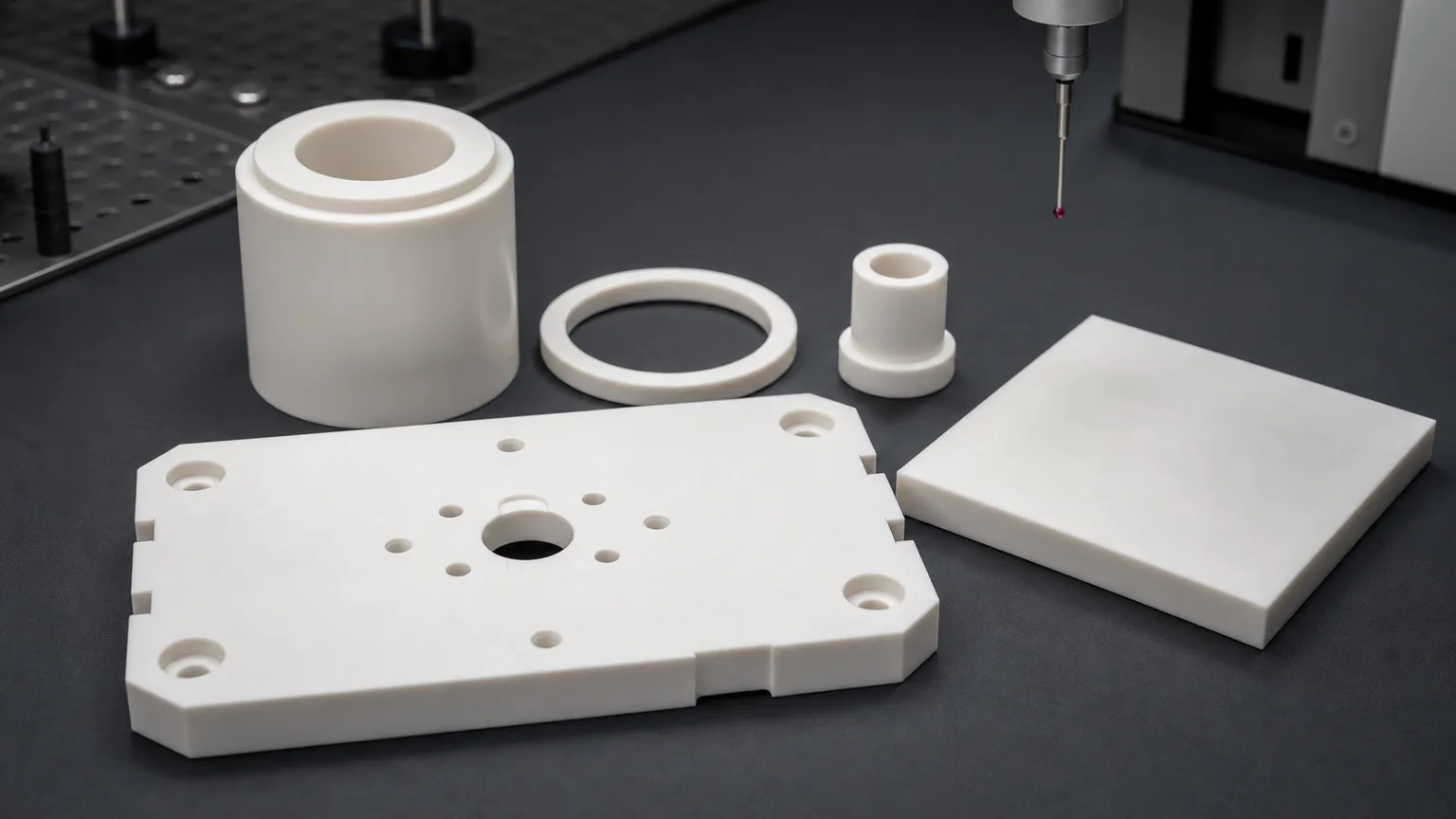
Alumina is one of the most widely specified technical ceramics because it can combine electrical insulation, wear resistance, thermal stability, chemical resistance, and practical availability. The machining challenge is that those advantages only become useful when the grade, blank state, functional surfaces, tolerance map, edge quality, and inspection plan are reviewed together.
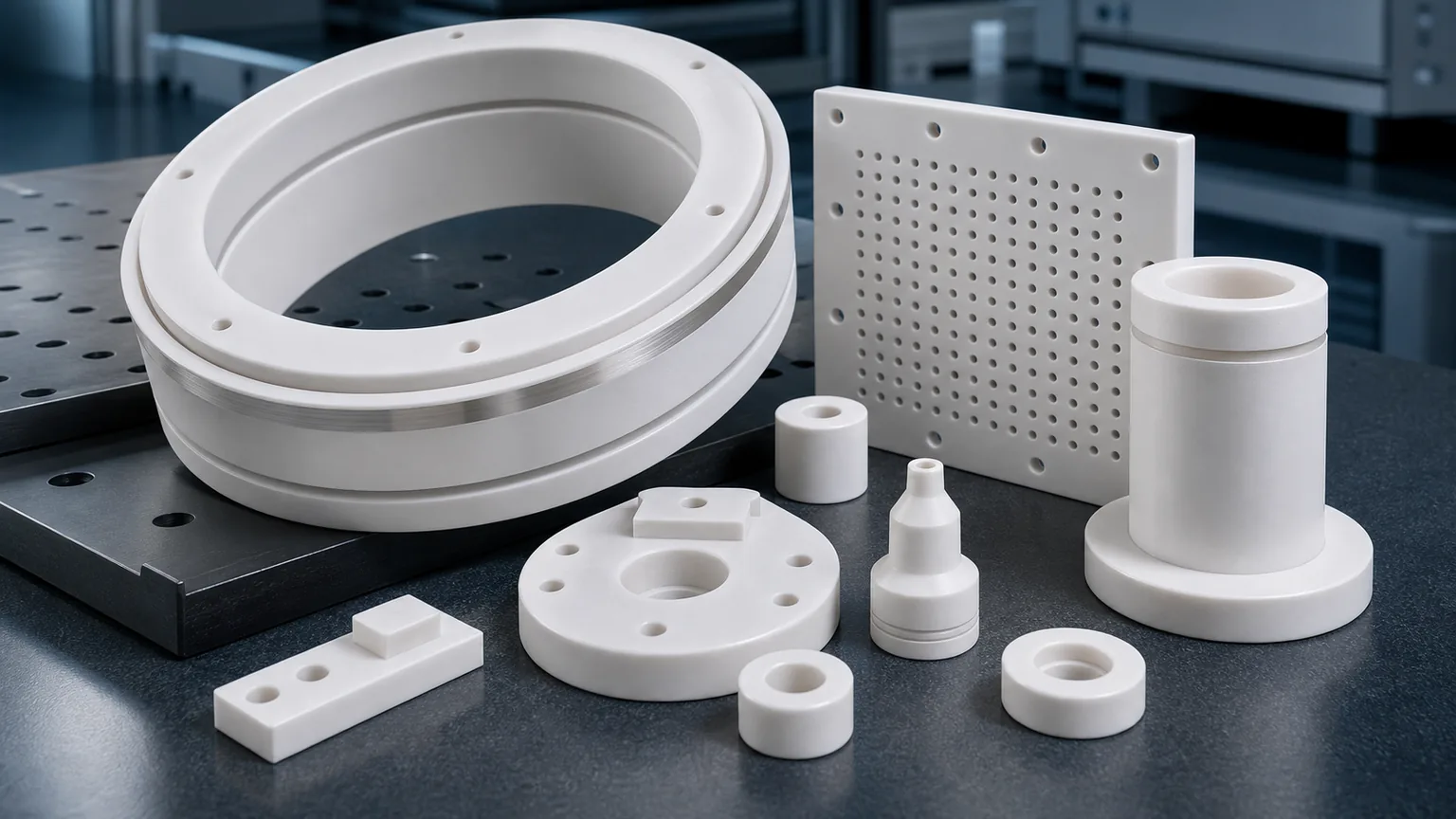
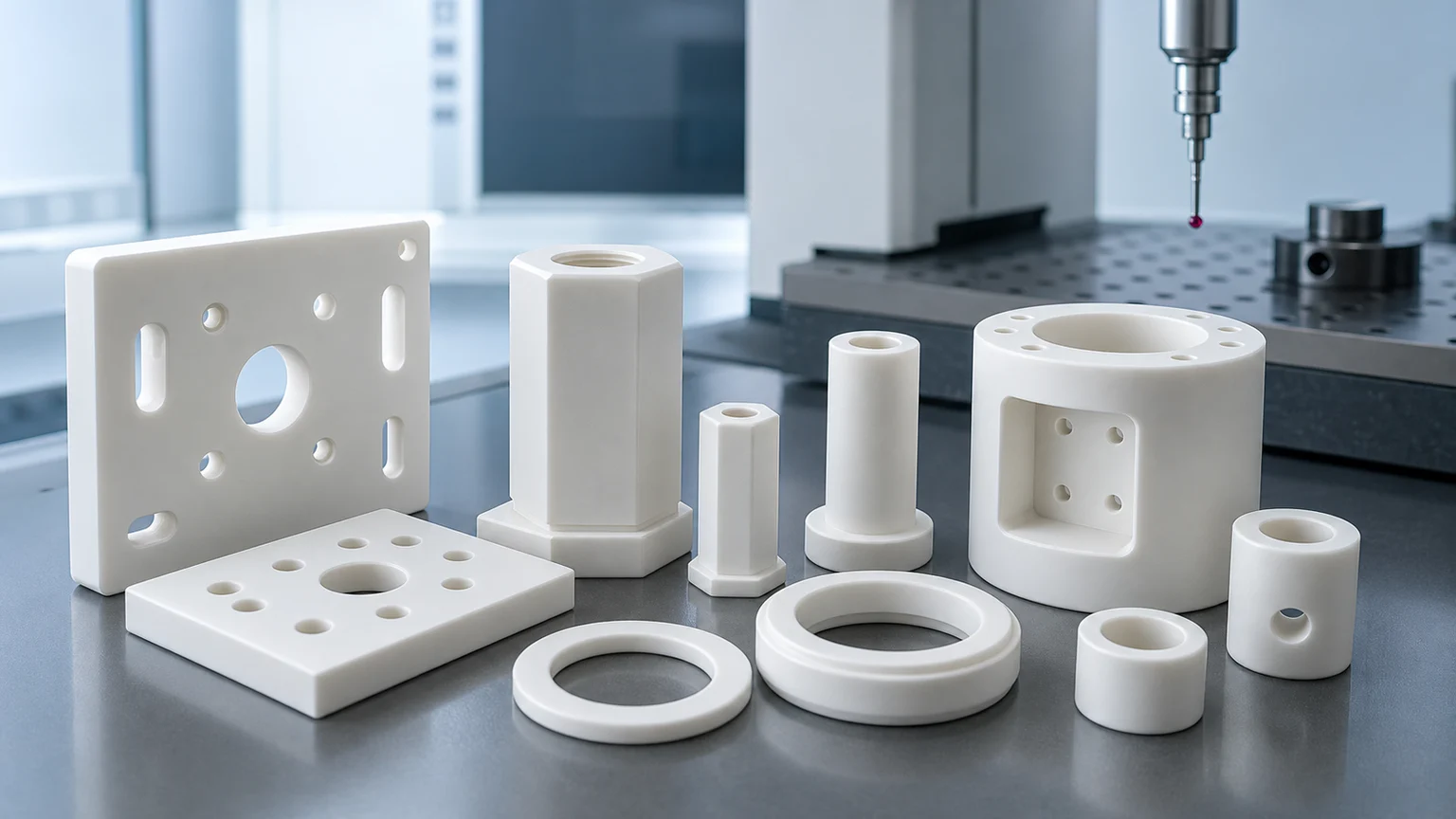
Precision machined alumina ceramic parts are common in industrial automation, electrical equipment, semiconductor-adjacent hardware, high-vacuum assemblies, sensor systems, abrasive material handling, test fixtures, pump and valve components, thermal equipment, and laboratory instruments. Typical RFQs include alumina insulators, spacers, sleeves, bushings, plates, substrates, nozzles, guide blocks, wear liners, standoffs, washers, seal supports, and custom ceramic fixtures.
The practical sourcing question is not simply “Can alumina be machined?”
The better question is:
Which alumina grade, fired state, machined surfaces, tolerances, finish zones, and inspection evidence are needed for this part to work in the real assembly?
That question should be answered before feasibility, price, lead time, or final machining route are confirmed.
Why Alumina Is Used For Industrial Ceramic Parts
Alumina, or aluminum oxide Al2O3, is often selected when an industrial part needs a combination of mechanical and electrical performance. Compared with many metals and polymers, alumina can provide useful hardness, dielectric behavior, corrosion resistance, dimensional stability, and resistance to many wear environments.
Its strength is not that it solves every ceramic application. Its strength is balance. Alumina is often easier to source than more specialized ceramics, more cost-effective than many advanced alternatives, and available in multiple purity and microstructure options. That makes it a practical first review material for many machined ceramic components.
However, alumina is still a hard and brittle ceramic. Sharp corners, thin walls, unsupported sections, point loading, and over-tight global tolerances can create cost and fracture risk. Fired alumina parts with precision features usually require diamond grinding, lapping, or other abrasive finishing rather than ordinary metal-style cutting.
Common Applications For Precision Machined Alumina Parts
Alumina appears across many industrial assemblies because it can support several functions at once.
| Application area | Common alumina parts | RFQ review focus |
|---|---|---|
| Electrical insulation | Spacers, standoffs, feedthrough parts, sleeves, housings | Creepage path, wall thickness, edge condition, voltage environment, cleanliness |
| Wear and sliding contact | Bushings, liners, guide blocks, rollers, valve seats | Contact mode, counterface, surface finish, edge break, load, and wear mechanism |
| Vacuum and analytical equipment | Plates, insulating supports, sensor mounts, flow hardware | Flatness, cleaning, outgassing expectations, holes, sealing faces, packaging |
| Industrial automation | Locating blocks, guide rails, grippers, fixture plates | Datum strategy, mounting holes, chip control, repeatability, replacement surfaces |
| Thermal equipment | Insulating plates, furnace fixtures, tubes, support parts | Temperature, thermal cycling, thickness, assembly load, and atmosphere |
| Sensors and measurement assemblies | Housings, sleeves, substrates, probe supports | Small features, insulation path, surface finish, bore quality, inspection method |
This spread of applications is why alumina ceramic machining should not be treated as a catalog shape purchase. Two alumina plates may look similar, but one may be a high-voltage insulator, one may be a wear liner, and one may be a lapped vacuum interface. In semiconductor hardware, alumina insulating rings, feedthrough sleeves, nozzles, gas plates, and clean fixture components should be reviewed with the alumina ceramic parts for semiconductor processing equipment guide before grade, cleaning, packaging, and inspection evidence are locked. Alumina insulating rings and chamber-adjacent spacer rings should also be reviewed with the precision ceramic rings for semiconductor process chambers guide when ID/OD control, lapped bands, grooves, cleaning, and inspection evidence matter. When the alumina part is used around plasma etching, deposition, feedthrough-adjacent sleeves, or electrode spacing, use the ceramic insulators for plasma etching and deposition equipment guide to define dielectric paths, edge quality, and clean packaging. The drawing and acceptance requirements drive the route.
For high- and ultra-high-vacuum chambers outside the narrower semiconductor process-ring scope, the machined alumina components for high- and ultra-high-vacuum systems guide covers structural rings, spacers, sleeves, insulating supports, sealing interfaces, trapped-volume review, cleaning, bake context, and customer-owned vacuum testing.
Alumina Grade Selection Matters
The word “alumina” is not enough for a reliable quotation. Different alumina grades can vary in purity, density, grain structure, strength, finishability, color, and cost. A drawing that only says “ceramic” or “alumina” leaves too many assumptions open.
Common RFQ distinctions include:
- General industrial alumina for insulating, wear, and fixture components.
- Higher-purity alumina for cleaner electrical, vacuum, sensor, or process-side requirements.
- Fine-grain alumina when edge quality, smaller features, or improved surface condition matter.
- Dense alumina where mechanical stability, wear, or sealing support is important.
- Application-specific material callouts when the customer must match an existing qualified part.
If the exact grade is already controlled, include the material specification, supplier preference, purity, density requirement, and any certificate expectation. If the grade is not fixed, describe the operating environment and failure mode so material selection can be reviewed against the part’s job.
The ceramic material selection guide gives a broader framework for comparing alumina with zirconia, silicon nitride, silicon carbide, aluminum nitride, MACOR, and boron nitride.
Blank State And Machining Route
Alumina parts may start from pressed blanks, tubes, rods, plates, near-net shapes, or customer-supplied blanks. The blank route affects machining allowance, datum strategy, surface condition, yield, and quote risk.
For precision machined alumina ceramic parts, the route may include:
- Green machining before sintering when the blank process and shrinkage allowance support the geometry.
- Fired blank machining for accessible features with moderate requirements.
- Diamond grinding for precision faces, slots, bores, OD/ID relationships, and flatness.
- Lapping for seal lands, reference faces, and very flat functional interfaces.
- Polishing only when the surface condition has a defined function.
- Edge break, cleaning, inspection, and packaging for chip-sensitive features.
The route should be chosen after reviewing the drawing. A part with a simple outside profile but one tight bore may need a different process from a flat plate with many holes, countersinks, and flatness requirements. Green machining can reduce shaping effort in some cases, but post-sinter finishing is often needed for final accuracy and functional surfaces.
Features That Drive Alumina Machining Cost
Alumina is hard, abrasive, and brittle after firing. Cost is often driven less by the part outline and more by the features that must be finished, measured, and protected.
High-impact features include:
- Tight bores in sleeves, bushings, and insulating tubes.
- OD/ID concentricity or runout relationships.
- Flatness and parallelism on plates, spacers, and datum surfaces.
- Small holes, deep holes, countersinks, and closely spaced hole patterns.
- Thin walls, thin webs, and unsupported tabs.
- Slots, pockets, and internal corners with small radii.
- Lapped sealing bands or low-Ra contact faces.
- Chip-sensitive edges around holes, slots, and handling faces.
- Matched sets or assemblies where multiple parts must align.
This is why drawings should separate critical features from non-critical geometry. Applying tight tolerance and low surface roughness to every surface usually increases cost without improving function.
Alumina Insulators, Spacers, And Standoffs
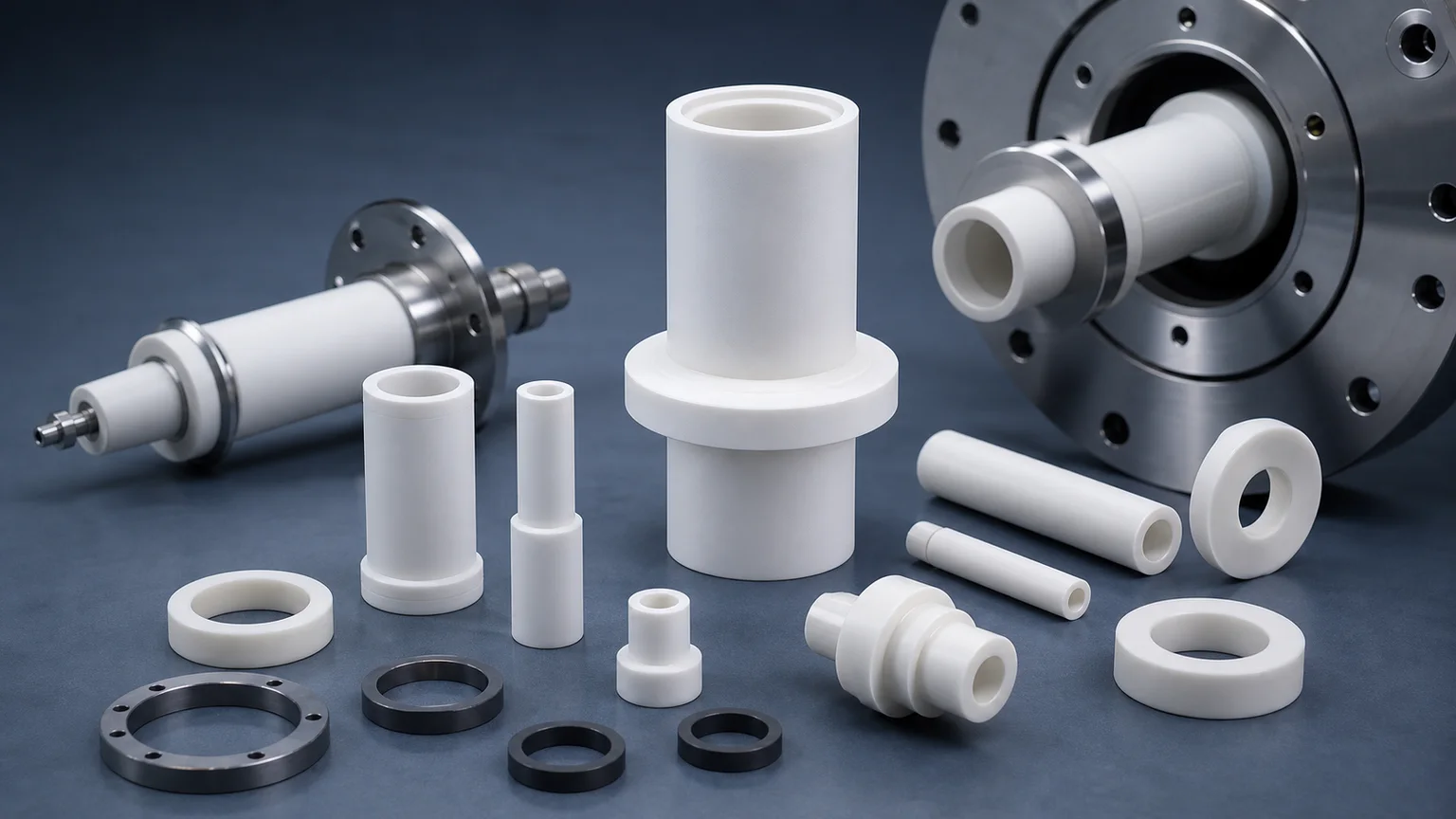
Electrical insulation is one of the most common reasons engineers specify alumina. Alumina spacers, sleeves, standoffs, feedthrough supports, and insulating plates can be used where polymer insulation cannot handle temperature, vacuum, wear, or dimensional stability requirements.
For these parts, the RFQ should define:
- Voltage environment and insulation function.
- Creepage and clearance path if relevant to the assembly.
- Wall thickness around bores and holes.
- Surface condition along the insulation path.
- Edge breaks around holes and slots.
- Mounting load and clamping method.
- Temperature, vacuum, humidity, contamination, or cleaning requirements.
Do not treat every white ceramic spacer as equivalent. A simple length spacer, a high-voltage standoff, and a vacuum feedthrough insulator may need different grade, finish, cleaning, and inspection controls. The high-voltage ceramic insulator RFQ guide covers this requirement in more detail.
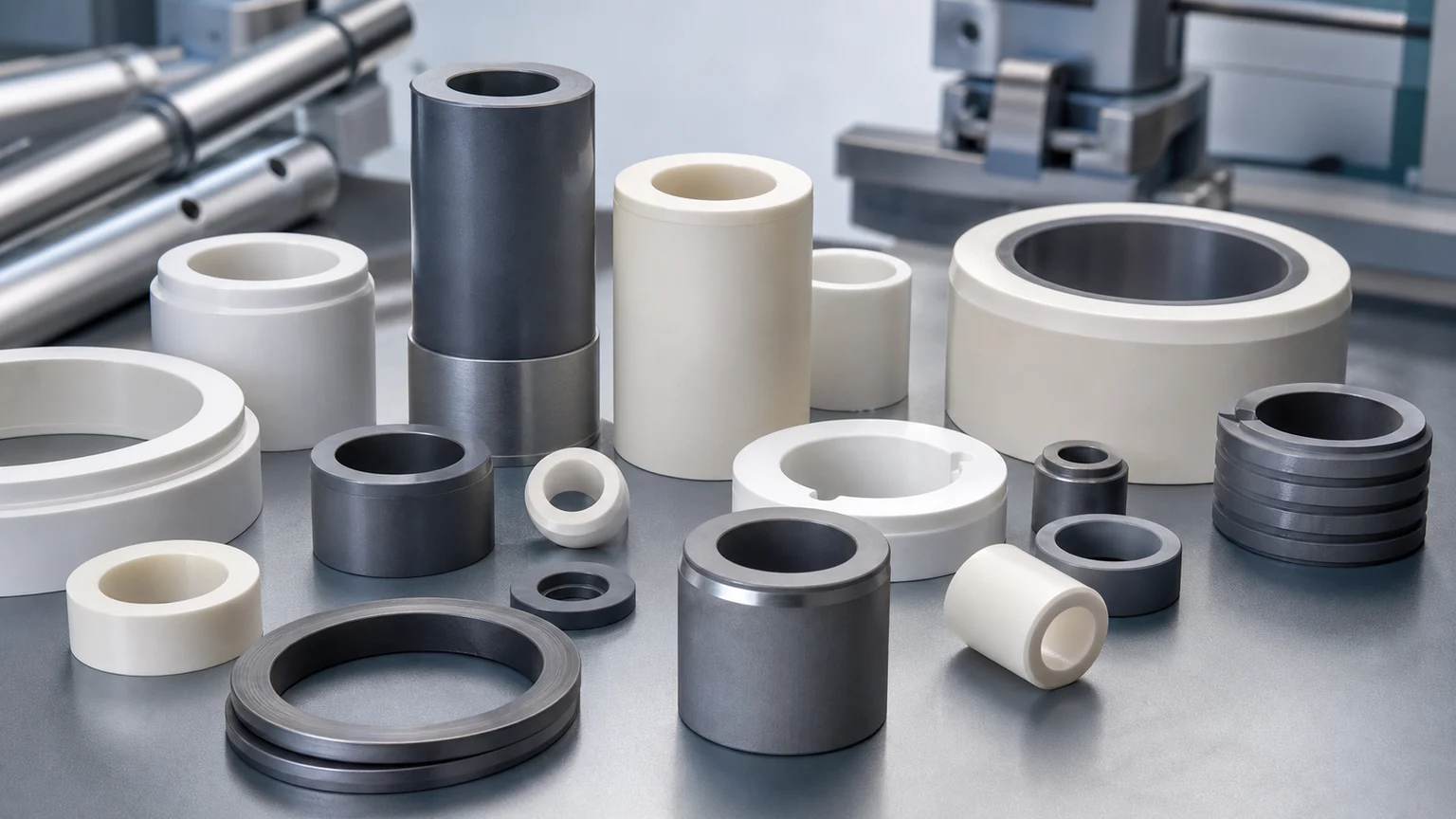
Alumina Bushings, Sleeves, And Wear Parts
Alumina is also used for bushings, sleeves, liners, guide blocks, wear plates, and valve-adjacent parts. Its hardness and wear resistance can be useful, but wear performance depends on the complete contact system.
Important review items include:
- Sliding, abrasive, erosive, or mixed wear mode.
- Counterface material and roughness.
- Dry, lubricated, wet, vacuum, or chemical operating condition.
- Bore quality, roundness, and concentricity.
- Entry chamfers and edge condition.
- Load, speed, vibration, and impact exposure.
- Whether the part is replaceable or bonded into a larger assembly.
If impact toughness or thermal shock is the dominant concern, zirconia or silicon nitride may need review. If chemical wear and lapped sealing are dominant, silicon carbide may be a better candidate. Alumina is often a strong option, but it should not be selected by hardness alone. The related wear-resistant ceramic machining guide explains wear-mode review across several ceramic materials.
Alumina Plates, Substrates, And Fixture Components
Machined alumina plates and substrates may be used as insulating fixtures, sensor bases, laboratory hardware, automation tooling, or high-temperature support parts. These parts often appear simple, but flatness, holes, datum faces, and edge quality can dominate the quotation.
Review these drawing details:
- Which face is functional and which face is only a mounting or clearance surface.
- Whether flatness applies to the entire plate or only a local land.
- Whether thickness tolerance is global or only functional at stack-up locations.
- Whether holes are through holes, blind holes, counterbores, countersinks, or slots.
- Whether hole edges need controlled chamfers.
- Whether the part needs matched pairs, serialization, or set-level inspection.
- Whether cleaning and packaging must protect finished faces.
For fixture plates, avoid point loading where possible. Use broad support, practical edge breaks, and stable datum surfaces. Alumina can be precise, but it does not behave like a ductile metal plate under concentrated clamping loads.
Tolerances And Surface Finish Should Be Local
The best alumina drawings usually identify functional zones instead of assigning maximum precision everywhere.
Examples:
- A bushing may need tight bore size, roundness, and concentricity, while the outside length can be less critical.
- A spacer may need parallel end faces and controlled length, while the OD is only clearance.
- An insulating plate may need controlled hole spacing and edge condition, while a pocket floor can remain moderate.
- A seal support may need one lapped band, while the rest of the part can be standard ground.
Use local notes for surface finish, flatness, and lapped faces. Avoid global notes such as “all surfaces low Ra” unless every surface truly has that function. Over-specification can increase machining time, inspection time, and handling risk.
For deeper specification guidance, see the ceramic tolerance capability map and the surface finish and subsurface damage guide.
Design Rules For Machined Alumina Parts
Alumina design should reduce edge chips, stress concentration, and inspection ambiguity.
Useful rules include:
- Add radii to internal corners where the feature allows it.
- Avoid knife edges and unsupported thin tabs.
- Keep holes away from fragile edges when possible.
- Use practical chamfers on handling edges and bore entries.
- Define which edges are functional and which edges are simply chip-controlled.
- Avoid deep narrow slots unless the function requires them.
- Place datums on finished, stable, measurable surfaces.
- Separate mounting loads from precision wear or insulation surfaces.
- Avoid assuming metal-style thread, press-fit, or point-clamp behavior.
- Provide CAD and a controlled drawing when features are complex.
The ceramic CNC machining design rules guide covers feature-level design review for holes, slots, thin walls, datums, and edges.
Inspection Evidence For Alumina Ceramic RFQs
Inspection should match the function of the alumina part. A drawing may call for CMM inspection, optical measurement, pin gauges, bore gauges, roundness measurement, flatness measurement, surface finish measurement, or visual chip criteria.
| Feature | Useful inspection question |
|---|---|
| Precision bore | Is diameter, roundness, cylindricity, or taper controlled? |
| Sleeve OD/ID | Is concentricity, runout, or wall thickness important? |
| Plate face | Is flatness global, local, or only required at datum lands? |
| Hole pattern | Are location, edge break, and counterbore depth controlled? |
| Insulation path | Are surface condition and edge contamination relevant? |
| Wear face | Is the finish specified on the actual contact surface? |
| Lapped or sealing face | Is flatness, Ra, and handling protection defined? |
| Clean or vacuum surface | Are cleaning, packaging, and acceptance evidence required? |
If inspection documentation is required, include it in the RFQ before quotation. Measuring and documenting a ceramic component can be a meaningful part of the project effort, especially when parts are small, thin, lapped, or chip-sensitive.
When Alumina May Not Be The Best Choice
Alumina is useful, but it is not always the best ceramic.
Review alternatives when:
- Higher fracture toughness is more important than hardness or insulation.
- Thermal shock resistance is a dominant failure mode.
- A very high thermal-conductivity electrical insulator is required.
- Chemical wear or sealing duty points toward silicon carbide.
- A very fast prototype is needed and a machinable ceramic can meet the environment.
- The part needs a material already qualified by the customer’s system.
These are not reasons to reject alumina automatically. They are reasons to review the application rather than treating alumina as the default answer for every white ceramic part.
RFQ Inputs For Precision Machined Alumina Ceramic Parts
For a useful alumina ceramic machining review, send:
- 3D CAD and controlled 2D drawing.
- Alumina grade, purity, density, or acceptable alternatives.
- Blank source requirement if the blank is customer-controlled.
- Quantity, prototype or production intent, and revision status.
- Application function: insulation, wear, fixture, vacuum, thermal, sensor, or fluid control.
- Operating temperature, media chemistry, voltage, load, speed, or vacuum condition where relevant.
- Functional surfaces and non-critical surfaces.
- Tolerances for bores, faces, hole patterns, flatness, parallelism, runout, or concentricity.
- Surface finish requirements by face or band.
- Edge break and visual chip criteria.
- Cleaning, packaging, certificate, or inspection report requirements.
- Target timing for review, not a confirmed schedule.
The custom ceramic CNC machining RFQ checklist provides a broader format for preparing drawings, material notes, quantities, and acceptance requirements.
Practical Takeaway
Precision machined alumina ceramic parts are valuable because alumina can combine insulation, wear resistance, chemical stability, temperature capability, and practical manufacturability for many industrial applications.
The part still needs engineering review. Alumina grade, blank state, functional surfaces, machining route, edge quality, tolerance scope, surface finish, cleaning, packaging, and inspection evidence all affect feasibility and cost. Send the drawing, CAD, material requirement, application conditions, quantity, target timing, and acceptance expectations so the machining route can be reviewed before quotation and production planning.
- Alumina ceramic machining
- Precision ceramic machining
- Ceramic insulators
- Ceramic bushings
- Industrial ceramics