Published · Updated · CERAMIC CNC Engineering · Engineering Guide · 9 min read
Alumina Ceramic Insulators for Electrical and Electronic Applications
Engineering guide for precision machined alumina ceramic insulators used in electrical and electronic assemblies, including standoffs, spacers, sleeves, plates, housings, creepage paths, edge quality, cleaning, inspection, and RFQ inputs.
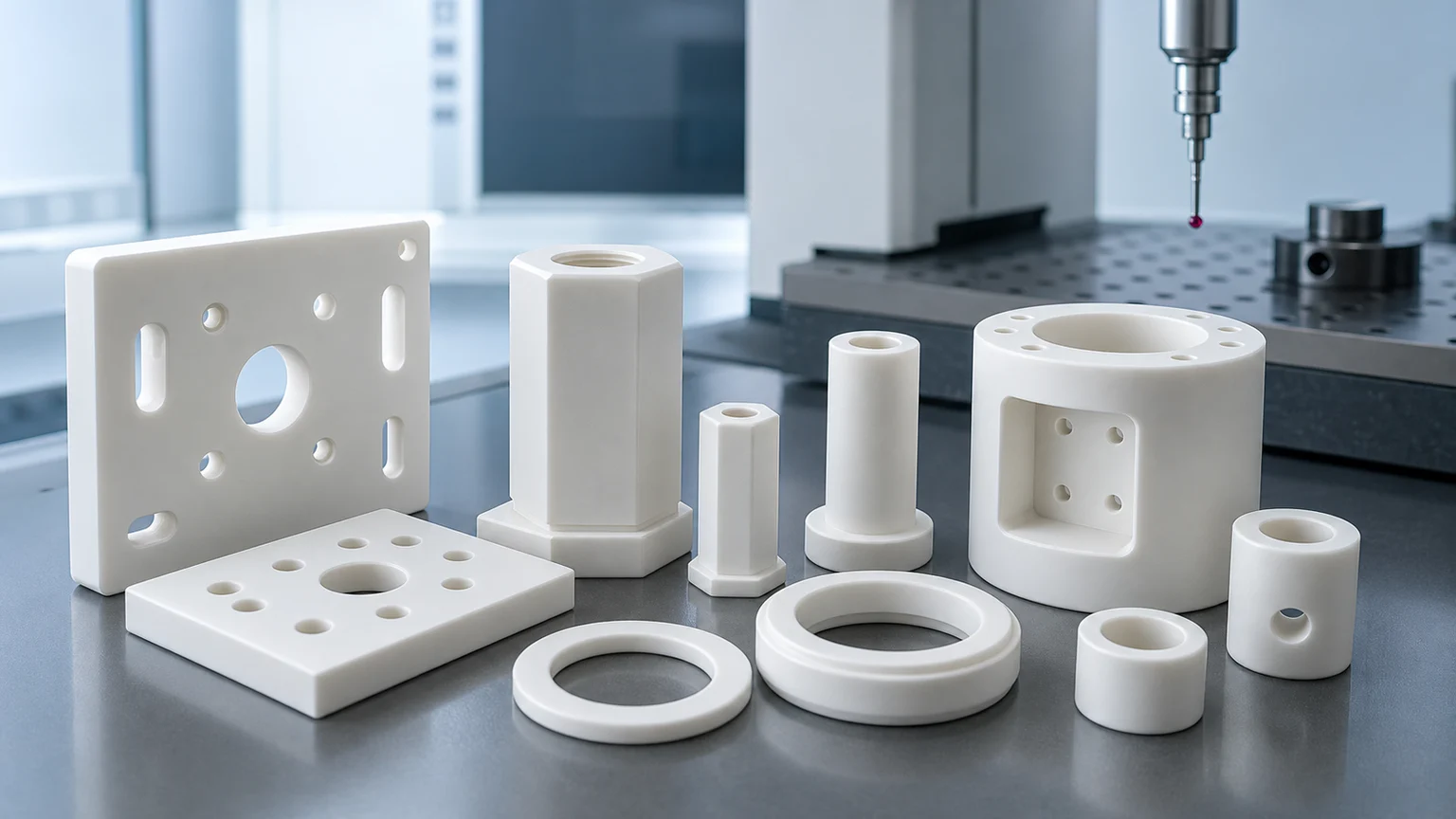
Alumina ceramic insulators are usually purchased because a polymer, metal, or ordinary spacer cannot provide the required combination of electrical isolation, temperature stability, wear resistance, dimensional control, and clean assembly behavior. A useful RFQ should define the insulation function, component geometry, functional surfaces, edge condition, surface finish, cleaning, and inspection evidence before price or lead time is treated as fixed.
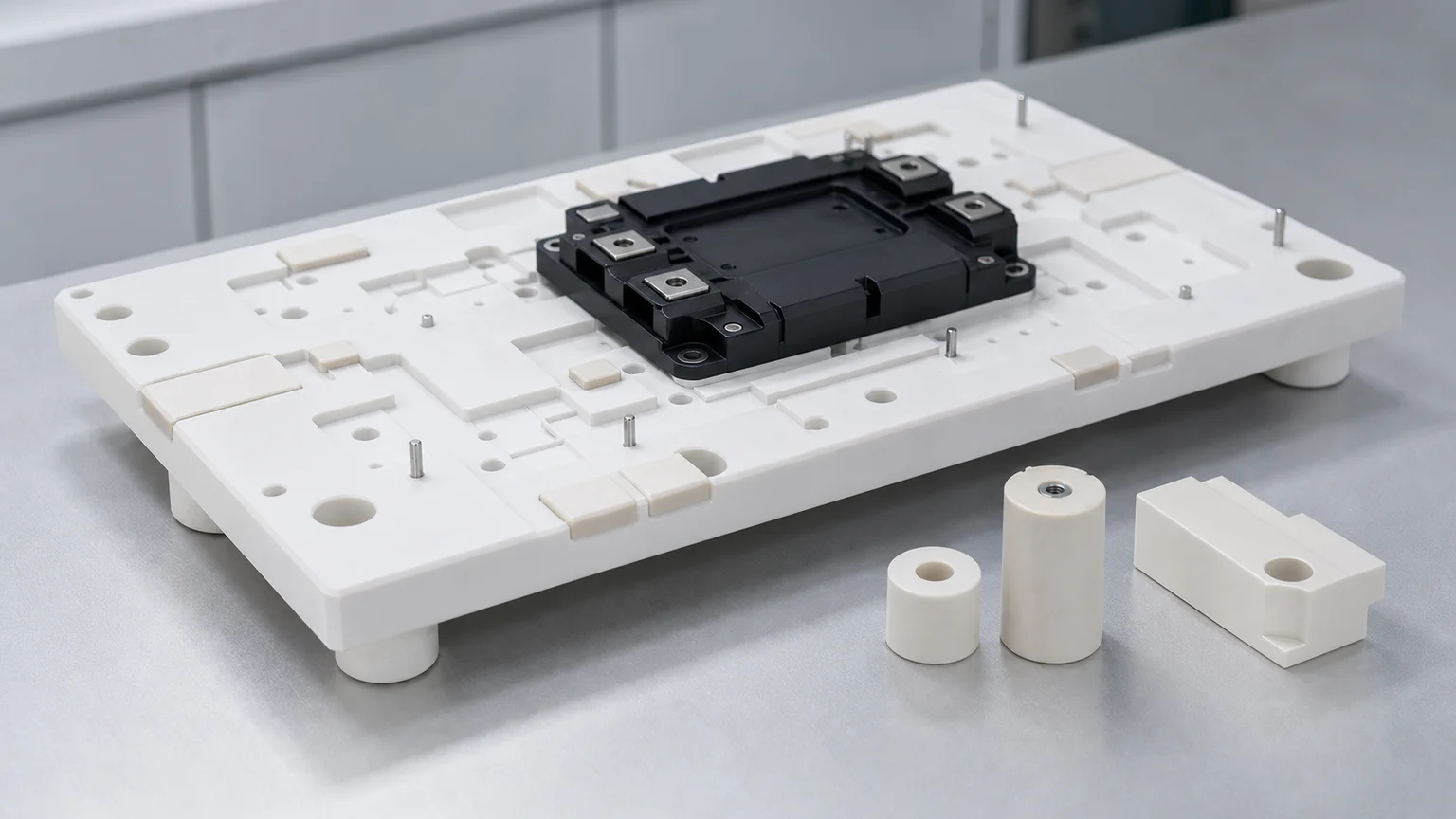
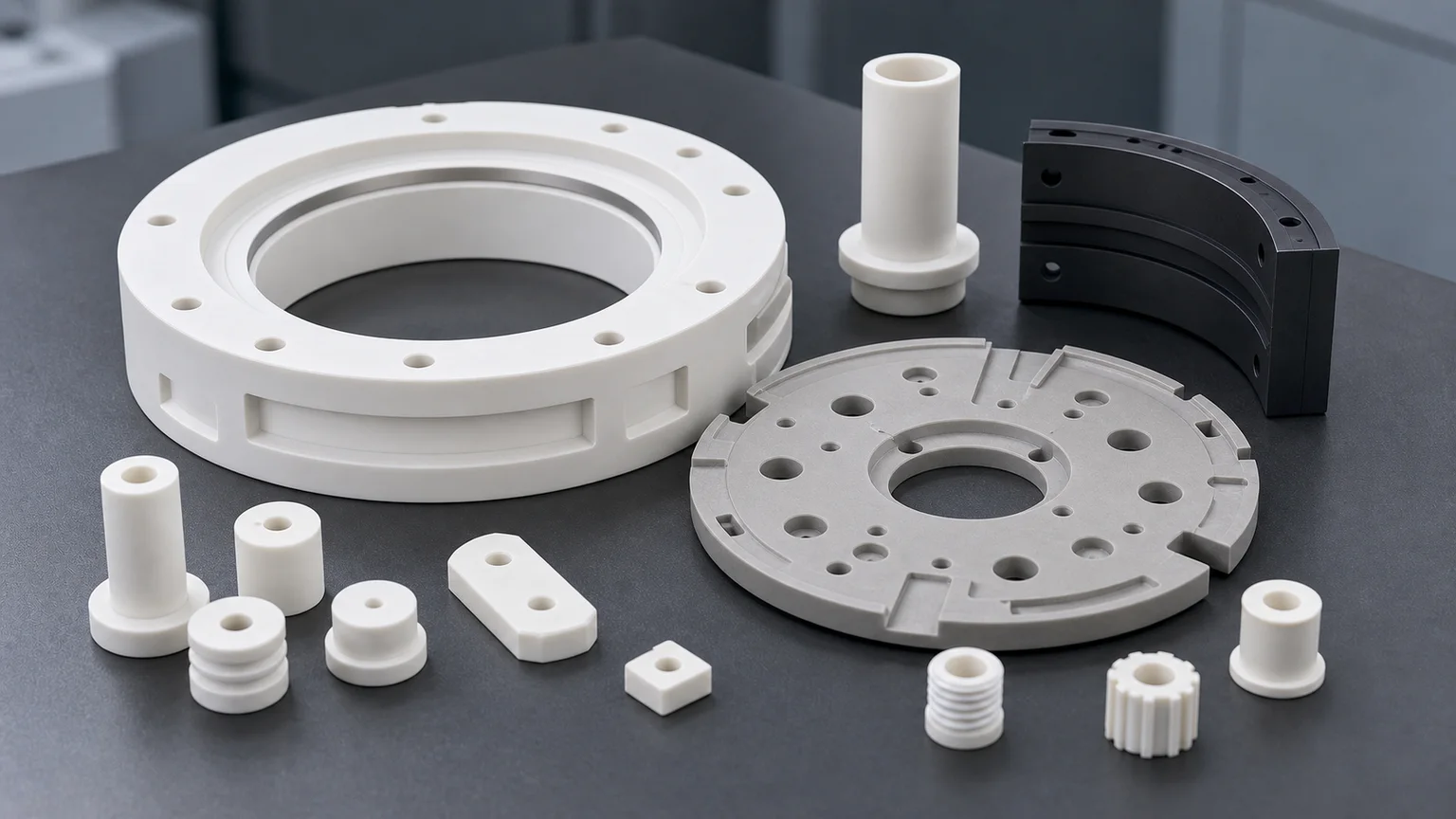
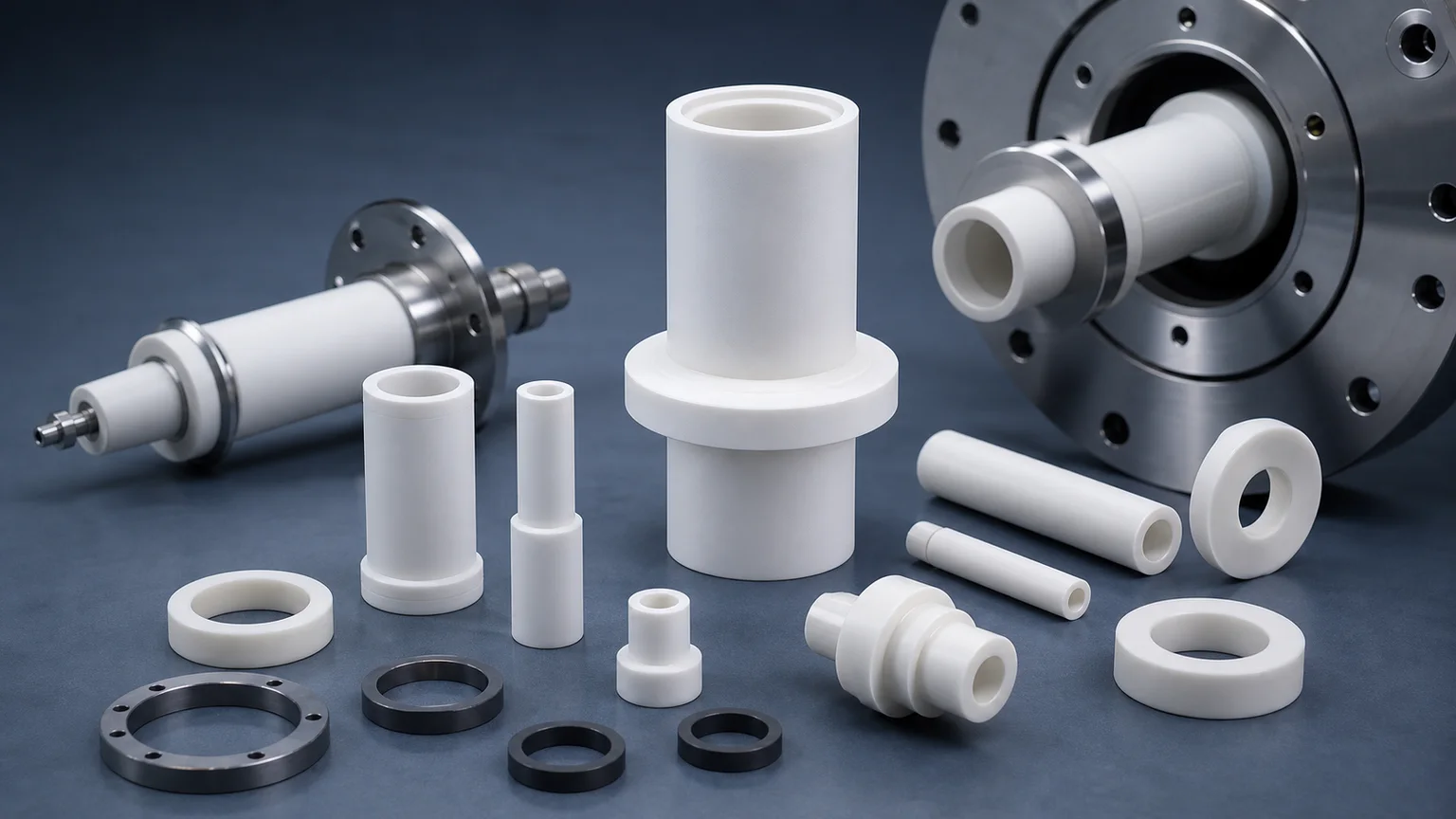
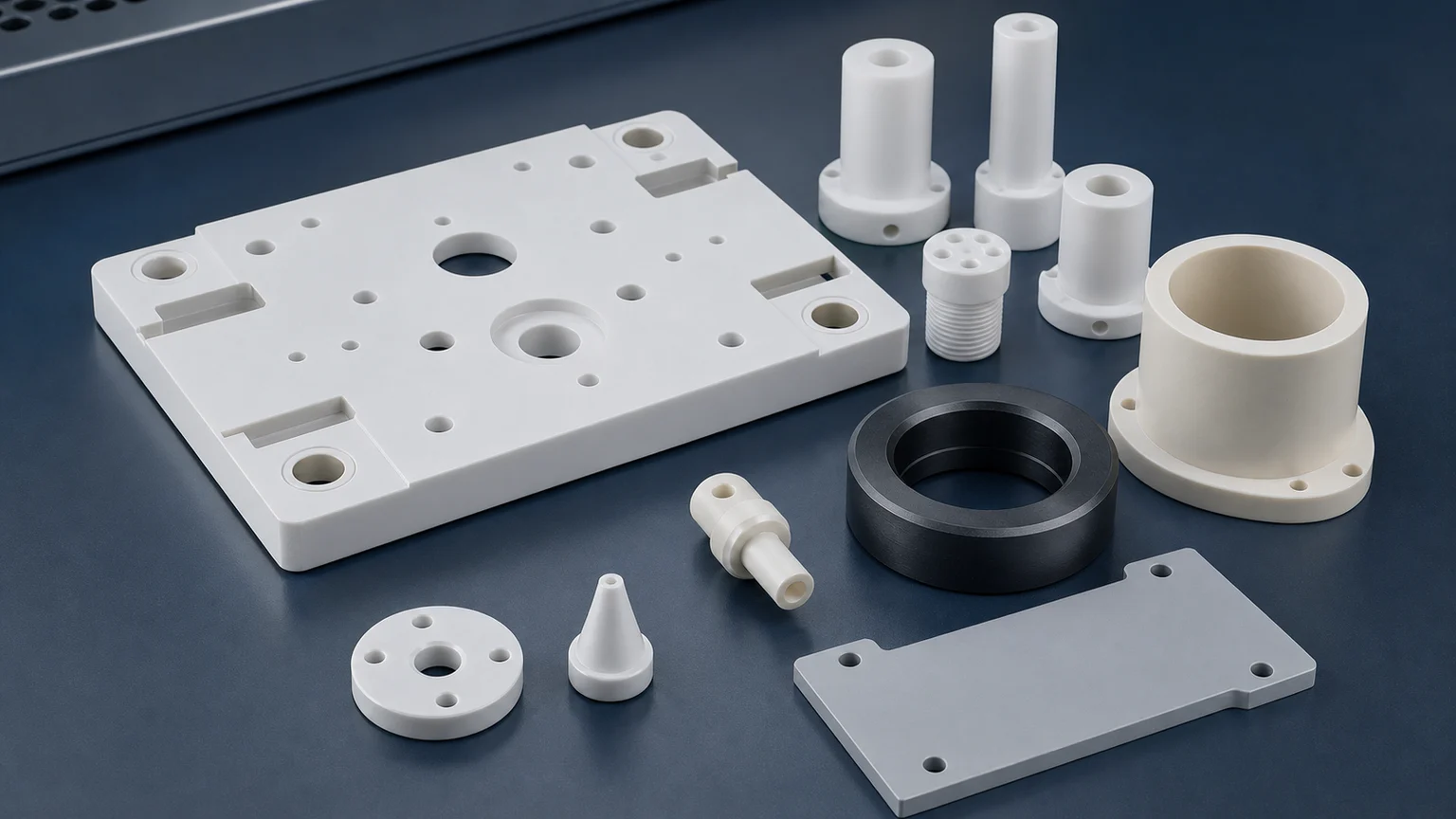
Alumina ceramic insulators appear in power electronics, test fixtures, high-voltage assemblies, industrial sensors, vacuum hardware, semiconductor-adjacent tools, RF and microwave fixtures, battery and charger equipment, analytical instruments, and automated manufacturing systems. The part name may be simple: alumina spacer, ceramic standoff, insulating sleeve, ceramic washer, feedthrough support, ceramic plate, ceramic housing, or custom insulating block.
The sourcing problem is not simple.
Two white alumina parts can look nearly identical in a catalog photo while requiring different machining routes. One may only set stack height. Another may protect a creepage path near a conductor. A third may sit in a vacuum assembly where bore chips, cleaning residue, and packaging matter. A fourth may be a power-module fixture where flatness and electrical isolation have to work together.
That is why alumina ceramic insulation RFQs should be reviewed as engineered components, not as generic ceramic shapes.
Where Alumina Insulation Enters Modern Equipment
Alumina insulators are used where an assembly needs electrical isolation together with a rigid, temperature-stable, wear-resistant, or cleanable component. Typical interfaces include conductors, bus hardware, sensors, vacuum feedthroughs, power-module fixtures, RF housings, test equipment, and automated production tools.
The application name alone is not enough for quotation. The drawing should identify the voltage path, mating conductors, bore or mounting fit, temperature, contamination risk, edge geometry, cleaning requirement, and the surfaces that will be inspected.
Common Alumina Ceramic Insulator Part Types
Alumina is often selected because it can combine electrical insulation, hardness, thermal stability, chemical resistance, and practical availability. CoorsTek describes alumina ceramics across industrial uses such as wear, electrical insulation, sensor, medical, and semiconductor applications. In machining work, those material advantages only matter when the geometry and acceptance requirements are clear.
| Part type | Typical function | RFQ details that change machining review |
|---|---|---|
| Alumina standoff | Separates conductors, boards, plates, or bus hardware | Length, end-face parallelism, bore quality, edge break, load path |
| Alumina spacer or washer | Controls stack height and electrical isolation | Thickness tolerance, flatness, ID/OD clearance, matched set requirement |
| Alumina insulating sleeve or tube | Isolates a pin, shaft, conductor, probe, or fastener | ID/OD concentricity, wall thickness, bore chips, chamfer, fit condition |
| Alumina insulating plate | Supports or isolates an electronic or test assembly | Flatness, hole pattern, slots, counterbores, local surface finish |
| Alumina feedthrough-adjacent support | Holds a conductor near vacuum or high-voltage zones | Bore fit, sealing interface, creepage path, cleaning, packaging |
| Alumina sensor or fixture housing | Protects electronics or locates a sensing element | Datum strategy, pockets, small holes, edge quality, cleaning, inspection plan |
This article focuses on electrical and electronic applications. For a broader alumina overview, use the precision machined alumina ceramic parts guide. For higher-voltage design language, use the high-voltage ceramic insulator RFQ guide. For vacuum bores, sealing lands, conductor fits, and creepage interfaces, use the ceramic feedthrough insulator guide. For plates, substrates, and dielectric supports controlled by an RF design, use the RF and microwave ceramic plate guide.
Start With The Insulation Function
The first RFQ question should be:
What failure mode is the alumina ceramic insulator supposed to prevent?
The answer may be electrical shorting, tracking, arcing, leakage, heat-related polymer failure, mechanical wear, contamination on the surface, assembly drift, or breakdown near a high-field edge. A drawing without this context can still be machined, but it may not be quoted against the real functional risk.
Send the following context when available:
- Working voltage, peak voltage, AC/DC condition, pulse condition, or frequency range.
- Creepage and clearance requirement if the design controls it.
- Conductor locations, fastener locations, metallized areas, coatings, or mating hardware.
- Temperature range and thermal cycling.
- Humidity, vacuum, oil, coolant, chemical vapor, plasma-adjacent, or cleanroom condition.
- Mechanical load, clamp force, vibration, or expected replacement cycle.
- Whether the part is a prototype, production item, test fixture, or qualified replacement part.
This does not make the ceramic machining supplier responsible for the electrical design. It gives the supplier enough information to protect the surfaces and edges that the electrical design depends on.
Alumina Grade, Purity, And Blank Route
The word “alumina” is not enough for a reliable quote. Alumina parts may differ by purity, grain structure, density, color, finishability, cost, and available blank form. A part that only says “ceramic insulator” forces the supplier to guess.
Useful RFQ distinctions include:
- General industrial alumina for cost-sensitive insulation, spacers, and fixtures.
- Higher-purity alumina when cleanliness, dielectric performance, or process exposure matters.
- Fine-grain alumina when small features, edge quality, or surface finish are important.
- Customer-specified grade when the part must match an approved design.
- Customer-supplied blank versus supplier-sourced blank.
Blank state also matters. Green machining before sintering may support certain shapes, but final size and critical surfaces often require post-sinter grinding or lapping. Fired alumina is hard and brittle; tight bores, flat datum faces, slots, thin walls, and controlled chamfers usually require abrasive machining rather than metal-style cutting.
Use the ceramic material selection guide when alumina is being compared with aluminum nitride, zirconia, silicon nitride, silicon carbide, Macor, or boron nitride.
Creepage, Clearance, And Edge Geometry
Creepage and clearance are electrical design terms, but they become machining issues when the path depends on slots, steps, grooves, holes, standoffs, sleeves, ribs, or edge radii.
Clarify these drawing details:
- Which faces and edges sit between conductors.
- Whether the outside profile is part of the insulation path or only clearance geometry.
- Minimum wall thickness around holes, slots, and bores.
- Whether sharp internal corners are allowed.
- Which edges require controlled chamfer or radius.
- Whether chips on a hole edge, slot edge, or outside edge are acceptable.
- Whether surface finish or cleaning is important on the insulation path.
Ceramics do not behave like ductile plastics or metals at sharp edges. A very thin rib, knife edge, or sharp inside corner can raise machining cost and fracture risk. If the creepage path depends on a fragile feature, review the ceramic CNC design rules guide before locking the drawing.
Tolerance Strategy For Alumina Insulators
A common mistake is applying tight tolerance to every surface because the part is “precision ceramic.” That usually increases cost without improving electrical function.
Put the tight requirements where they matter:
| Functional need | Usually important dimensions | Often less critical if only clearance |
|---|---|---|
| Stack height control | Length, thickness, end-face parallelism | Outside profile or cosmetic faces |
| Fastener or conductor isolation | Bore diameter, wall thickness, chamfer, edge chips | Non-contact outside diameter |
| Board or fixture mounting | Hole location, counterbore depth, local flatness | Unused back face or open clearance area |
| Creepage or clearance protection | Slot width, rib thickness, edge radius, surface | Decorative edges that do not face conductors |
| Sensor or test fixture alignment | Datum faces, pin holes, pocket position | Non-functional pockets or visual outside geometry |
For early drawings, mark critical-to-function surfaces directly. Use local notes for flatness, parallelism, bore tolerance, Ra, and chip criteria. A blanket tight tolerance block can make quotation slower and less accurate.
The ceramic tolerance capability map is the right internal reference when deciding which features need diamond grinding, lapping, CMM evidence, optical inspection, or simple visual acceptance.
Surface Finish, Cleanliness, And Packaging
For alumina ceramic insulators, surface finish is not only cosmetic. Surface condition may influence assembly, contact stability, cleaning, particle control, and the customer’s electrical test.
Define finish only where it has a function:
- End faces that control stack height or contact pressure.
- Bore surfaces that touch pins, sleeves, conductors, or shafts.
- Creepage surfaces that must remain clean and chip-controlled.
- Thermal or electrical fixture interfaces.
- Vacuum or sensor-adjacent surfaces.
- Lapped or polished zones if the customer has a real acceptance reason.
Avoid specifying “polish all surfaces” unless the whole surface truly needs that condition. It can add cost while failing to define the edge quality, cleaning method, or packaging protection that actually matters.
If Ra, lapping, polishing, or grinding damage affects function, use the surface finish and subsurface damage guide.
When Alumina Is Not The Best Insulating Ceramic
Alumina is a strong default for many electrical insulation parts, but it is not the only option.
| Alternative material | When it may be reviewed | Caution |
|---|---|---|
| Aluminum nitride | Electrical insulation plus high thermal conductivity | Flatness, edge chips, moisture handling, and thermal-interface finish matter |
| Silicon nitride | Higher mechanical load, thermal shock, or wear-adjacent support | Cost and geometry review may be different from alumina |
| Zirconia | Tougher compact sleeves, pins, or mechanical parts | Electrical and thermal context still needs review |
| Macor | Fast prototype insulators and lab fixtures | Prototype success does not automatically transfer to fired alumina production |
| Boron nitride | High-temperature insulation and special thermal environments | Mechanical strength, fragility, and application exposure need careful review |
For power electronics, AlN may be a better fit when thermal conductivity is as important as insulation. Use the AI data center power electronics ceramic machining guide when the part sits near SiC modules, thermal interfaces, insulating fixtures, or test sockets.
Inspection Evidence For Alumina Ceramic Insulator RFQs
Inspection should prove the features that control assembly and electrical function.
| Requirement | Useful evidence to request or discuss |
|---|---|
| Bore fit | Pin gauge, bore gauge, CMM, roundness check, or ID report |
| Stack height | Thickness or length report, end-face parallelism, matched set data |
| Hole pattern | CMM or optical inspection of hole position, counterbore, and slot geometry |
| Creepage features | Dimensional report for slot width, rib thickness, spacing, and chamfers |
| Edge quality | Visual chip standard, microscope image, maximum chip size, edge radius |
| Surface finish | Ra report on named functional faces, not every cosmetic surface |
| Cleaning / packaging | Defined cleaning route, bagging, separator sheets, handling note |
If the final electrical test is performed by the customer, state that in the RFQ. The ceramic supplier can then focus on dimensional, visual, surface, and packaging evidence that supports that test.
RFQ Checklist For Alumina Ceramic Insulators
Send the following:
- Drawing and STEP file.
- Material target, purity or grade if fixed, and whether equivalent review is allowed.
- Part type: standoff, spacer, sleeve, plate, washer, housing, feedthrough support, or custom insulator.
- Voltage, creepage, clearance, conductor location, or insulation function if known.
- Functional surfaces and non-critical clearance surfaces.
- Bore, hole, slot, wall-thickness, and edge requirements.
- Flatness, parallelism, Ra, lapping, or local finish notes.
- Cleaning, packaging, and contamination requirements.
- Inspection report expectations.
- Quantity, prototype or production status, and target timing.
Use the custom ceramic CNC machining RFQ checklist before sending the project. A quote-ready alumina insulator request is not only a material name. It is a controlled drawing package with function, geometry, tolerance, surface, edge, cleaning, packaging, and inspection expectations clear enough for review.
Bottom Line
Alumina ceramic insulators are high-value industrial components when the part needs electrical isolation, temperature capability, dimensional stability, and precision-machined features in one package. The strongest RFQs do not ask for “a ceramic spacer” in isolation. They define the insulation path, assembly fit, edge quality, functional surfaces, inspection evidence, and cleaning or packaging requirements.
That is how an alumina standoff, sleeve, spacer, plate, or housing becomes a manufacturable precision ceramic component instead of a risky catalog assumption.
- Alumina
- Ceramic insulators
- Electrical insulation
- Precision ceramic machining
- Power electronics ceramics
- RFQ checklist