Materials
Advanced ceramic materials for precision machining
If you know the ceramic grade and blank source, send them. If not, send the operating environment, failure mode, tolerance targets, and inspection needs so a material route can be reviewed.
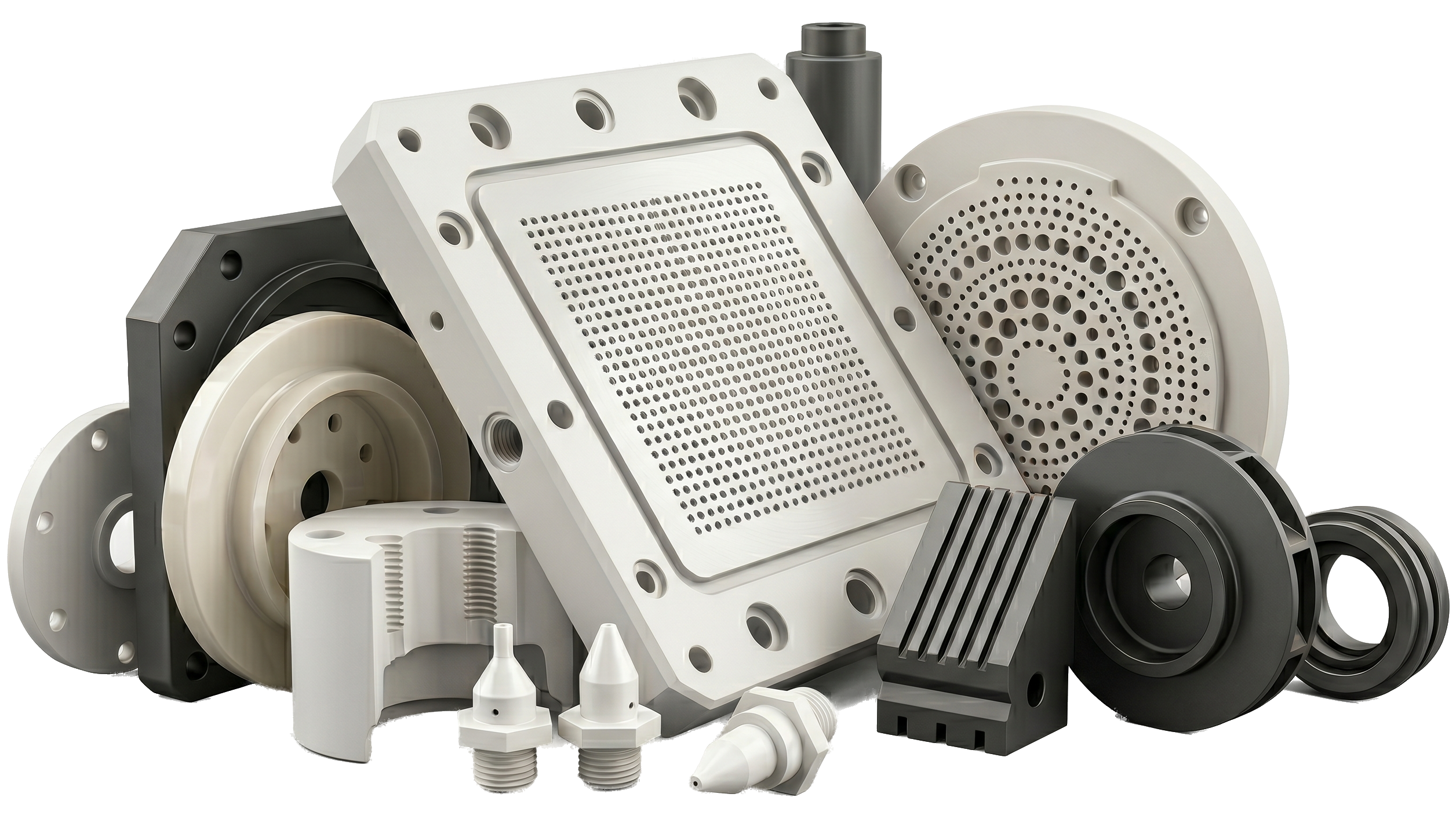
Common material paths
The right ceramic route is selected against the function of the part, not by material name alone.
95%, 97%, 99%, 99.5%, 99.8% and application-specific grades. Review focus: Purity, dielectric or wear duty, thermal environment, blank form, metallization or joining, and finish requirements.
Yttria-, ceria-, or magnesia-stabilized systems by grade. Review focus: Stabilizer system, strength and aging trade-offs, color, wear pair, surface finish, and operating environment.
Composition and grade to be confirmed. Review focus: Wear, toughness, media, part section, finish, and material certificate requirements.
Application-specific dense grades. Review focus: Load, impact, thermal cycling, wear interface, surface integrity, and inspection evidence.
Sintered, reaction-bonded, or other route by project. Review focus: Chemistry, temperature, stiffness, wear, sealing surface, blank availability, and finishing route.
Thermal-management grades by supplier data. Review focus: Thermal path, electrical isolation, moisture sensitivity, flatness, finish, and joining requirements.
Machinable and composite grades by application. Review focus: Temperature, atmosphere, electrical function, mechanical loading, contamination, and grade-specific limits.
Specified machinable glass-ceramic grade. Review focus: Thermal cycle, vacuum or electrical duty, thread and edge design, finish, and material traceability.
Project-specific. Review focus: Optical or thermal requirement, purity, geometry, surface condition, handling, and inspection method.
Select material by failure mode, not by name alone
A ceramic grade should be chosen against the real constraint: wear, chipping, thermal shock, dielectric performance, vacuum, chemical exposure, machinability, and available blank form.
Mechanical risk
Impact, tensile stress, unsupported thin walls, and sharp transitions can make a high-hardness ceramic fail early.
Thermal and chemical environment
Temperature profile, ramp rate, atmosphere, media chemistry, and erosion condition affect both material and design choices.
Finishability
A material that is excellent in service may be expensive to grind or polish to tight Ra and tolerance targets.
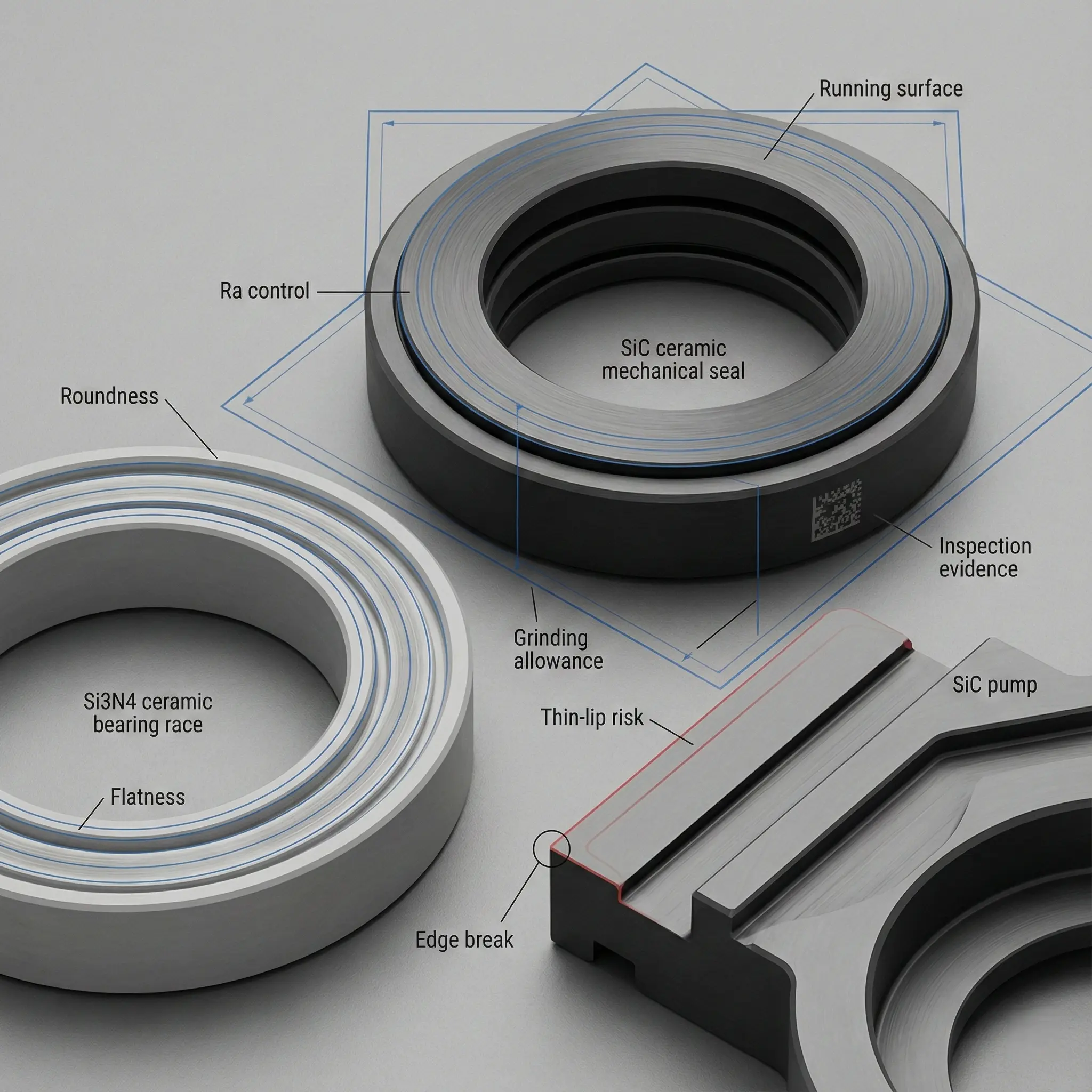
Material machining guides
Use these pages as the internal route from material name to machining risk, application fit, tolerance scope, surface finish, and RFQ inputs.
Compare ceramic families by failure mode, blank state, feature risk, finishability, and RFQ evidence.
Review alumina insulators, bushings, plates, spacers, sleeves, fixtures, purity notes, and finished faces.
Review zirconia pins, plungers, bushings, sleeves, wear parts, toughness limits, tolerances, and surface finish.
Review Si3N4 rollers, shafts, sleeves, guide parts, thermal shock exposure, roundness, and inspection needs.
Review SiC seal faces, valve seats, pump sleeves, nozzles, wear plates, semiconductor parts, and lapped faces.
Review AlN heat spreaders, insulating plates, thermal-interface flatness, cleanliness, and power electronics use.
Review Macor prototype parts, lab fixtures, insulating hardware, threads, fast iteration, and production limits.
Review BN high-temperature insulation parts, furnace fixtures, molten-metal-adjacent nozzles, spacers, and tubes.
Use the process overview when material choice, grinding route, tolerances, surface finish, and inspection overlap.
Not sure which ceramic material fits the part?
Send the CAD package, quantity, available blank information, operating environment, failure mode, and critical requirements so the material route can be reviewed.