Applications
Use ceramic CNC where geometry, surface integrity, and inspection decide success
Start from the application need, then define material grade, datums, functional faces, edge condition, surface finish, and evidence required for acceptance.
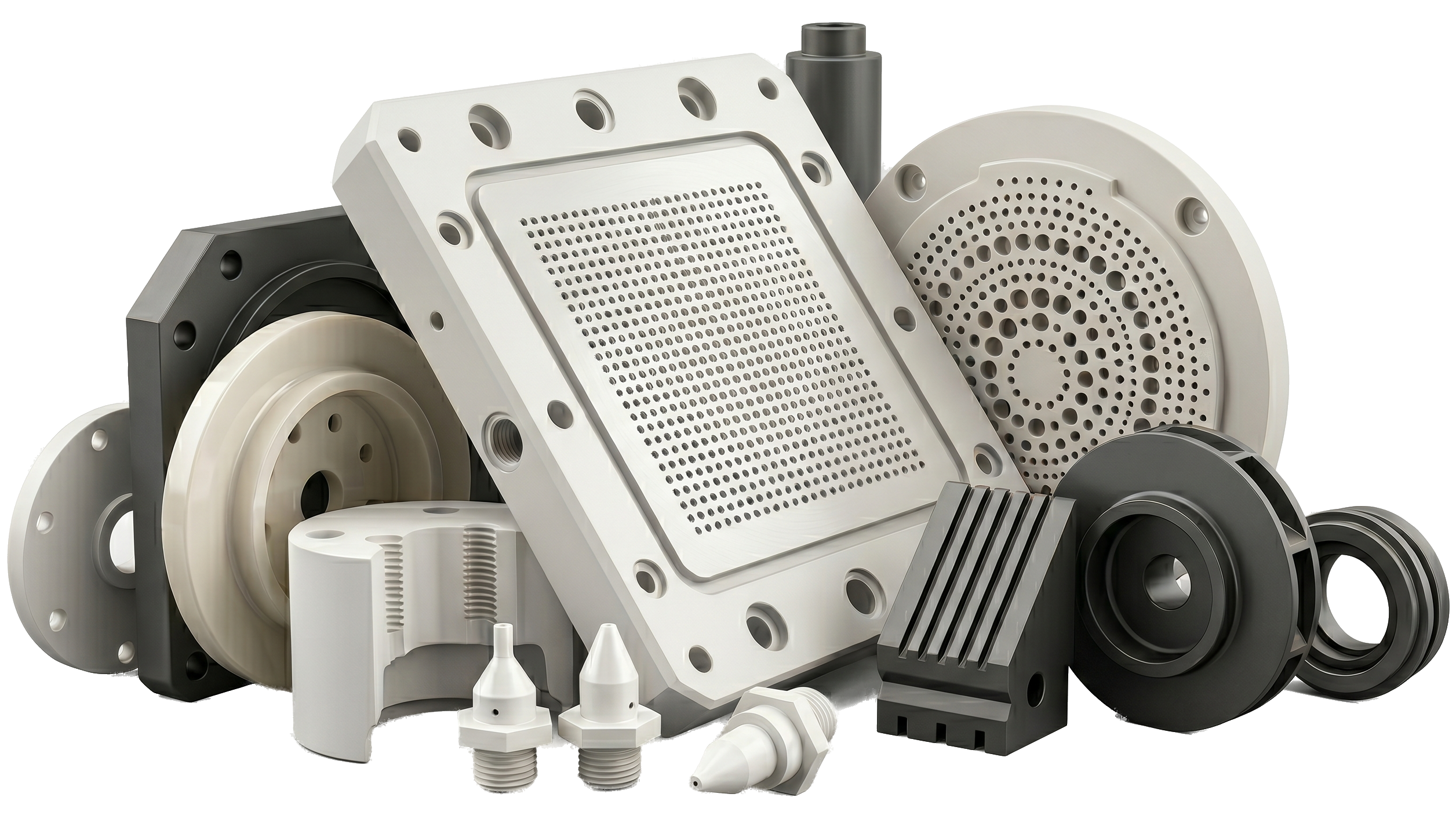
Application families
These categories mirror the RFQ patterns most likely to need ceramic machining feasibility review before price and schedule are confirmed.
Wafer-handling parts, vacuum chucks, process rings, plasma insulators, nozzles, and thermal components organized by functional and inspection risk.
Alumina insulators, AlN heat spreaders, feedthrough sleeves, high-voltage spacers, and power-module fixtures reviewed by interface.
Bushings, seal faces, valve seats, balls, plungers, sleeves, guide rails, and nozzles mapped to wear, media, fit, and leakage risks.
Fixture plates, locating pins, metrology references, sensor parts, vacuum insulators, cleanroom hardware, and Macor prototypes.
Sub-millimeter holes, jets, orifices, and restrictors reviewed for breakout, taper, concentricity, hole-to-edge distance, and optical or pin-gauge acceptance.
Lapped surfaces, precision bores, coaxial sleeves, metrology plates, and alignment fixtures where the datum scheme must be stable and inspectable.
Machinable features that need realistic wall thickness, internal radii, slot geometry, chamfer or radius control, and clear chip criteria before a quote is meaningful.
Heat-resistant fixtures, spacers, prototypes, and small-batch programs where the first article locks material grade, process route, inspection packet, and packaging.
Use cases
Application-specific review
Each case below is mapped to feature feasibility, failure modes, inspection logic, and RFQ inputs.
Semiconductor Ceramic Components
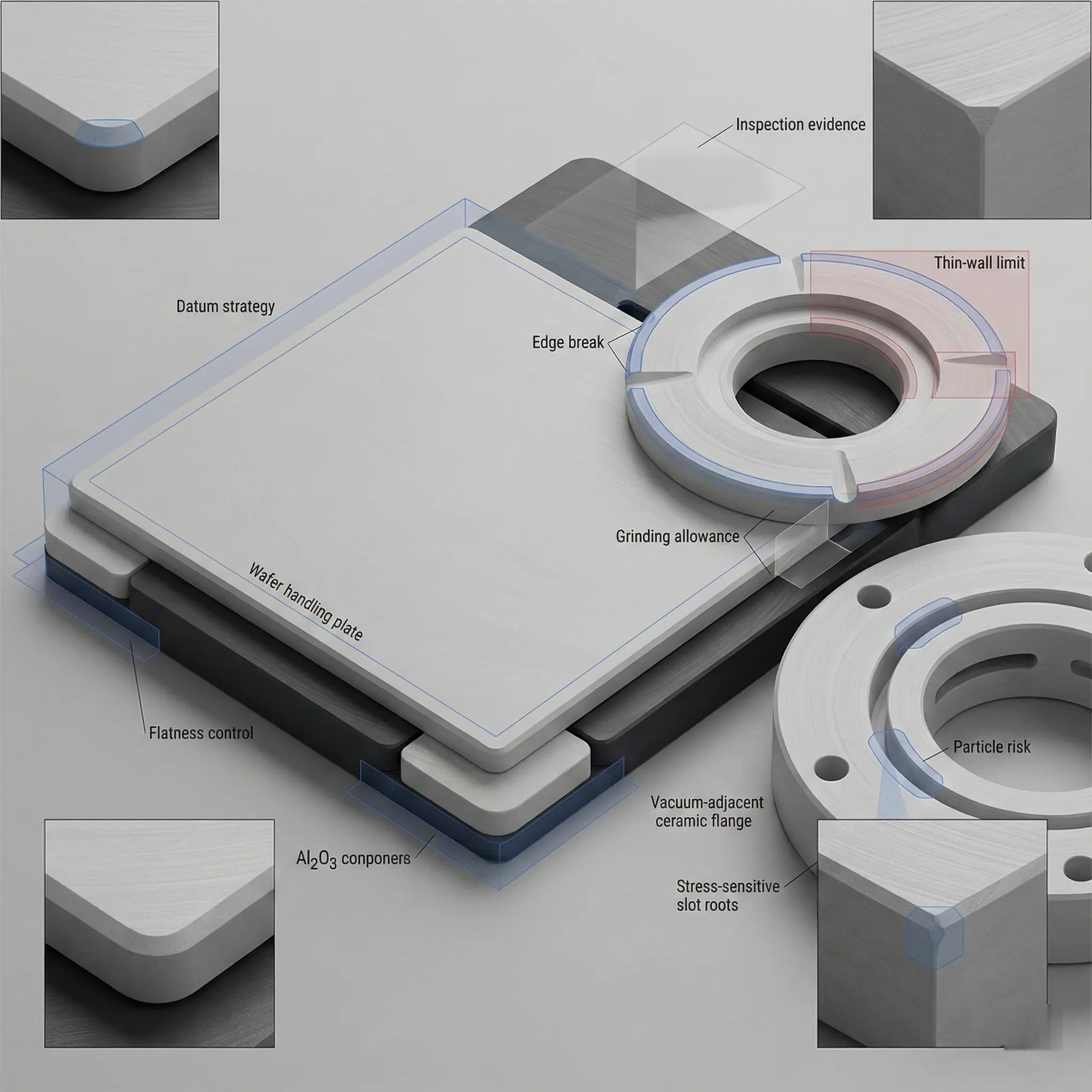
Semiconductor ceramic parts are judged by dimensional stability, particle-sensitive edge and finish requirements, flatness, edge quality, and repeatable interfaces. Common requests include wafer handling parts, insulating spacers, nozzles, focus-ring-adjacent hardware, and vacuum-side components in Al2O3 and SiC.
Risk drivers
Thin walls, slots, pocket radii, particle-sensitive edges, and contamination-aware finishing determine whether the drawing is buildable.
Process focus
We plan datum creation, diamond grinding allowance, edge break, and finish-critical surfaces before treating the RFQ as a price-only request.
Acceptance evidence
CMM, profile checks, key-dimension reports, surface finish notes, and visual edge criteria can be aligned to equipment-level acceptance.
Ceramic Sealing Faces and Valve Seats
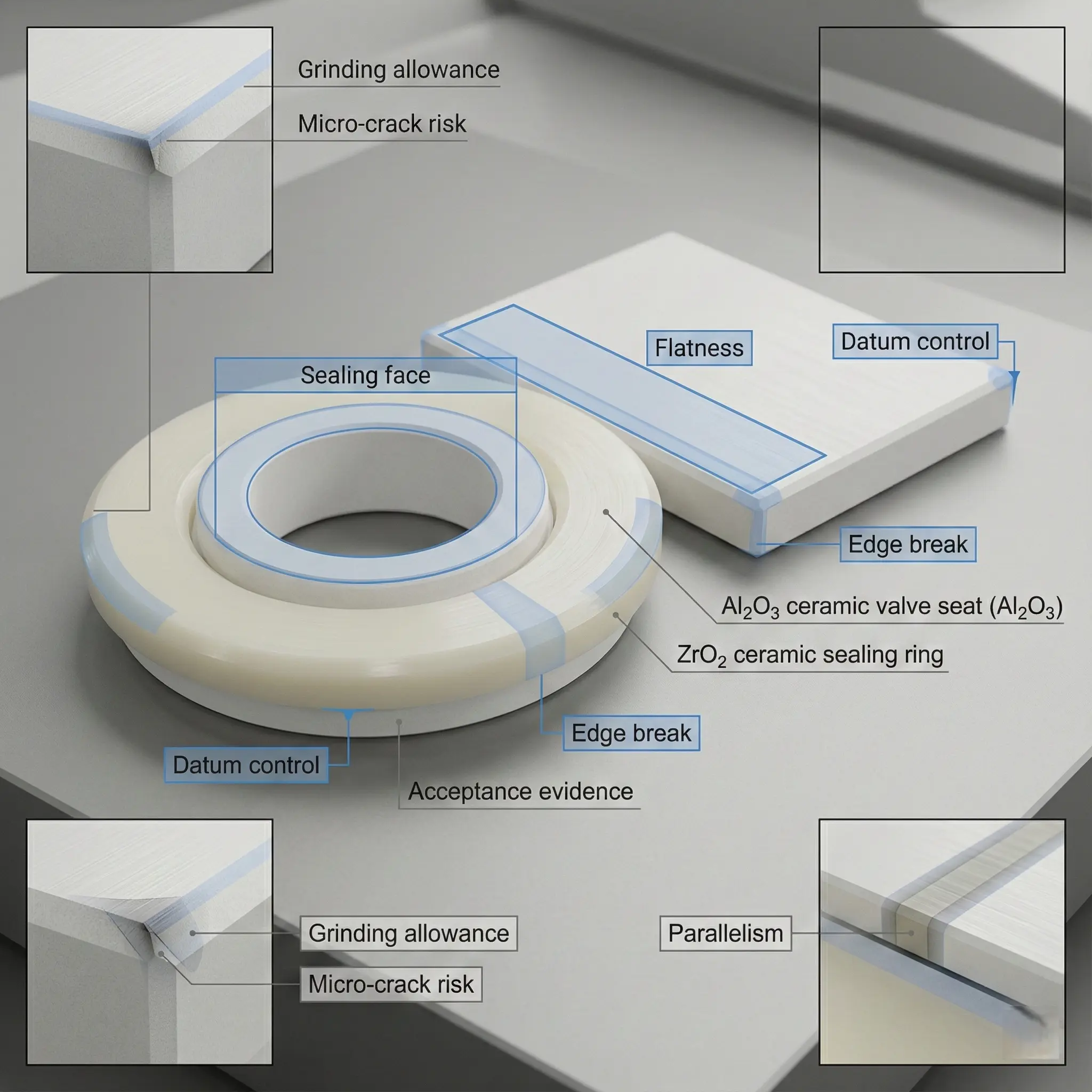
ZrO2 and Al2O3 valve seats, sealing rings, and mating faces are usually reviewed around flatness, parallelism, Ra, edge condition, and the grinding route.
Functional surfaces
Seal lands, lead-in chamfers, mating bands, and reference faces should be marked so precision is applied where it matters.
Failure modes
Edge chipping, hidden micro-cracks, waviness, and tolerance drift can create leak or wear failures even when nominal size passes.
Inspection path
Flatness mapping, surface finish readings, CMM datum checks, and chip criteria reduce late acceptance disputes.
Micro-Drilling and Precision Orifices
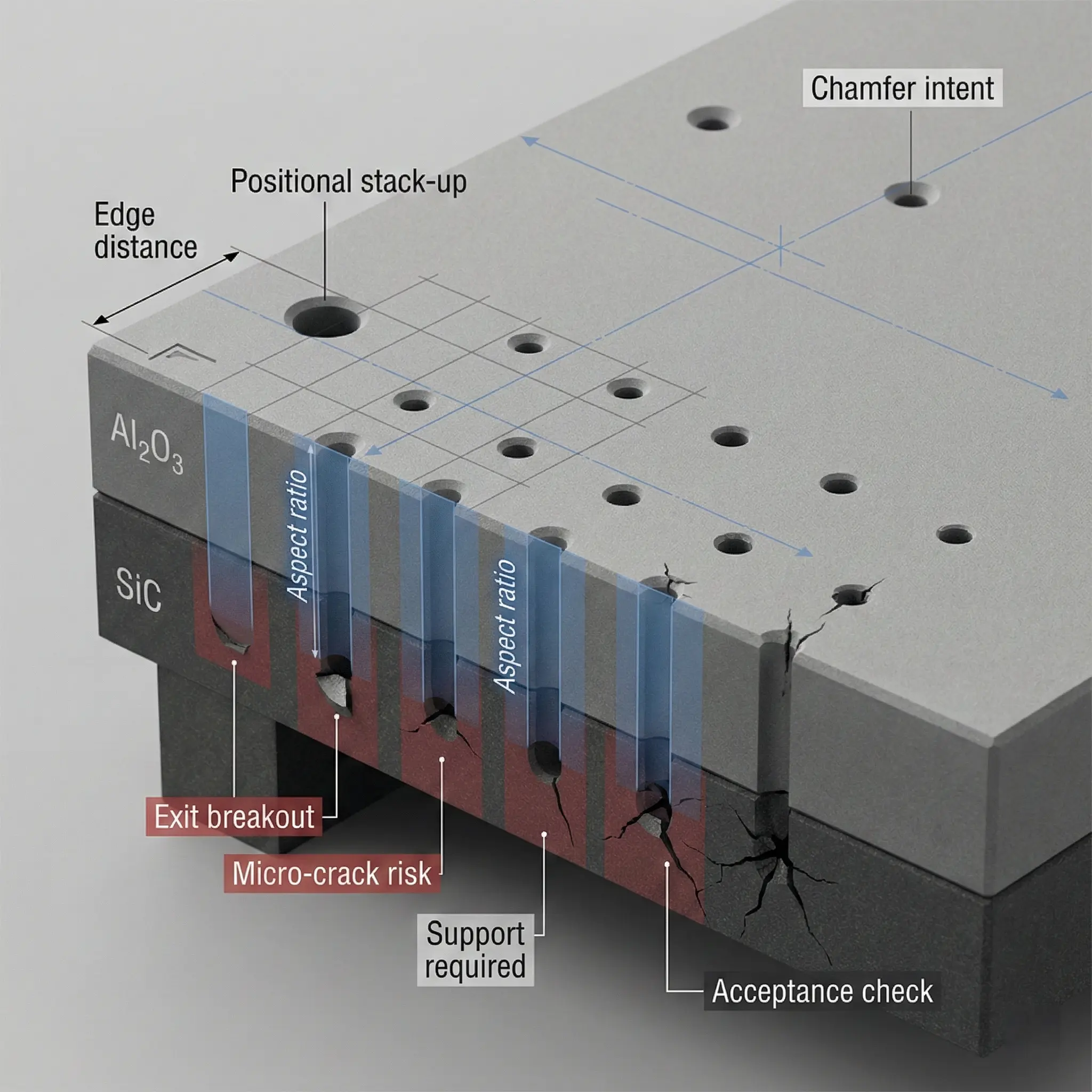
Sub-millimeter holes in Al2O3, Si3N4, and SiC are limited by brittle fracture, exit breakout, aspect ratio, taper, and measurable position relative to stable datums.
Design constraints
Diameter, depth, hole-to-edge distance, ligament width, entry and exit support, and allowable taper should be specified together.
Route options
Diamond drilling, ultrasonic machining, laser drilling, or green-state machining may fit depending on feature size and damage allowance.
Measurable acceptance
Optical measurement, pin gauges, CMM position evidence, or CT review for internal risk can be considered before the quote is finalized.
Ceramic Insulators and High-Voltage Interfaces
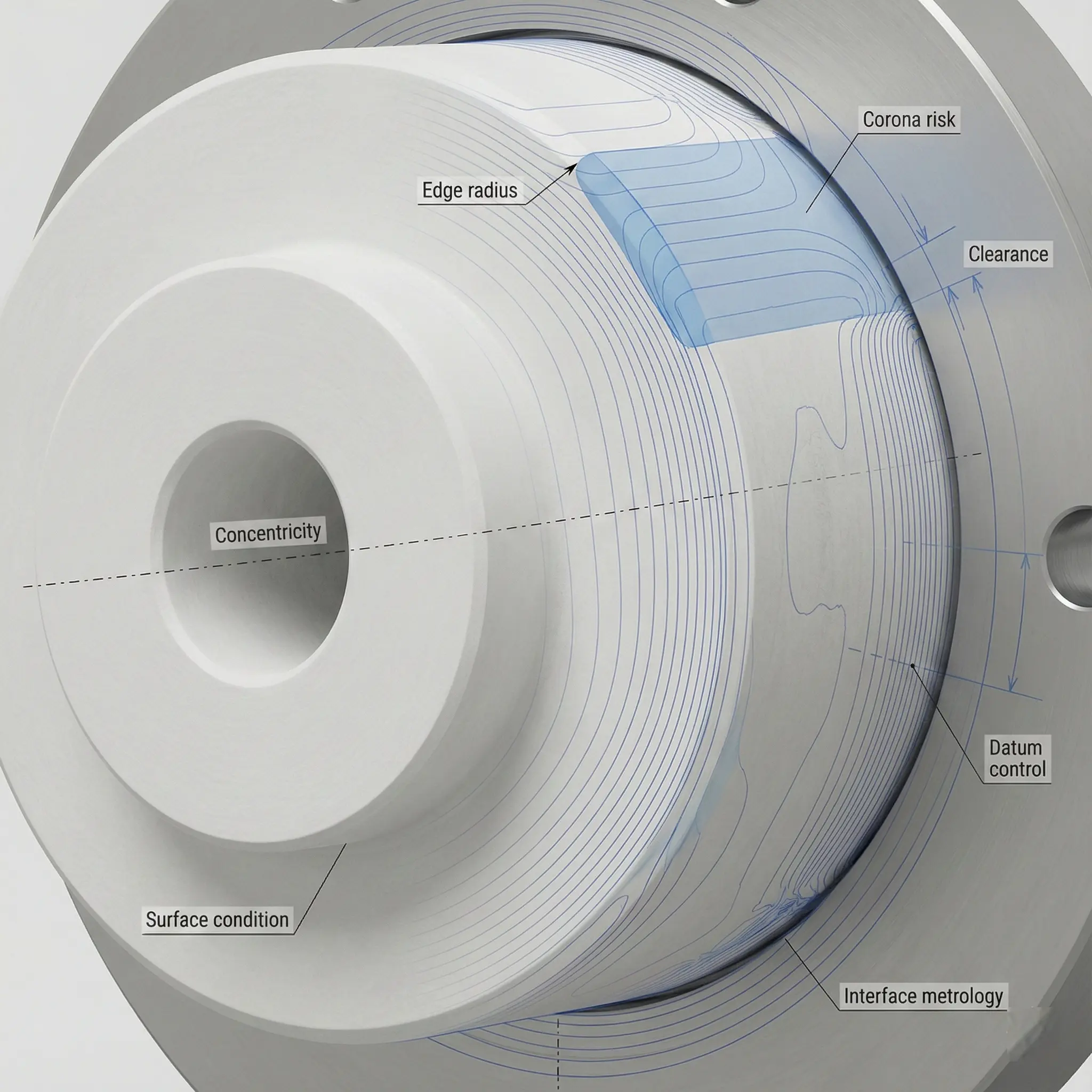
Electrical ceramic parts are performance-limited by edge radius, concentricity, creepage geometry, surface condition, and mating flatness, not by bulk dielectric strength alone.
Typical parts
Alumina standoffs, feedthrough insulators, insulating sleeves, vacuum interface parts, and high-voltage support hardware.
Risk controls
Sharp transitions, slot corners, chips, and surface contamination can elevate tracking, corona, or assembly stress.
Quote inputs
Send voltage class, clearance/creepage intent, mating surfaces, temperature range, and inspection or surface requirements.
Wear Parts: Seals, Bearings, and Pump Hardware
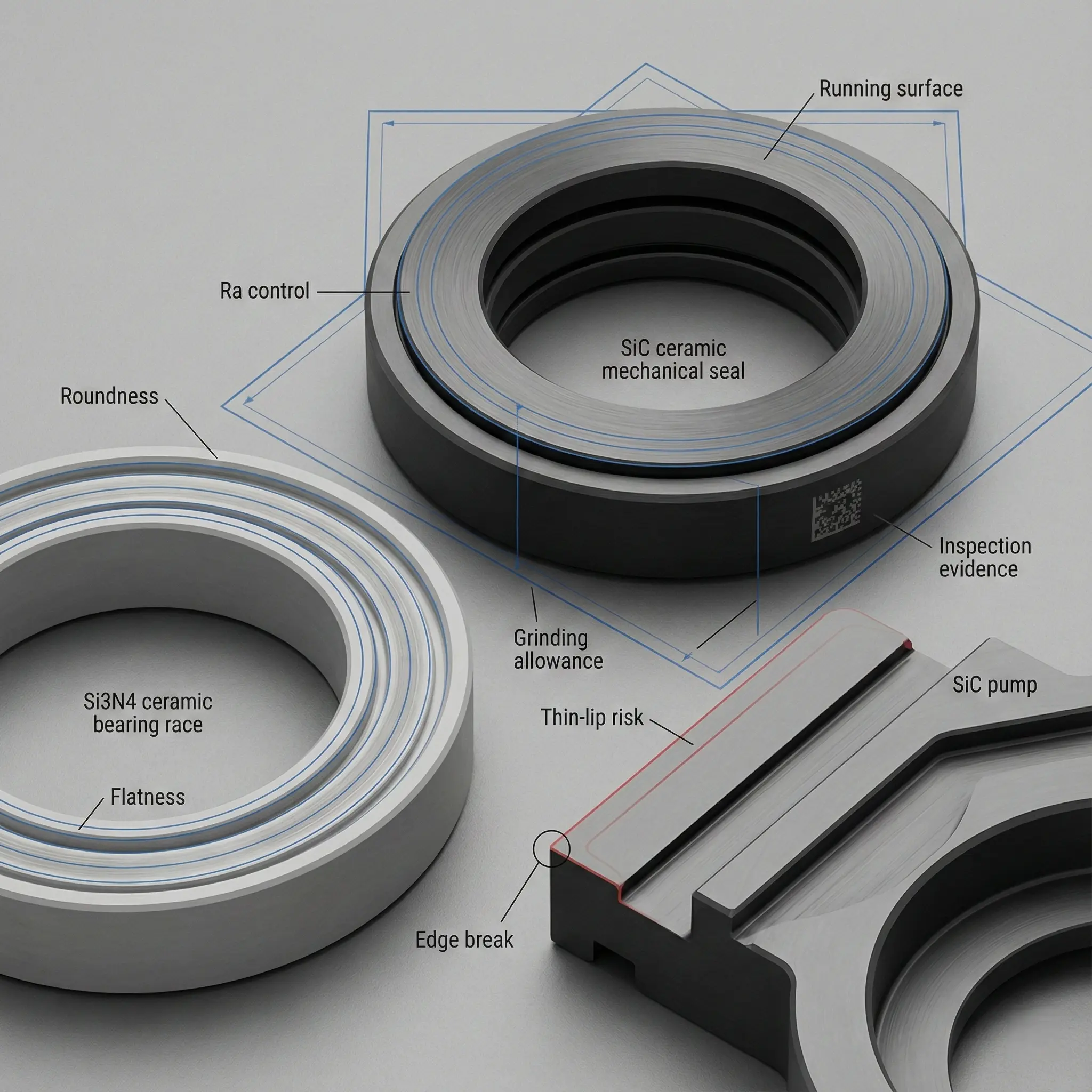
SiC, Si3N4, alumina, and zirconia wear parts need geometry and surface integrity that match the dominant wear mode: abrasion, erosion, impact, thermal cycling, or chemical attack.
Running surfaces
Roundness, flatness, Ra, groove condition, and edge stability often matter more than the nominal outside size.
Material fit
SiC may fit harsh media and high wear; Si3N4 may help with mechanical reliability and thermal shock; zirconia can reduce chipping risk.
Evidence
Surface finish, roundness/profile checks, datum-based dimensions, and lot traceability help align acceptance expectations.
Pump, Valve, and Dispensing Ceramic Components
Alumina and zirconia plungers, sleeves, valve seats, metering inserts, and dispensing-valve components are reviewed by cylindrical fit, sealing behavior, media compatibility, and inspection evidence.
Cylindrical interfaces
Plunger OD, sleeve ID, coaxiality, straightness, roundness, and sliding surface finish usually decide fit and leakage risk.
Fluid-control details
Media chemistry, abrasive particles, viscosity, pressure, cleaning method, and contamination limits affect material, finish, and packaging.
RFQ evidence
Surface roughness, roundness/profile checks, lapped seat notes, visual edge criteria, and protected packaging should match the functional risk.
Precision Flats, Parallels, and Lapped Surfaces
Flatness and parallelism in ceramics require stable datums, controlled removal, and grinding or lapping sequences that avoid warpage and subsurface damage.
Typical parts
Sealing plates, vacuum interfaces, optical-adjacent fixtures, metrology references, and spacer stacks.
Cost trigger
Tight flatness on multiple faces adds setup, fixture, lapping, cleaning, and repeated measurement time.
Specification guidance
Apply tight requirements only to functional faces, then define flatness mapping and Ra evidence for those faces.

Slots, Pockets, and Thin-Wall Geometry
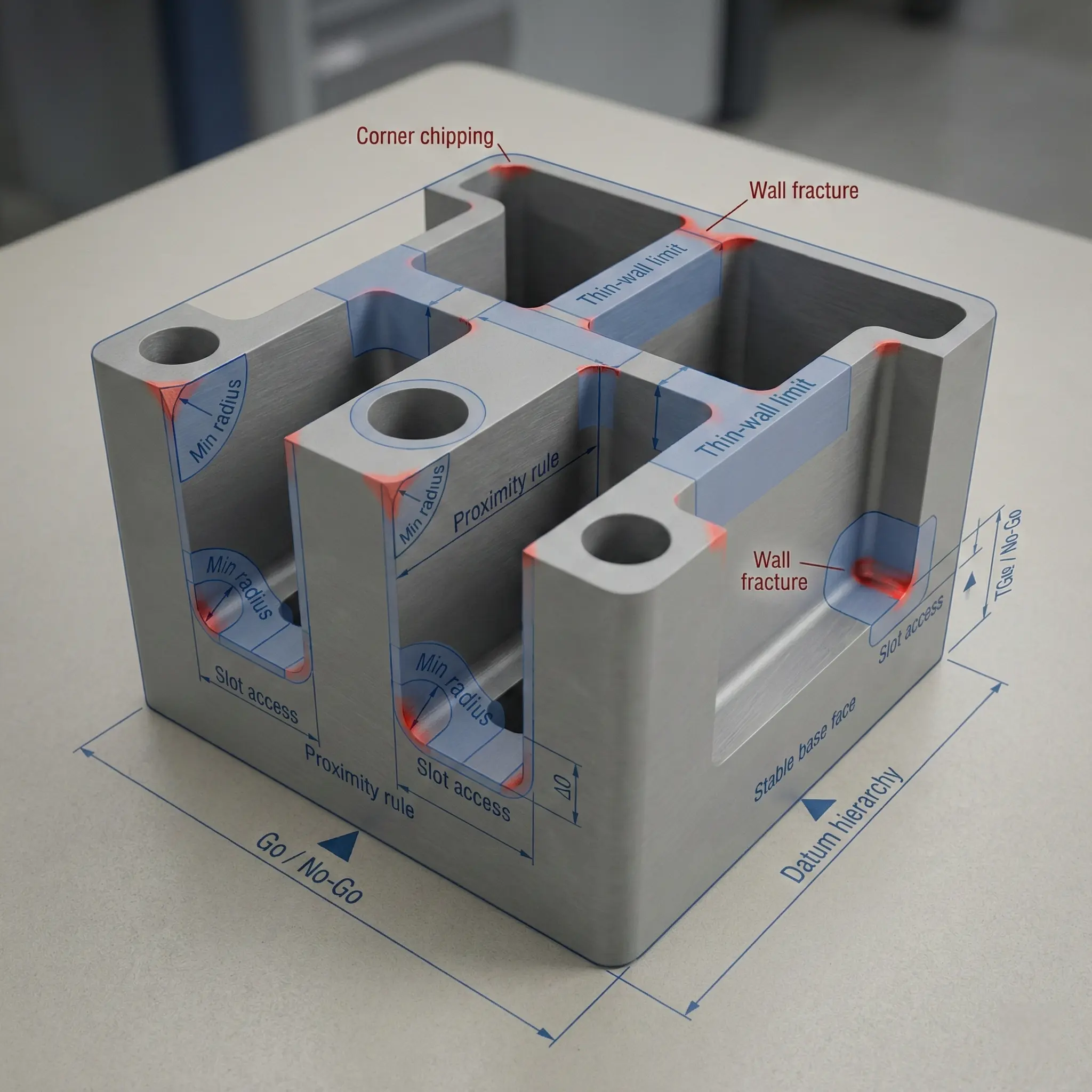
Complex pockets and thin walls are feasible only when the CAD respects tool access, minimum internal radii, wall stability, and brittle-fracture behavior.
Geometry limits
Minimum slot width, radius, wall thickness, step-down, hole proximity, and unsupported length should be reviewed early.
Damage modes
Corner chipping, wall fracture, micro-cracks, and tolerance drift often appear when sharp CAD features are treated like metal machining.
Drawing notes
Mark critical dimensions, allowable edge break, and surfaces that can remain as-sintered or standard-ground.
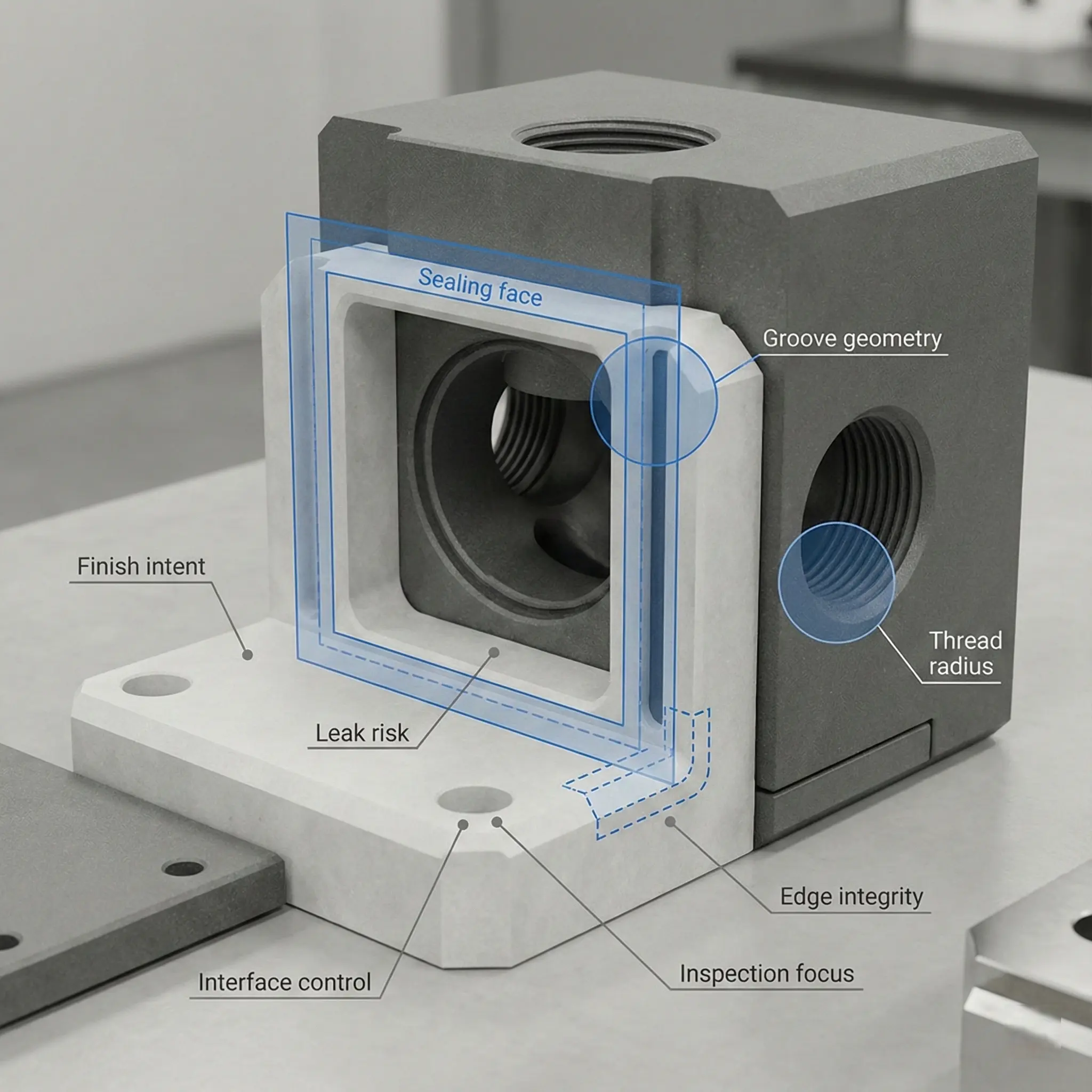
Chemical-Resistant Ceramic Hardware
Al2O3, SiC, and selected advanced ceramics are often considered for corrosive or abrasive media when sealing geometry, surface finish, and edge integrity are specified clearly.
Typical components
Flow components, corrosion-resistant plates, ceramic fixtures, pump parts, and process-contact hardware.
Interface control
Threads, grooves, seal faces, port transitions, and assembly edges need manufacturable geometry and defined acceptance.
RFQ inputs
Provide media chemistry, temperature, flow/erosion condition, cleaning method, and critical leak or wear surfaces.
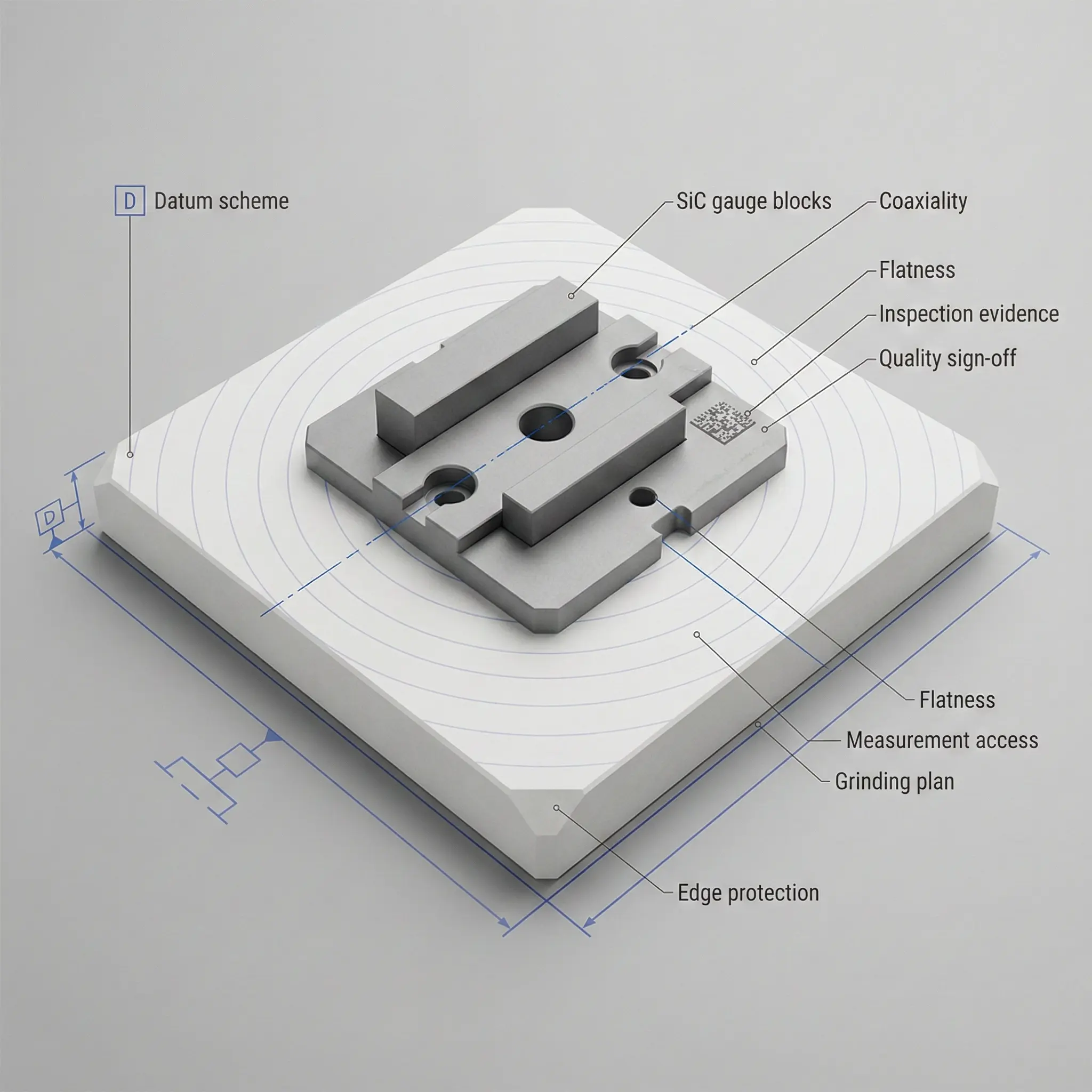
Metrology Fixtures and Reference Geometry
Ceramic metrology parts are purchased for stability and repeatability: datums must be meaningful, bores must be coaxial, and flats must remain stable.
Typical parts
Reference plates, gauge blocks, inspection fixtures, precision spacers, datum pads, and alignment bushings.
Measurement first
If a feature cannot be inspected repeatably, it should not become the acceptance basis for a precision program.
Delivery package
CMM reports, profile checks, flatness mapping, and protected packaging can document the agreed sign-off evidence.
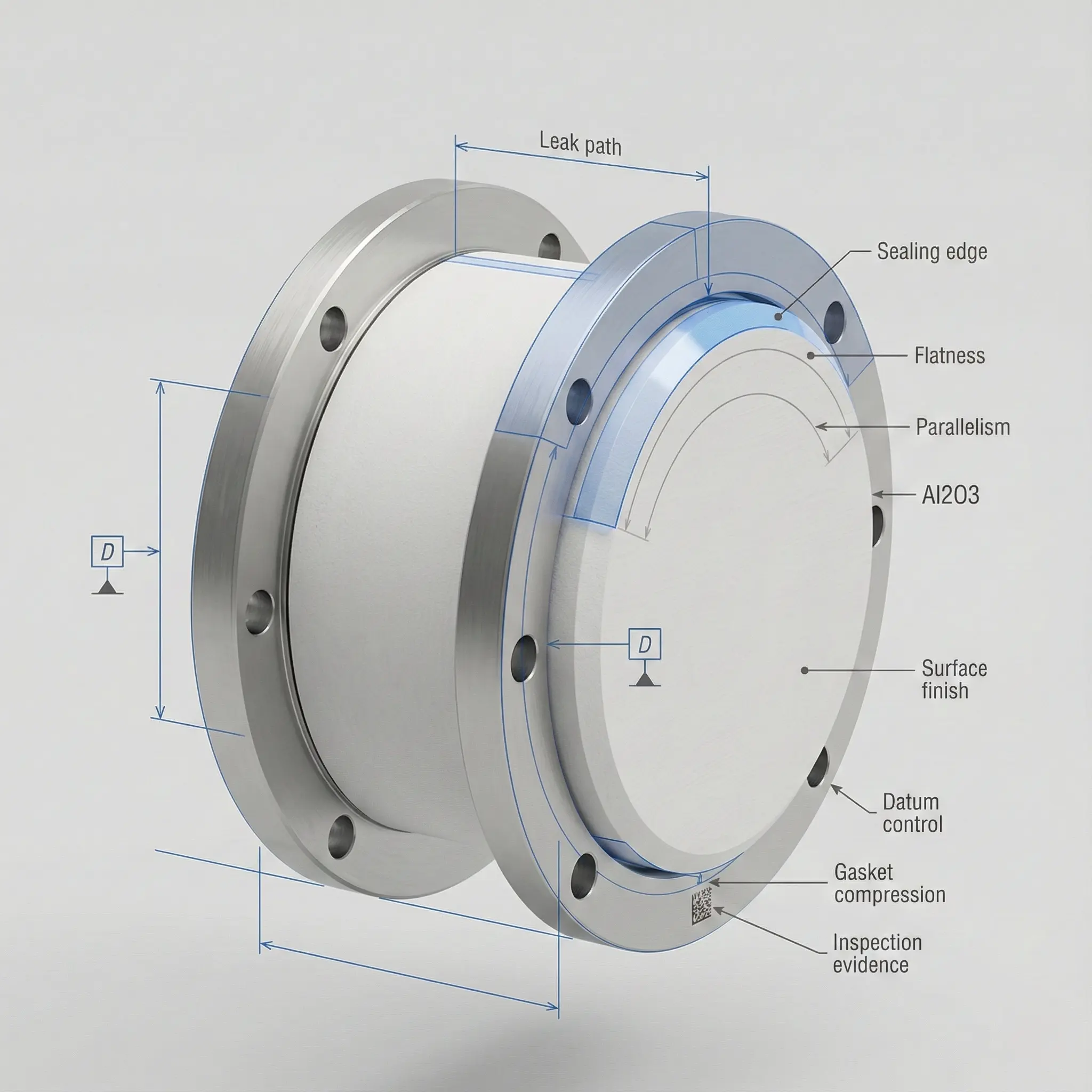
Vacuum Hardware: Ceramics for Leak-Critical Interfaces
Vacuum ceramic parts need flatness, edge integrity, cleanliness requirements, blank density or porosity evidence when relevant, and interface-critical reporting rather than generic dimensional pass/fail.
Typical uses
Insulating spacers, seat faces, ceramic rings, vacuum-adjacent hardware, and leak-critical interface components.
Primary risks
Micro-chips, gasket compression drift, outgassing surfaces, and hidden micro-cracks can compromise assembly yield.
Acceptance logic
Define leak target, cleaning/bake requirements, surface finish, and dimension reports for sealing interfaces.
Nozzles, Jets, and Flow Restrictors
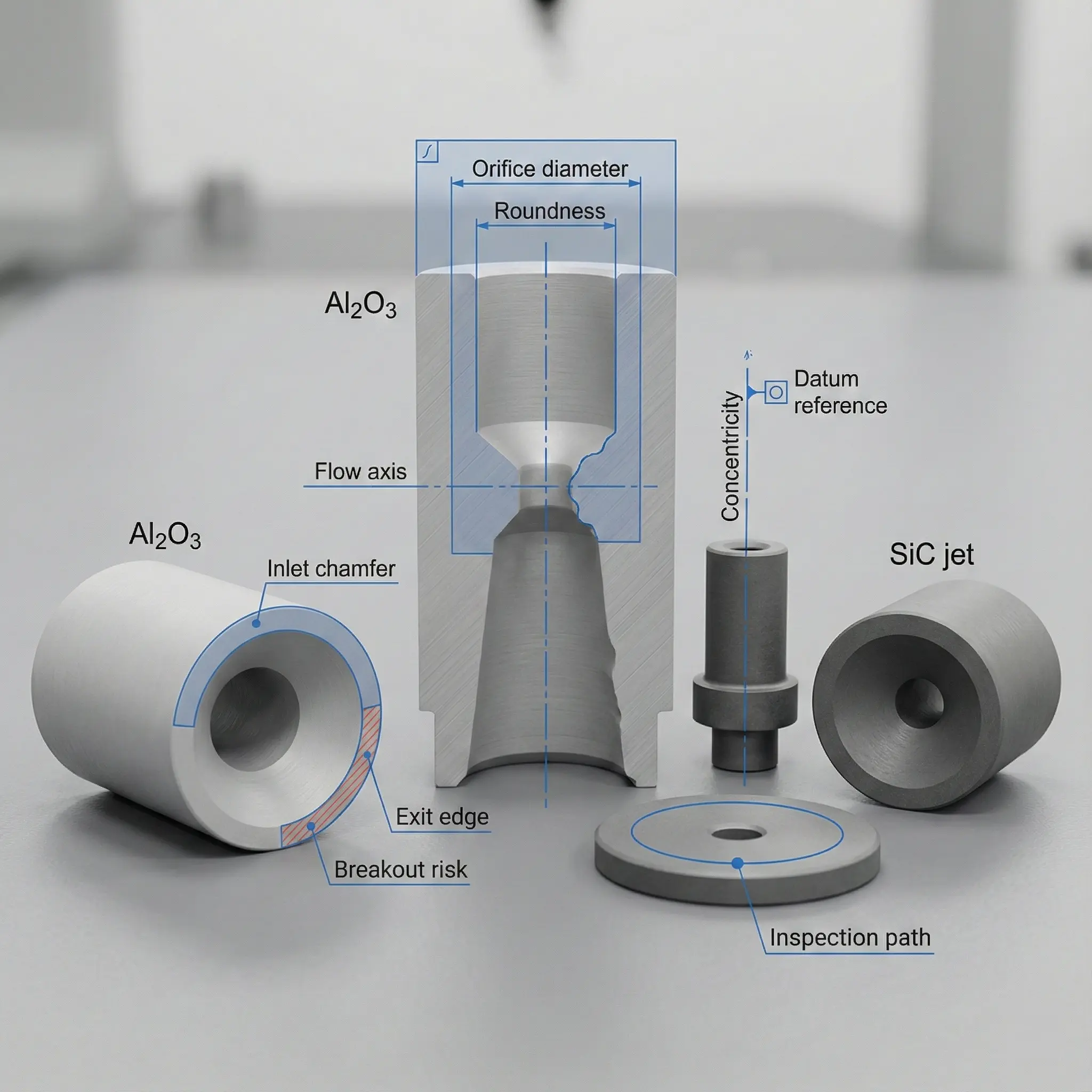
Ceramic nozzles, dispensing-valve inserts, and flow restrictors are reviewed by erosion resistance, orifice geometry, edge condition, and the flow or inspection evidence required by the application.
Feature controls
Orifice size, roundness, taper, concentricity, inlet chamfer, and exit breakout must be measurable.
Material options
Alumina, SiC, and zirconia may fit depending on media, erosion, thermal exposure, and chipping risk.
Inspection methods
Optical measurement, pin gauges, flow checks, or CMM evidence should be chosen according to the feature size.
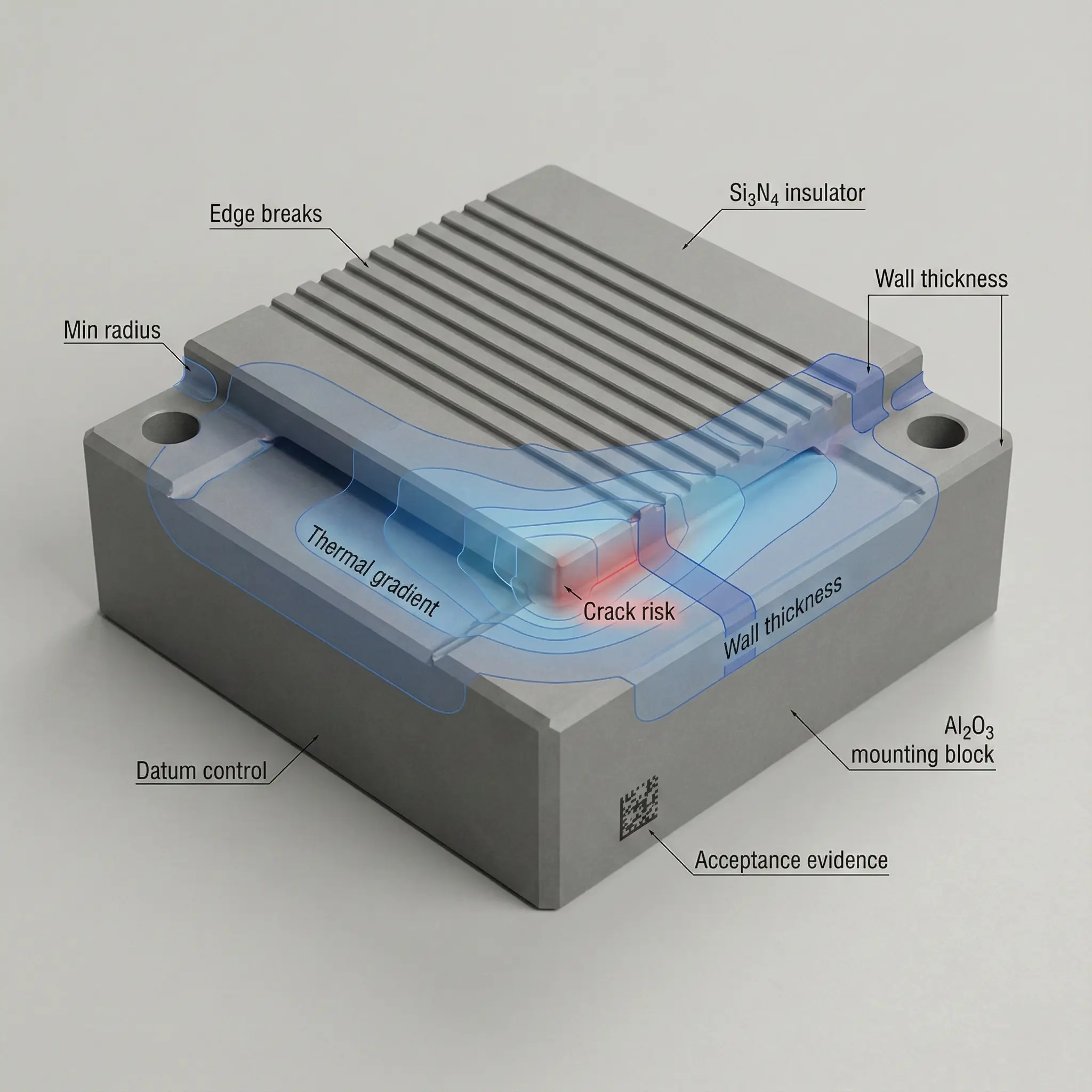
Thermal Barrier and Heat-Resistant Ceramic Fixtures
Heat-exposed ceramic fixtures need corner relief, wall-thickness control, stable mounting, and material selection matched to thermal cycling.
Typical parts
Alumina and silicon-nitride fixtures, spacers, setters, insulating plates, and hot-zone tooling.
Failure modes
Cracks start at sharp corners, abrupt thickness changes, mounting tension, or uneven stock removal.
What to send
Provide service temperature, ramp rate, atmosphere, load condition, mounting method, and critical faces.
Precision Bores, Coaxiality, and Alignment Features
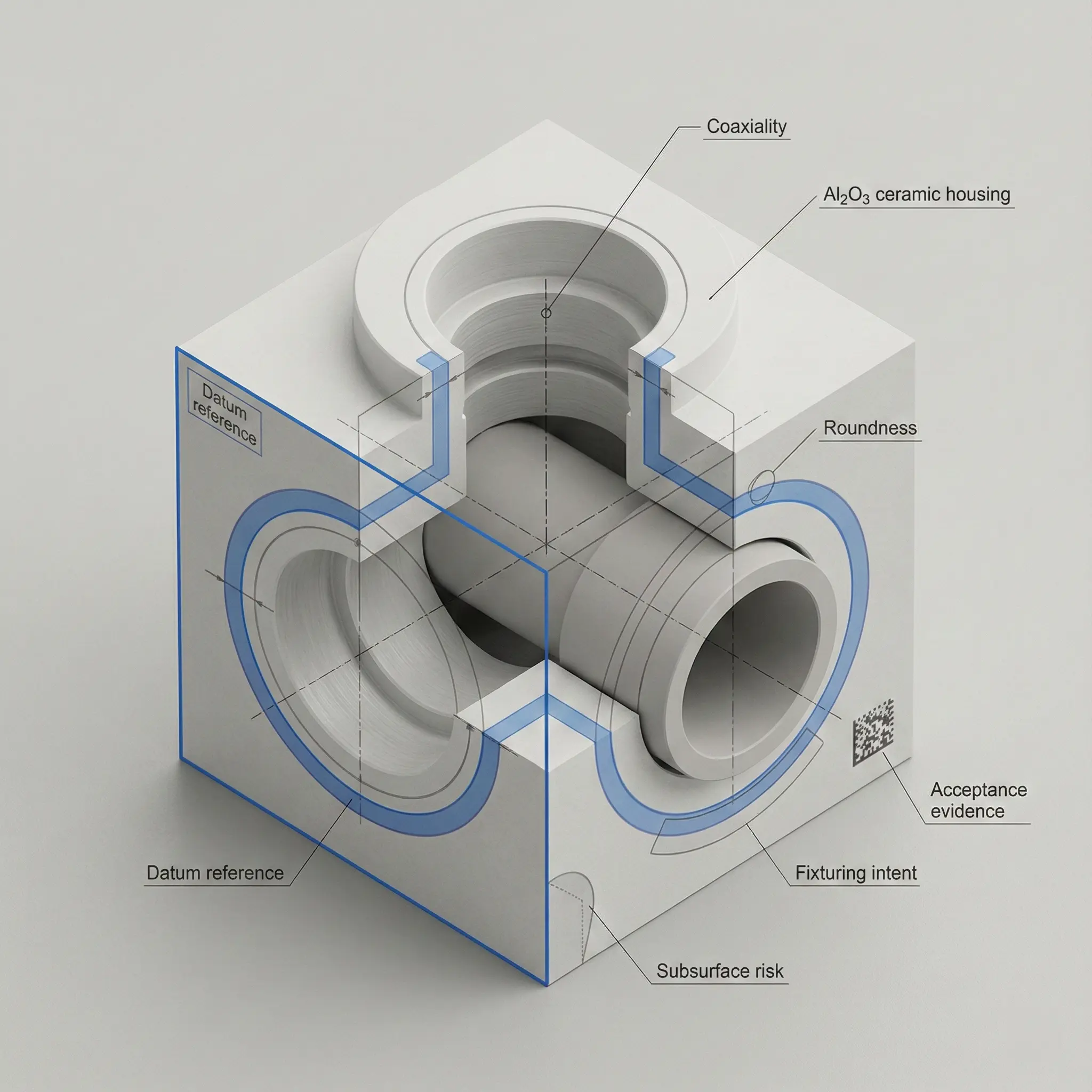
Precision bores in ceramics are a grinding and datum-control problem. Coaxiality and roundness depend on how parts are held, finished, and inspected.
Typical parts
Alignment bushings, insulating sleeves, bearing-adjacent components, precision rings, and stack-up-critical hardware.
Constraints
Minimum bore size, wall thickness around bores, fixturing stability, and re-chucking strategy determine what tolerance can be reviewed.
Inspection
CMM coaxiality, roundness/profile checks, and datum-based key dimensions should be planned before production.
Ceramic Edge Quality: Chamfers, Radii, and Chip Control
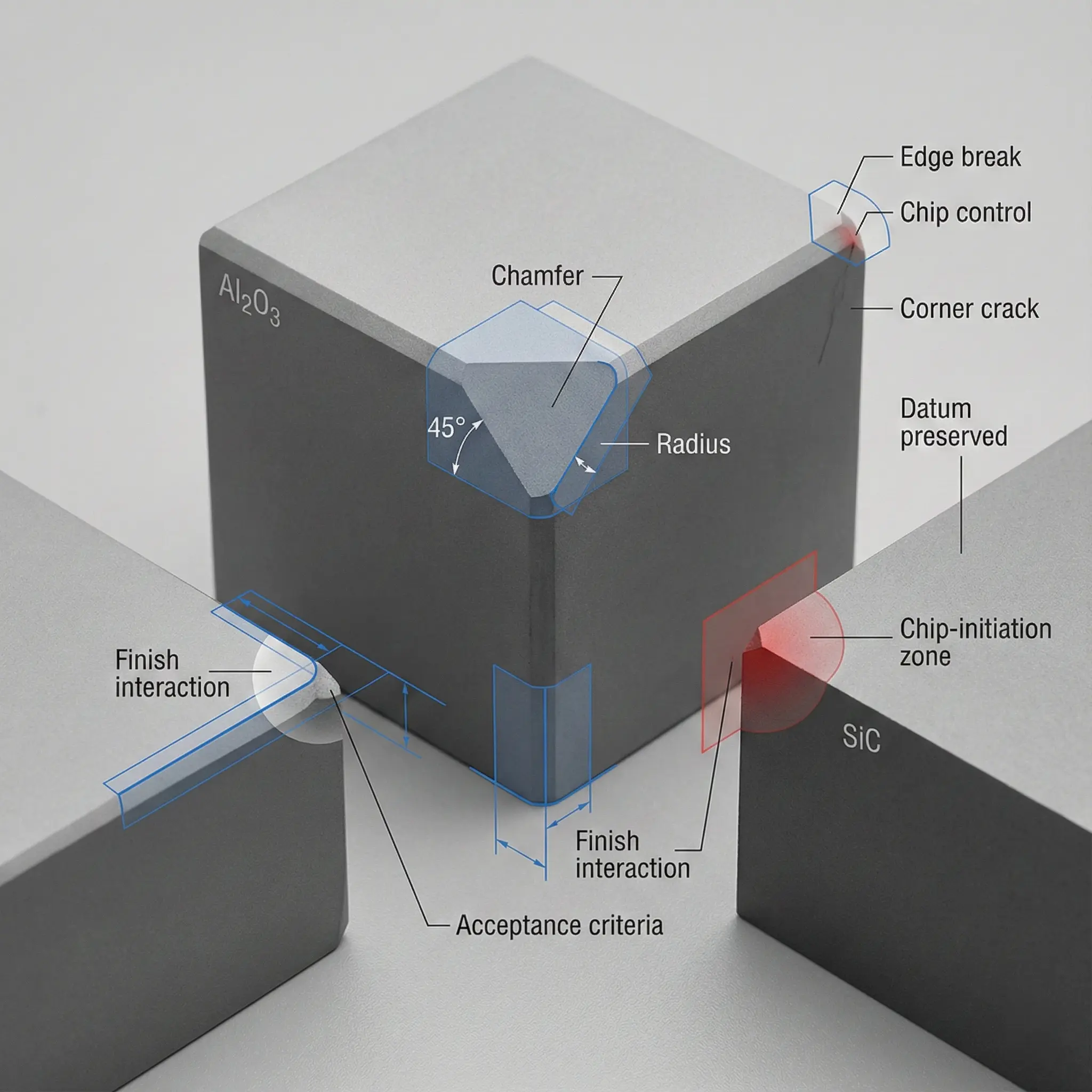
Most ceramic failures start at edges. A controlled chamfer or radius is an engineering feature, not cosmetic finishing.
Specify edges
Handling edges, seal lead-ins, hole exits, slots, and mating corners should have measurable chip or edge-break criteria.
Avoid ambiguity
Words like "no chips" or "sharp" should be replaced with functional zones, allowable chip size, and inspection method.
Process impact
Edge finishing interacts with adjacent tolerance and surface finish, so it should be in the RFQ rather than added late.
Prototyping, Small-Batch Production, and Repeat Orders
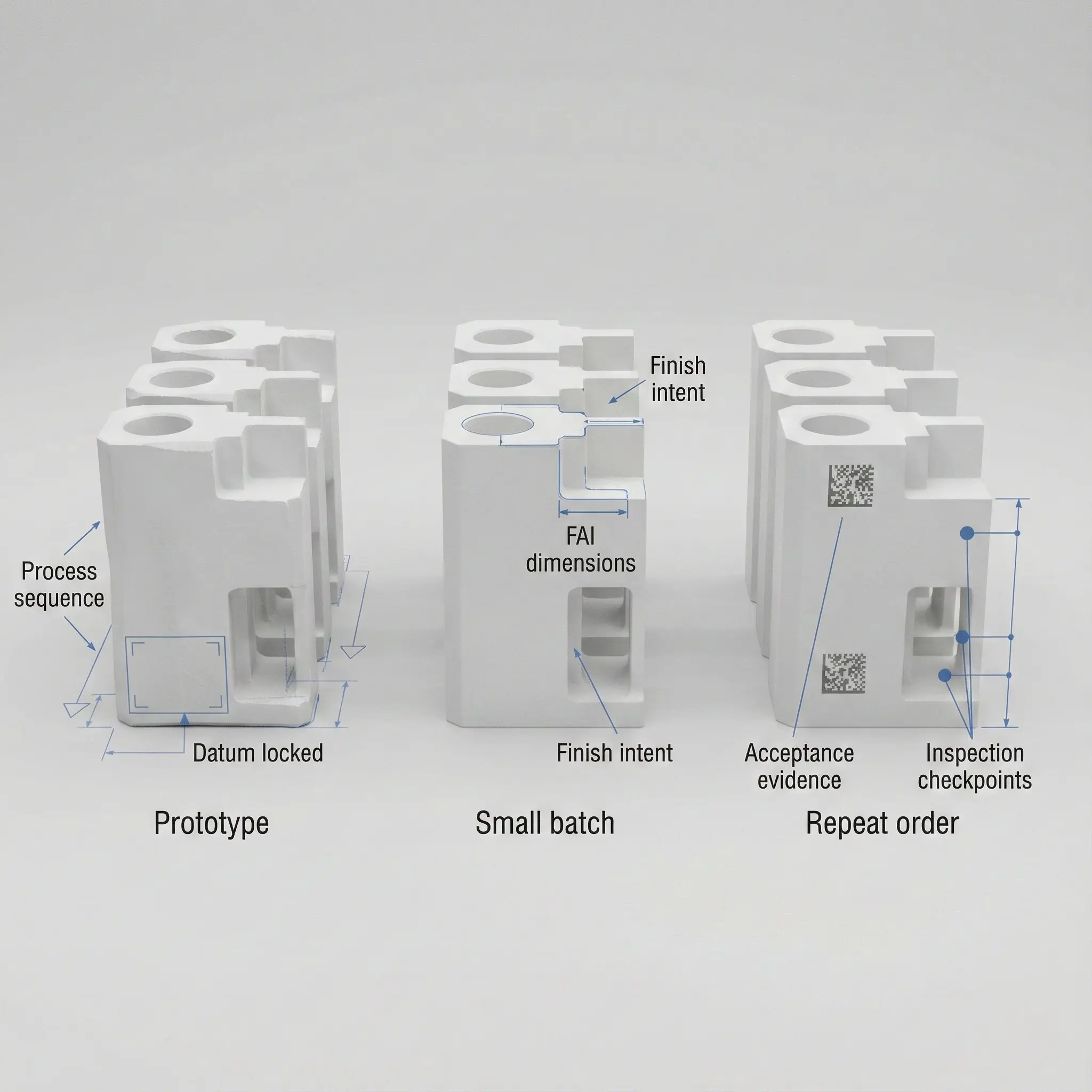
Ceramic prototype and repeat-order programs are easier to evaluate when material grade, datum scheme, finishing route, measurable acceptance, and protected handling are defined early.
Prototype value
Early parts should confirm feature feasibility, edge integrity, inspection method, and assembly fit before repeat orders.
Repeatability plan
Keep material grade, route, tooling assumptions, finishing sequence, and inspection method stable across lots.
Procurement inputs
Send prototype quantity, production forecast, target date, CTQs, documentation requirements, and packaging needs.
Requirements that affect quotation
Ceramic parts quote differently when precision is localized to functional interfaces instead of applied globally.
Seal faces, bearing fits, datum pads, bores, orifice edges, and alignment features should be marked on the drawing.
Define chamfer, radius, and allowable chip size by zone so handling edges do not become hidden crack origins.
Ra, lapping, polishing, and surface integrity should be applied to faces that drive sealing, wear, cleanability, or friction.
Micro-holes, narrow slots, thin walls, and internal radii need diameter, depth, taper, edge condition, and inspection method.
A generic material name is not enough for critical applications. Specify grade, density, purity, or performance targets.
CMM, profile, optical, surface finish, flatness mapping, special inspection, and key-dimension reports should match acceptance risk.
Application engineering guides
These engineering guides connect the part's function to material choice, precision features, surface requirements, and RFQ evidence.
Wafer handling parts, vacuum chucks, SiC rings, AlN plates, alumina insulators, micro-holes, and inspection review.
AlN heat spreaders, heater-adjacent plates, insulating thermal spacers, thermal-interface flatness, Ra, clean handling, packaging, and inspection evidence.
SiC and alumina process rings, lapped annular bands, ID/OD control, grooves, edge quality, cleaning, packaging, and inspection evidence.
Alumina insulating rings, AlN thermal insulators, sleeves, spacers, creepage paths, plasma-adjacent edges, cleaning, packaging, and inspection evidence.
End effectors, lift pins, support pads, wafer-contact surfaces, edge quality, cleaning, packaging, and inspection evidence.
Wafer handling blades, grippers, support fingers, vacuum picks, contact pads, robot datums, edge quality, and inspection evidence.
Flatness, hole fields, porous surfaces, grooves, datum strategy, vacuum behavior, cleaning, and inspection evidence.
Dense and porous ceramic chuck plates, SiC rings, lapped working faces, micro-hole fields, grooves, flatness, and vacuum evidence.
Gas plates, nozzles, vacuum features, hole depth, taper, entry and exit breakout, cleaning, and measurement method.
Seal bands, valve seats, lapping scope, flatness, Ra, edge quality, paired faces, and acceptance reporting.
Plungers, sleeves, valve seats, seal faces, metering inserts, corrosion-resistant interfaces, leakage risk, Ra, roundness, and RFQ evidence.
Bushings, liners, guide rails, seal faces, pins, rollers, valve parts, contact surfaces, and replacement geometry.
Insulating spacers, sleeves, feedthrough-adjacent parts, creepage paths, edge condition, and assembly stress.
AlN plates, heat spreaders, power electronics fixtures, thermal-interface flatness, Ra, and cleanliness review.
Chemical, abrasive, high-temperature, semiconductor, pump, valve, nozzle, and seal applications where SiC fits.
BN insulators, furnace fixtures, tubes, spacers, molten-metal-adjacent nozzles, atmosphere limits, and RFQ inputs.
Need review for a precision ceramic part?
Send CAD, drawings, material grade, blank or sourcing requirement, quantity, target lead time, functional surfaces, edge requirements, and inspection expectations for feasibility and quotation review.