Material and route review
Review the ceramic family, grade, blank route, geometry, datums, critical features, and acceptance risk.
Precision ceramic manufacturing | Engineering review
We support custom advanced ceramic parts from material and process-route review through precision machining, finishing, inspection, and protective delivery. Send the available drawing package for a scoped engineering review.
Prefer email?
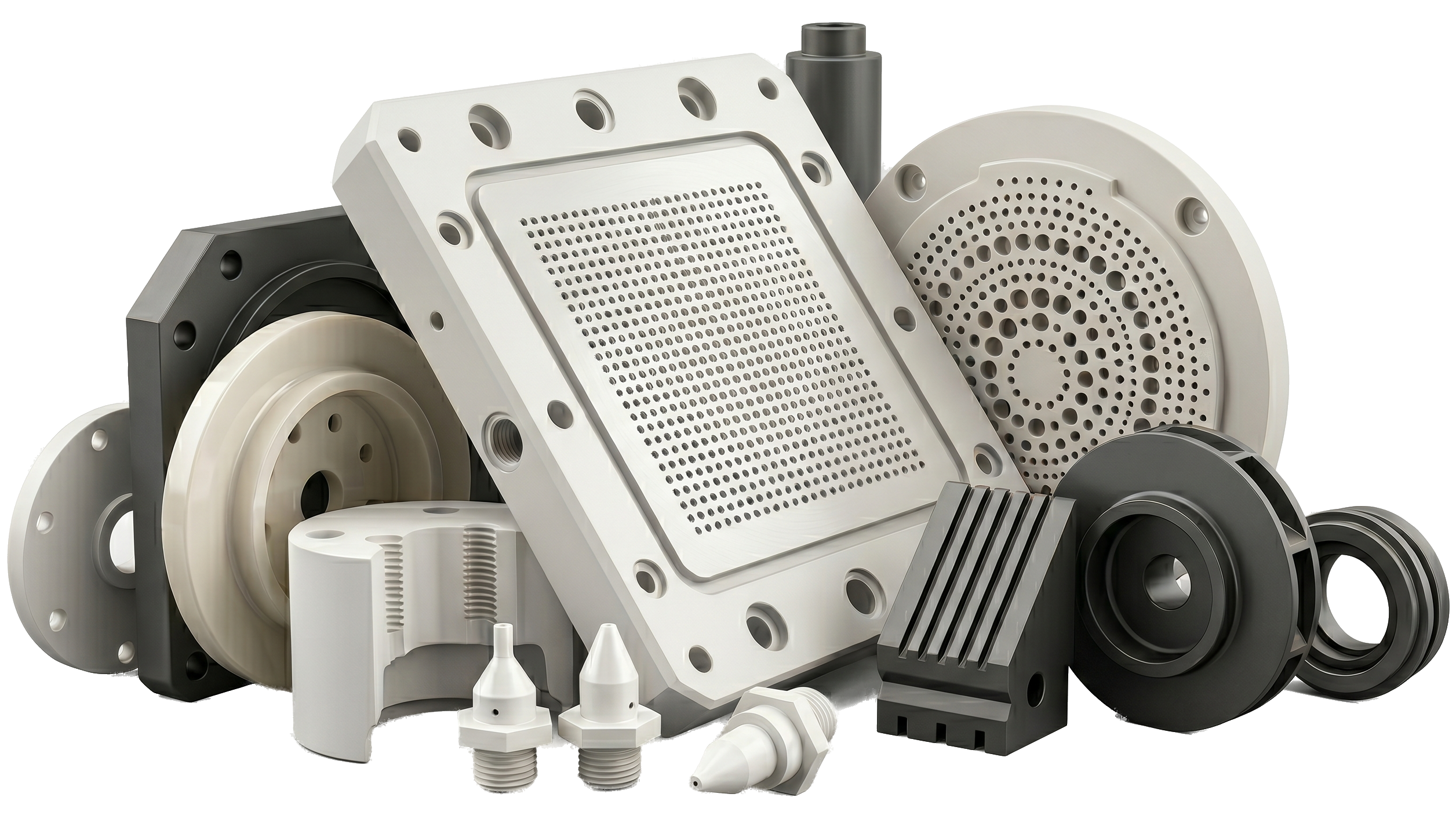
Process
Form · machine · finish
Materials
Al2O3 · ZrO2 · Si3N4
Output
Inspected parts
Service
Custom ceramic production
Scope
Form · machine · inspect
Start
Drawing and requirement review
01 | Who we are
CERAMIC CNC is the precision ceramic manufacturing service of Suzhou Como Precision Materials Co., Ltd. We review the drawing, define the route, manufacture the part, complete finishing, and supply the agreed evidence.
The engineering discussion stays focused on the part: function, geometry, material state, downstream operations, acceptance evidence, quantity, and timing.
Send your drawingReview the ceramic family, grade, blank route, geometry, datums, critical features, and acceptance risk.
Match pressing, injection molding, or sourced blanks to geometry, quantity, and material requirements.
Plan CNC machining, diamond grinding, honing, lapping, polishing, slots, holes, and edge conditions.
Agree dimensional, surface, profile, interface, cleaning, packaging, and document requirements.
02 | What we make
The catalogue covers drawing-specific shapes, cylindrical parts, pump and valve components, semiconductor and vacuum hardware, wear parts, and material-led ceramic components.
Rods, tubes, rings, shafts, sleeves, plates, pins, gauges, plungers, and structural parts.
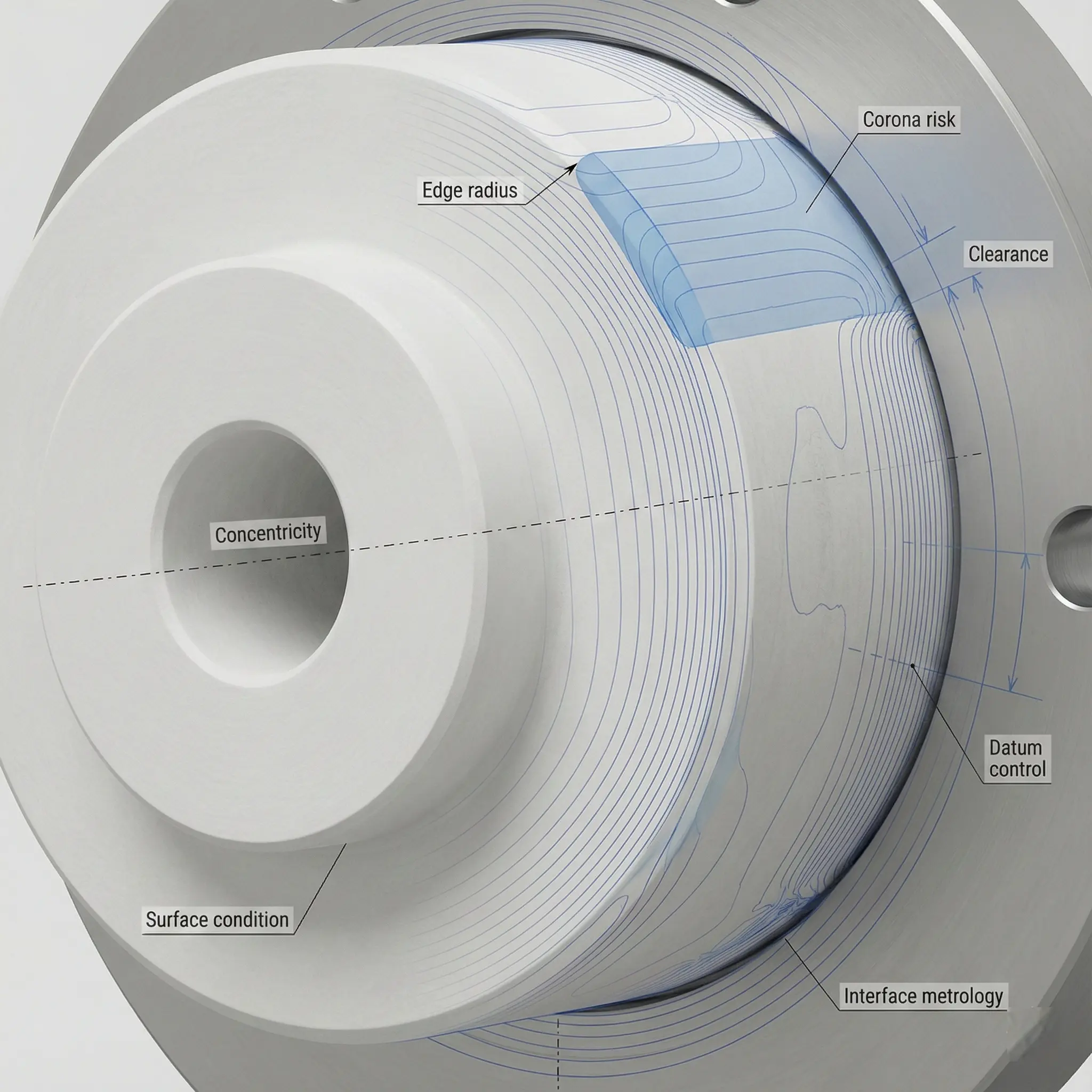
Pump, plunger, filling, dispensing-valve, seal, nozzle, and corrosive-fluid components.
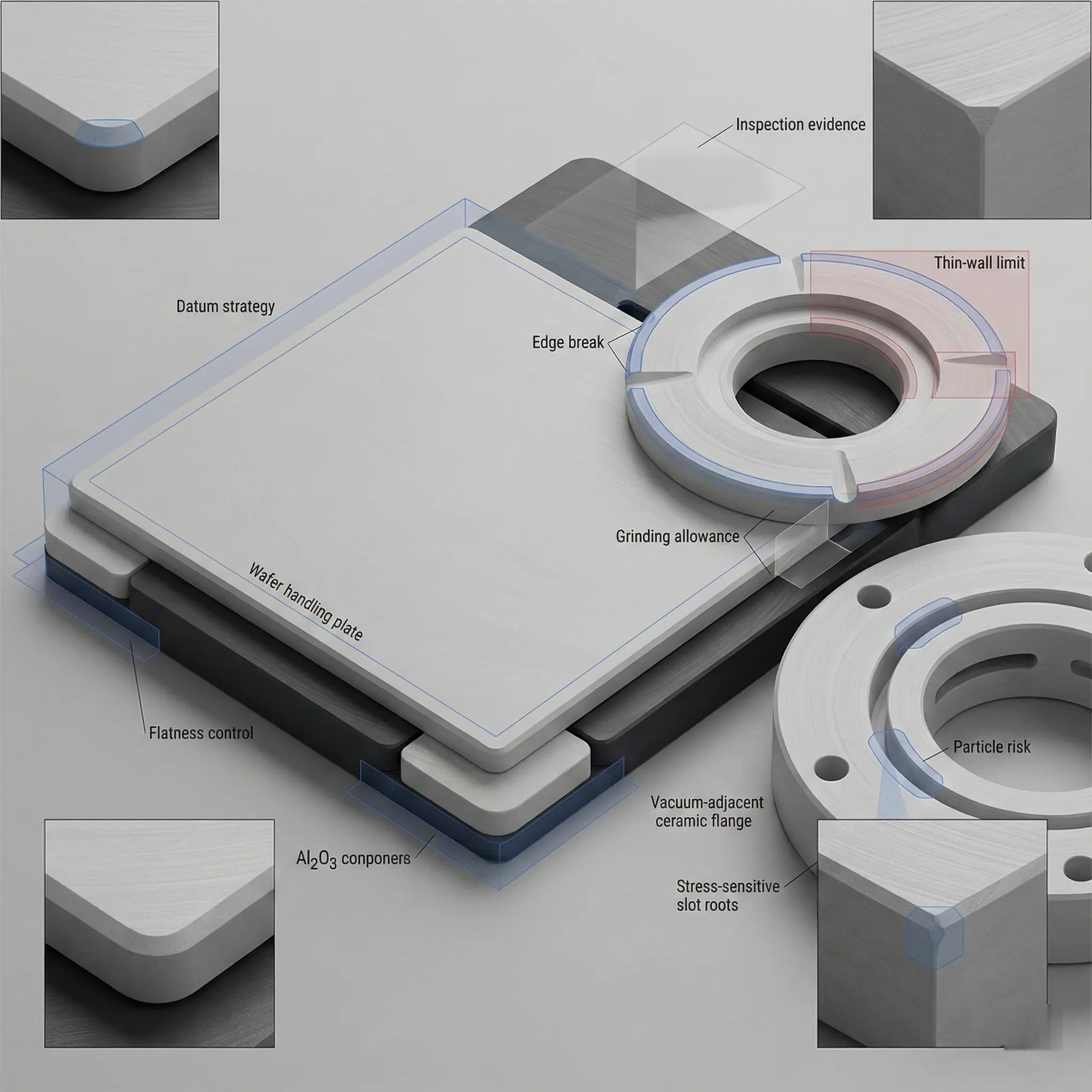
Vacuum pickup, wafer-handling, laser, chamber, electrical-insulation, and fixture components.
Locating, guiding, sliding, wear-resistant, insulating, and precision automation components.
Drawing-controlled ceramic parts reviewed for functional surfaces, cleaning, and packaging needs.
Insulators, substrates, thermal parts, laser hardware, and structures for demanding environments.
03 | Process-route support
A project can start with finished CAD or with a drawing and functional requirements. We connect material family, grade, blank or forming route, machining sequence, finishing, and acceptance evidence.
Tight tolerances are project-specific. Applying them everywhere can increase cost and fracture risk without improving function, so CTQs and datum relationships are reviewed first.
Map loads, wear, fluid, vacuum, electrical, thermal, temperature, cleanliness, and interface requirements.
Assess ceramic family, grade, blank availability, forming route, machining state, and production volume.
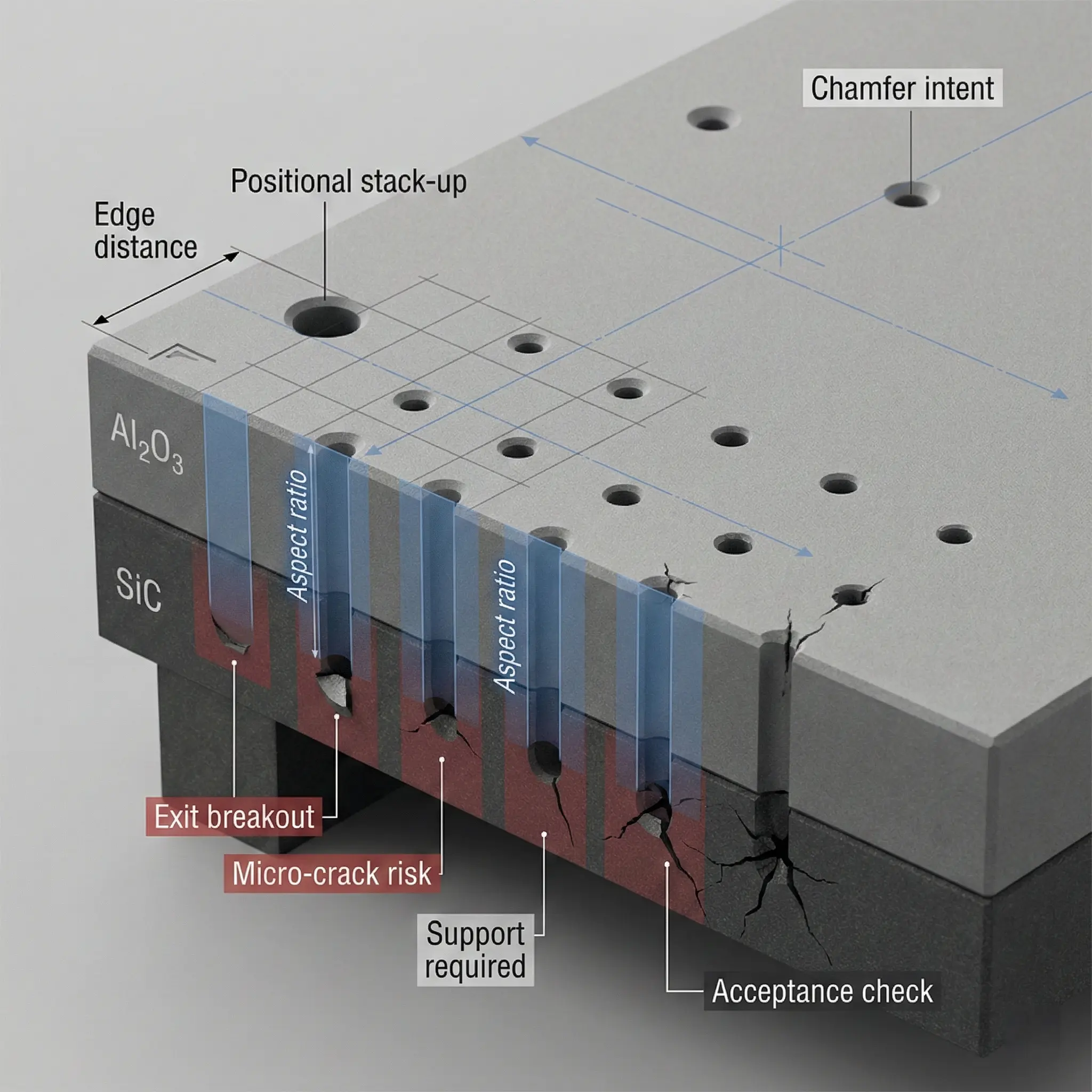
Balance walls, bores, slots, edges, tolerance stack-up, grinding access, lapping stock, and handling risk.
Define the drawing revision, datums, CTQs, surface criteria, inspection evidence, cleaning, and packaging scope.
Route, feature control, and evidence
Ceramic performance depends on the material state, feature geometry, surface condition, and acceptance method. The route is valuable only when those variables are tied to the actual operating requirement.
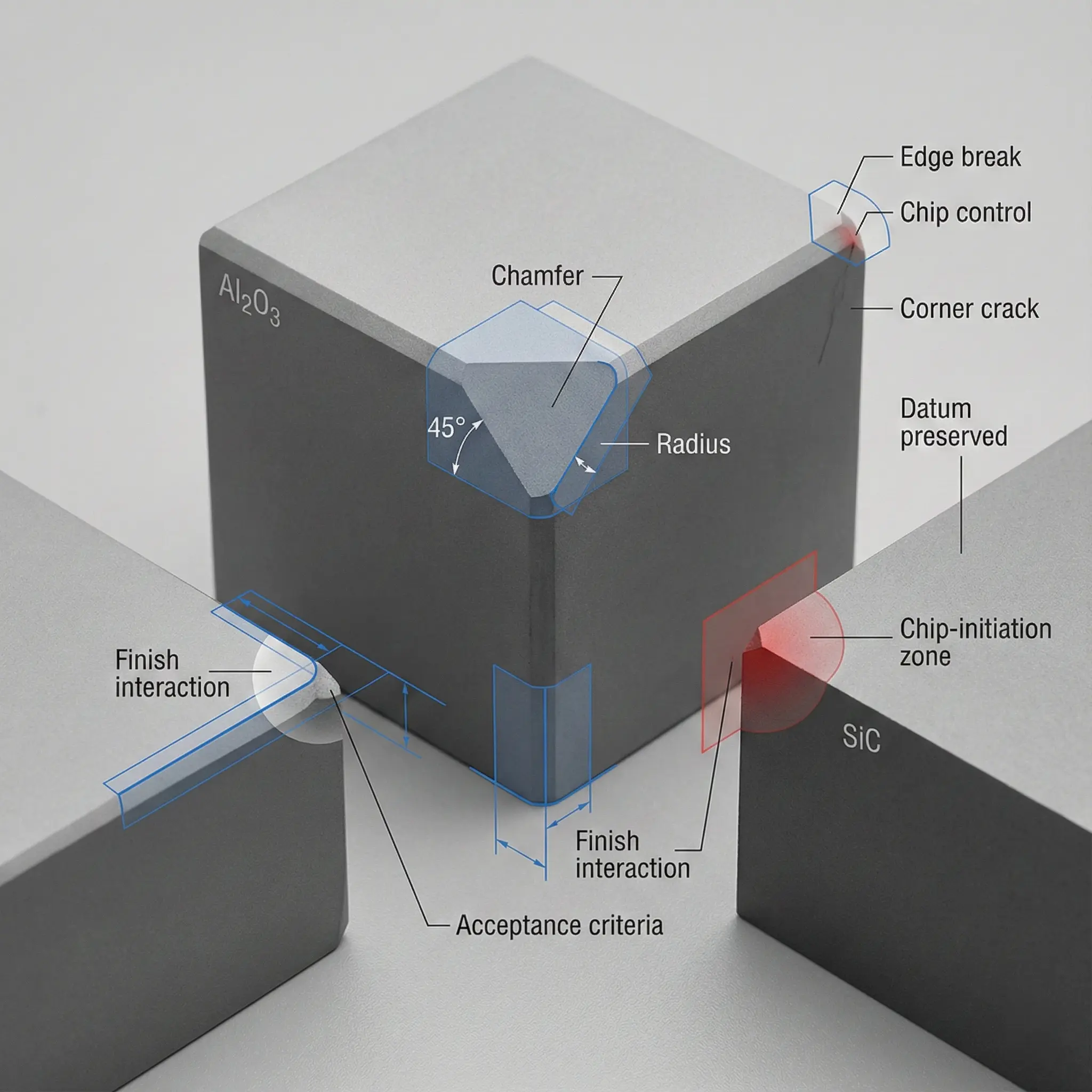
Route review | blank to finished part
A material name alone does not define the route. Grade, blank condition, shrinkage state, stock, geometry, and volume must be checked together.
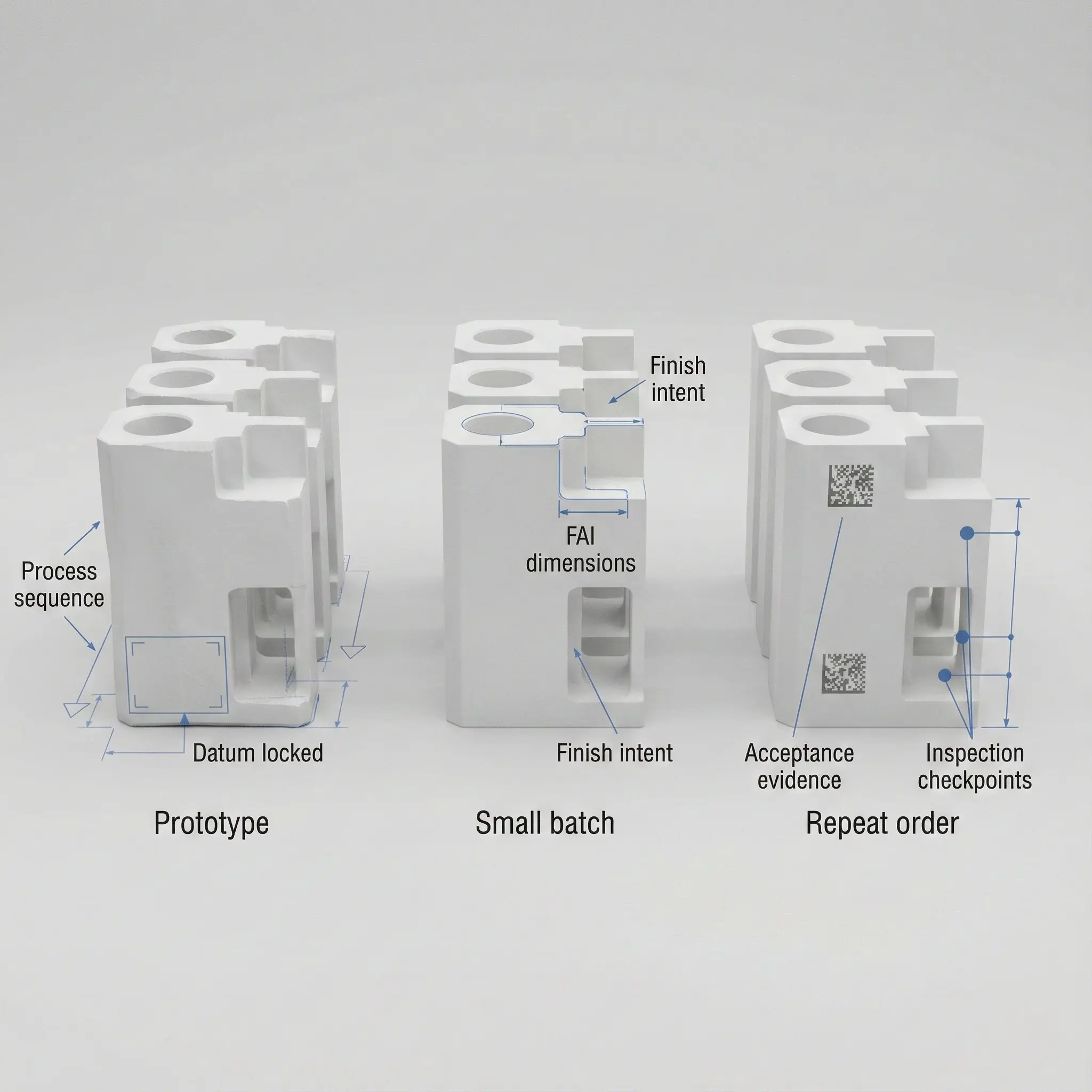
Feature review | datums and CTQs
Separate functional surfaces from general geometry so grinding access, edge protection, tolerance stack-up, and inspection effort go where they matter.
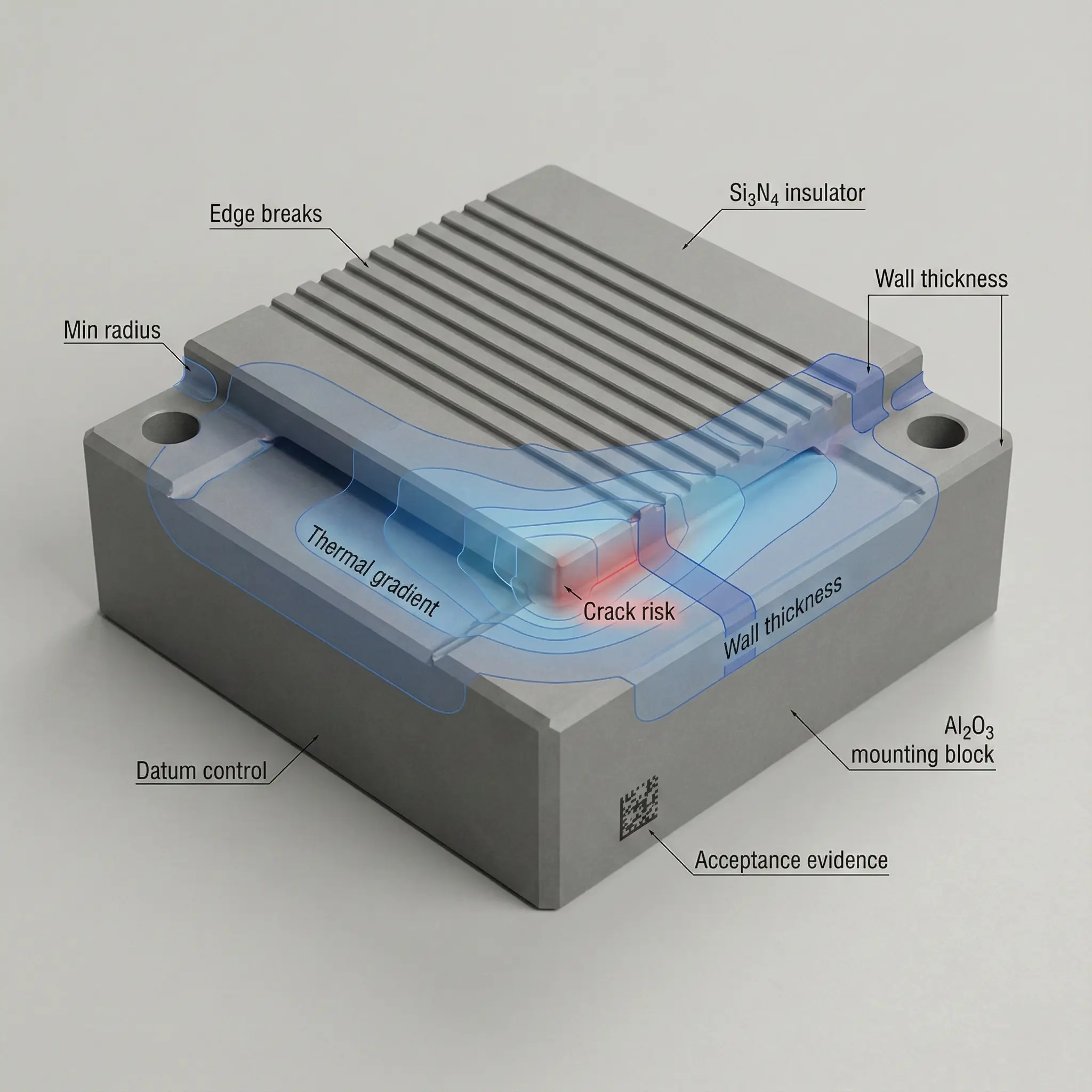
Acceptance review | measurement evidence
Match CMM, optical, profile, flatness, Ra, visual, and document requirements to the drawing before quotation and production release.
Two valid starting points
Existing CAD moves into ceramic DFM and production review. An early requirement brief starts with material, blank, feature, and acceptance choices before the prototype route is agreed.
Send requirements or CADUseful design inputs
04 | Production capability
The drawing determines the ceramic family, grade, blank route, machining sequence, critical surfaces, and inspection method. The quotation records the scoped route selected for that part.
Product scope
23 categories
One catalogue covering precision, fluid, vacuum, and automation parts.
Manufacturing routes
Form to finish
Blank selection, CNC, grinding, honing, lapping, and polishing.
Acceptance
Drawing-led review
Final feasibility depends on grade, geometry, CTQs, and evidence.
Material families
Strength, wear, temperature, electrical, thermal, chemical, purity, and acceptance priorities are reviewed together. The named ceramic family is only one input to the finished-part route.
Check your material and part
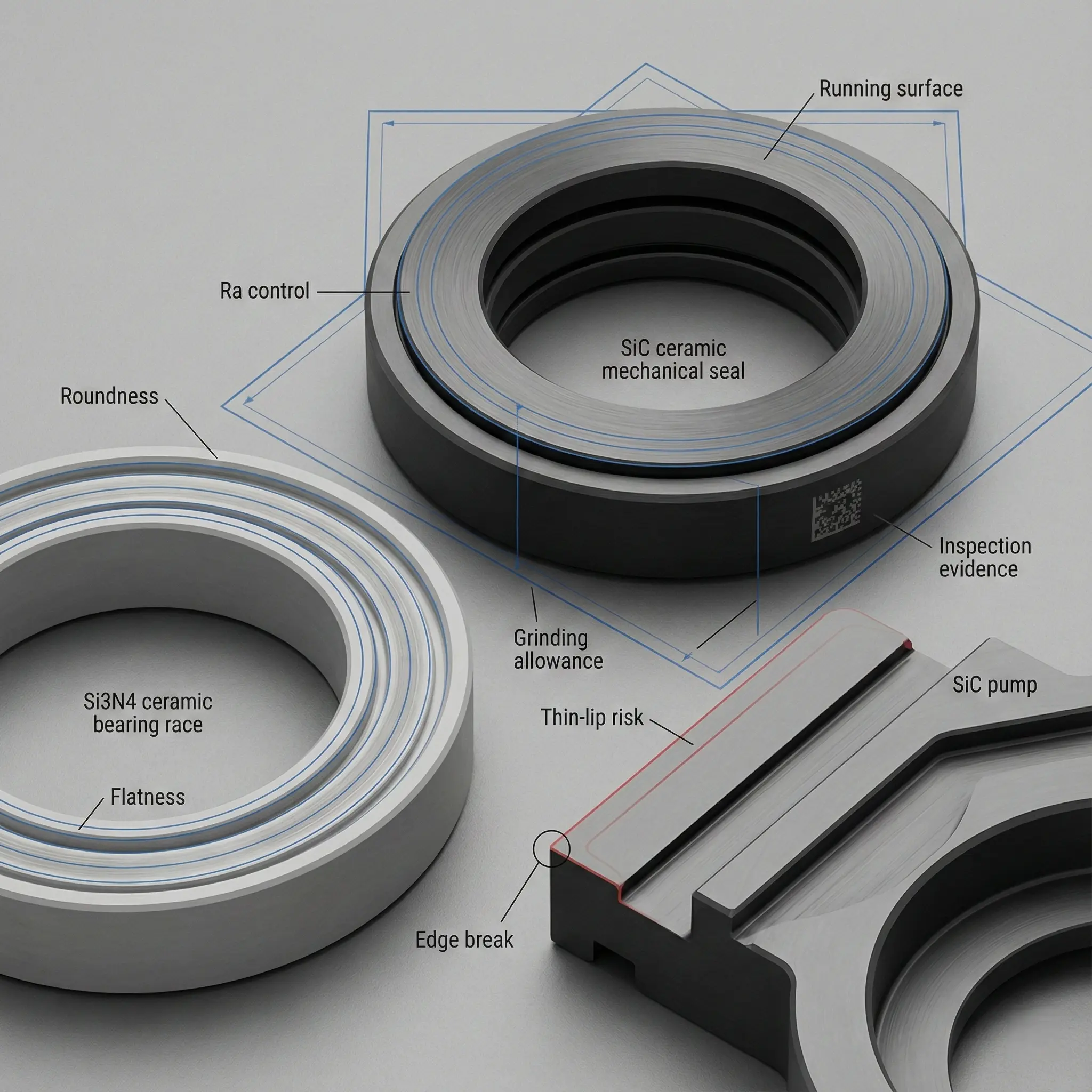
Broad structural, wear, electrical-insulation, fixture, and fluid-control applications by grade.
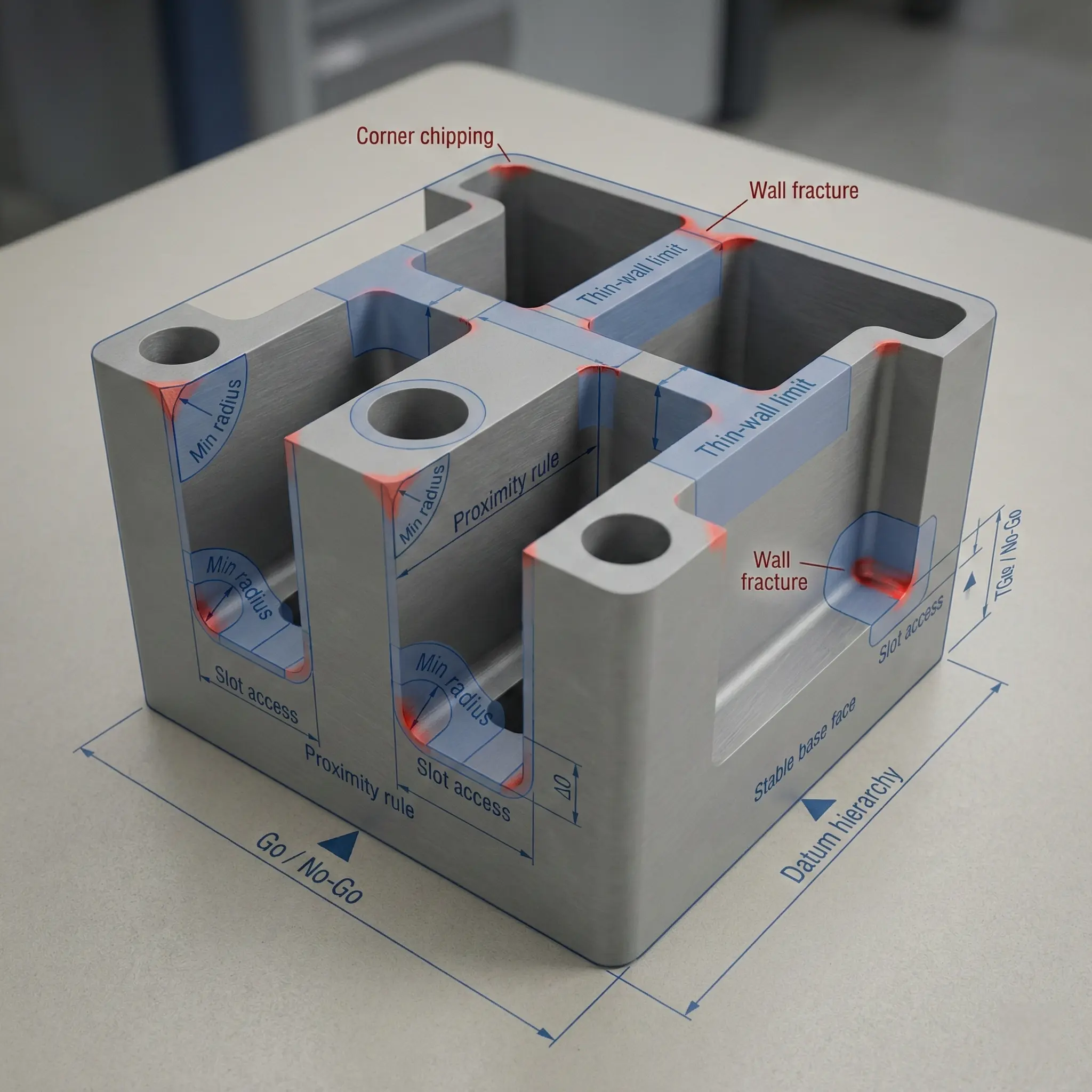
Yttria-, ceria-, or magnesia-stabilized routes reviewed against strength, wear, and environment.
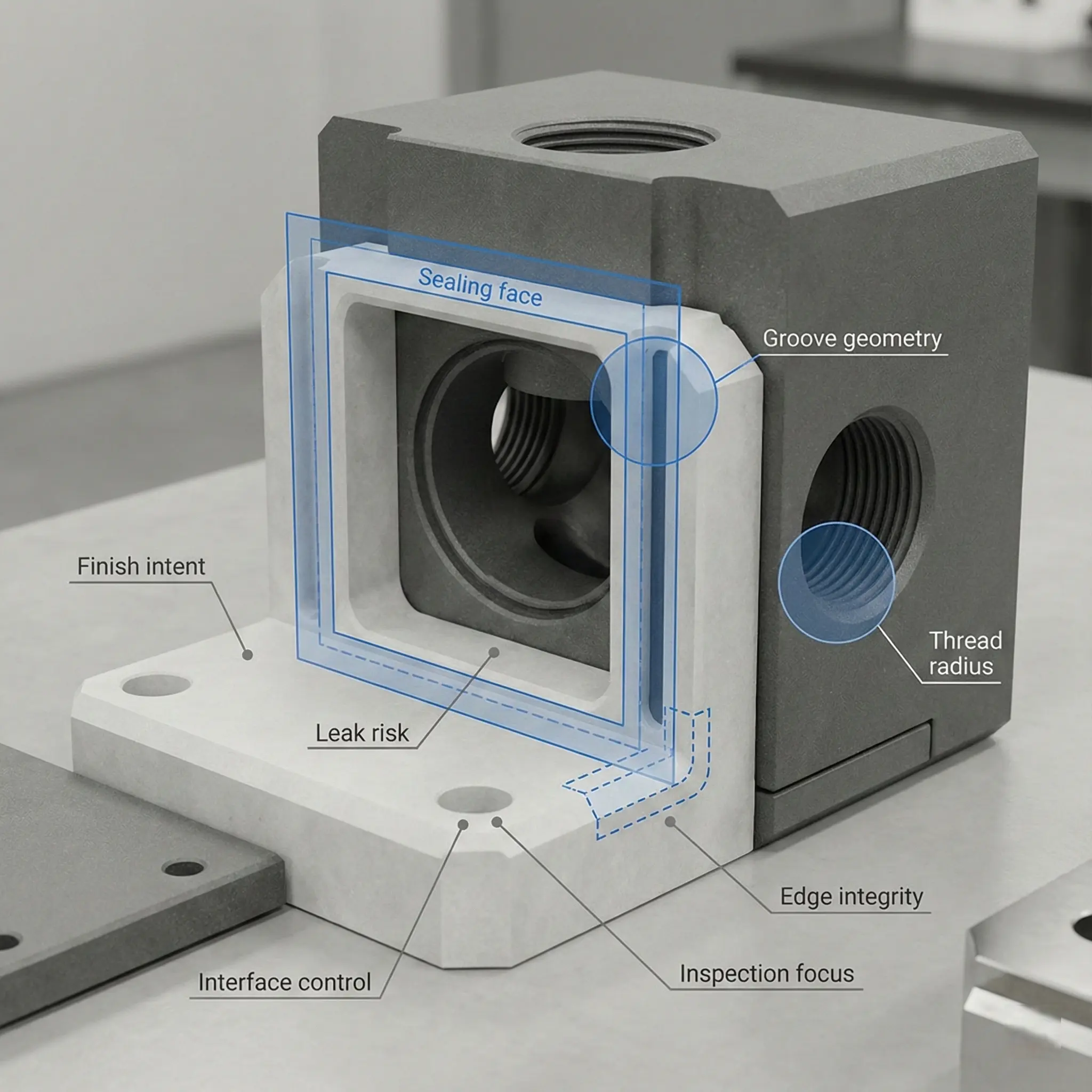
Silicon nitride, SiC, AlN, BN, MACOR, and fused silica for requirement-specific applications.
Route coverage
The final route is confirmed after material grade, blank state, geometry, quantity, CTQs, inspection, and packaging requirements are reviewed.
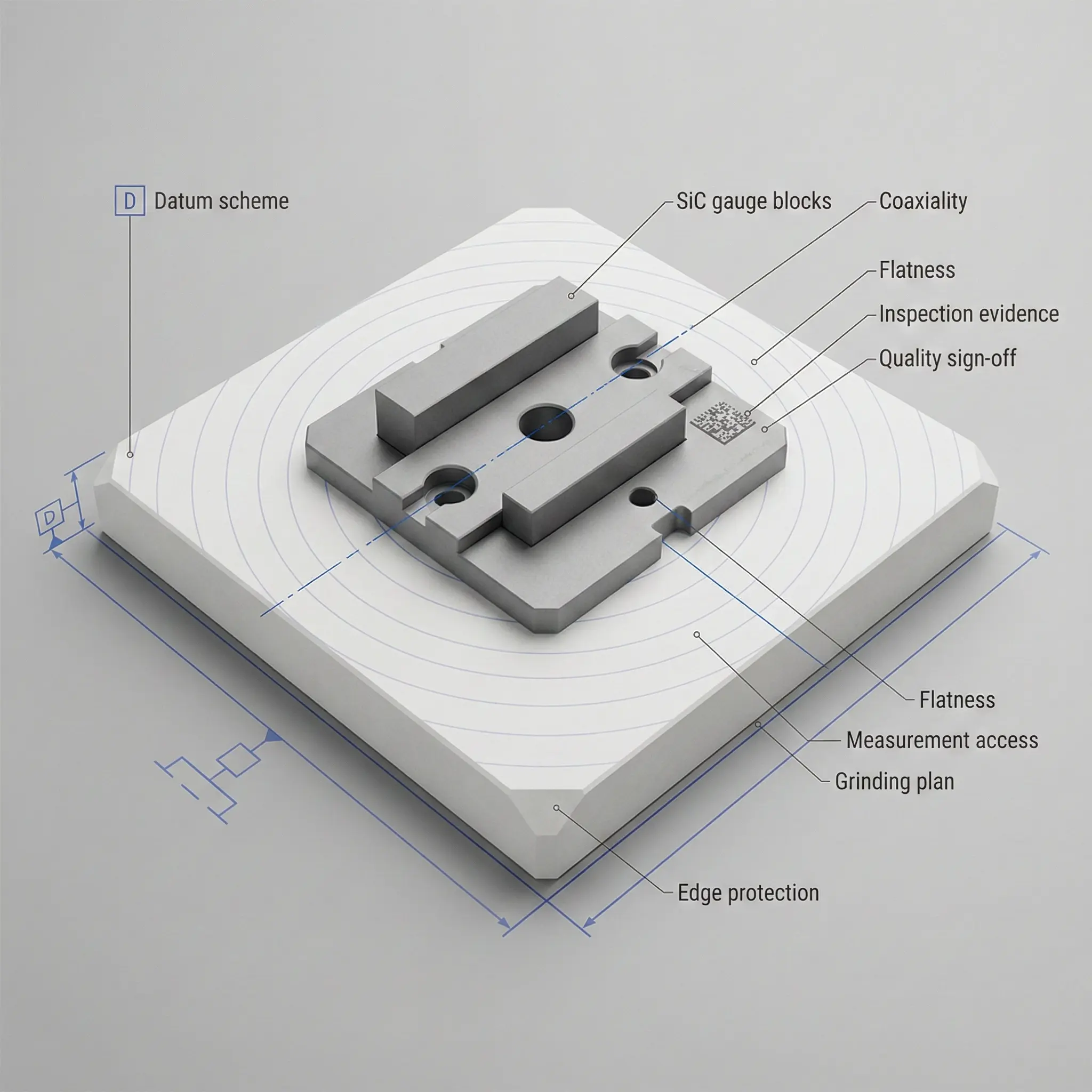
Forming
Pressing / injection / sourced blank
Machining
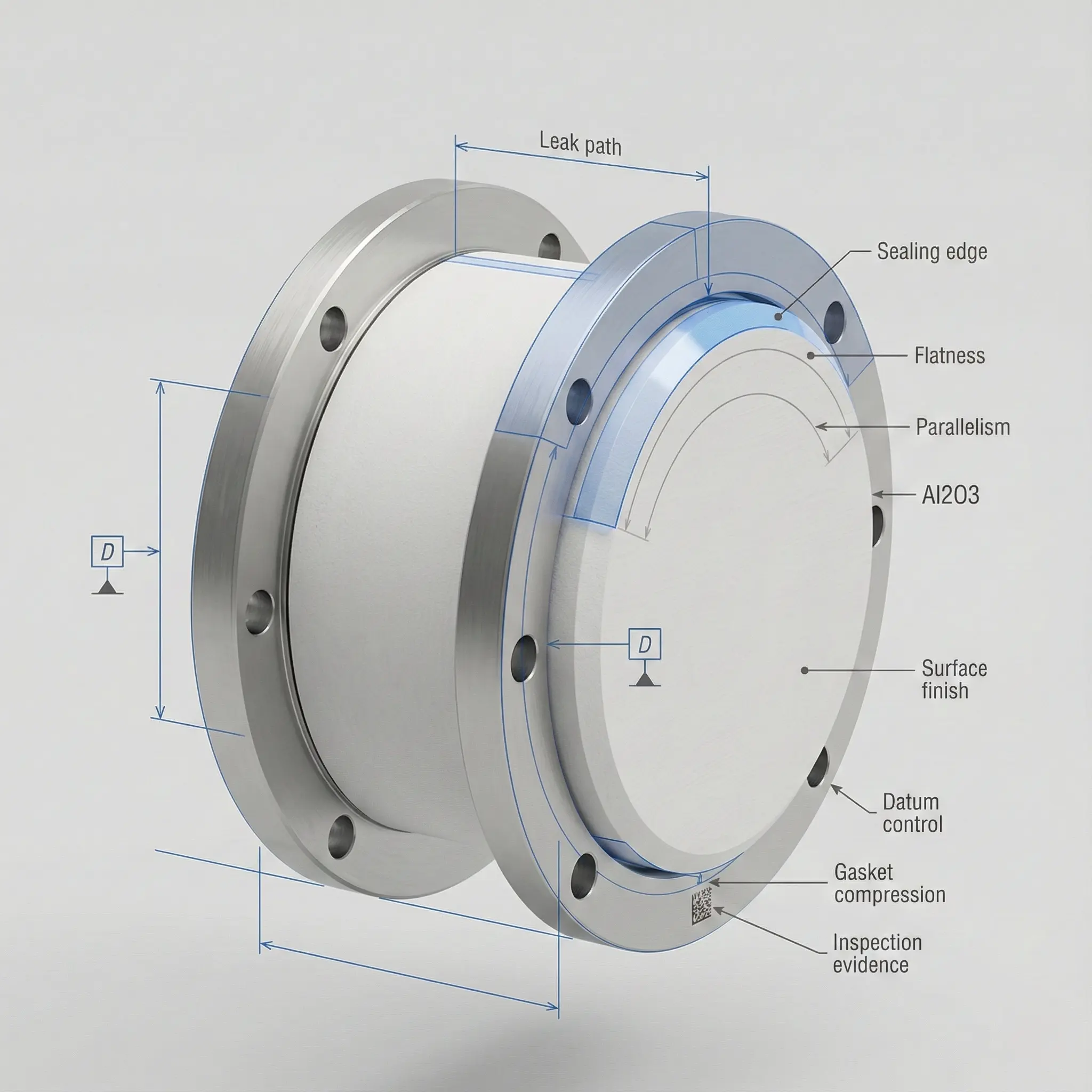
CNC / diamond grinding / cutting
Surface finishing
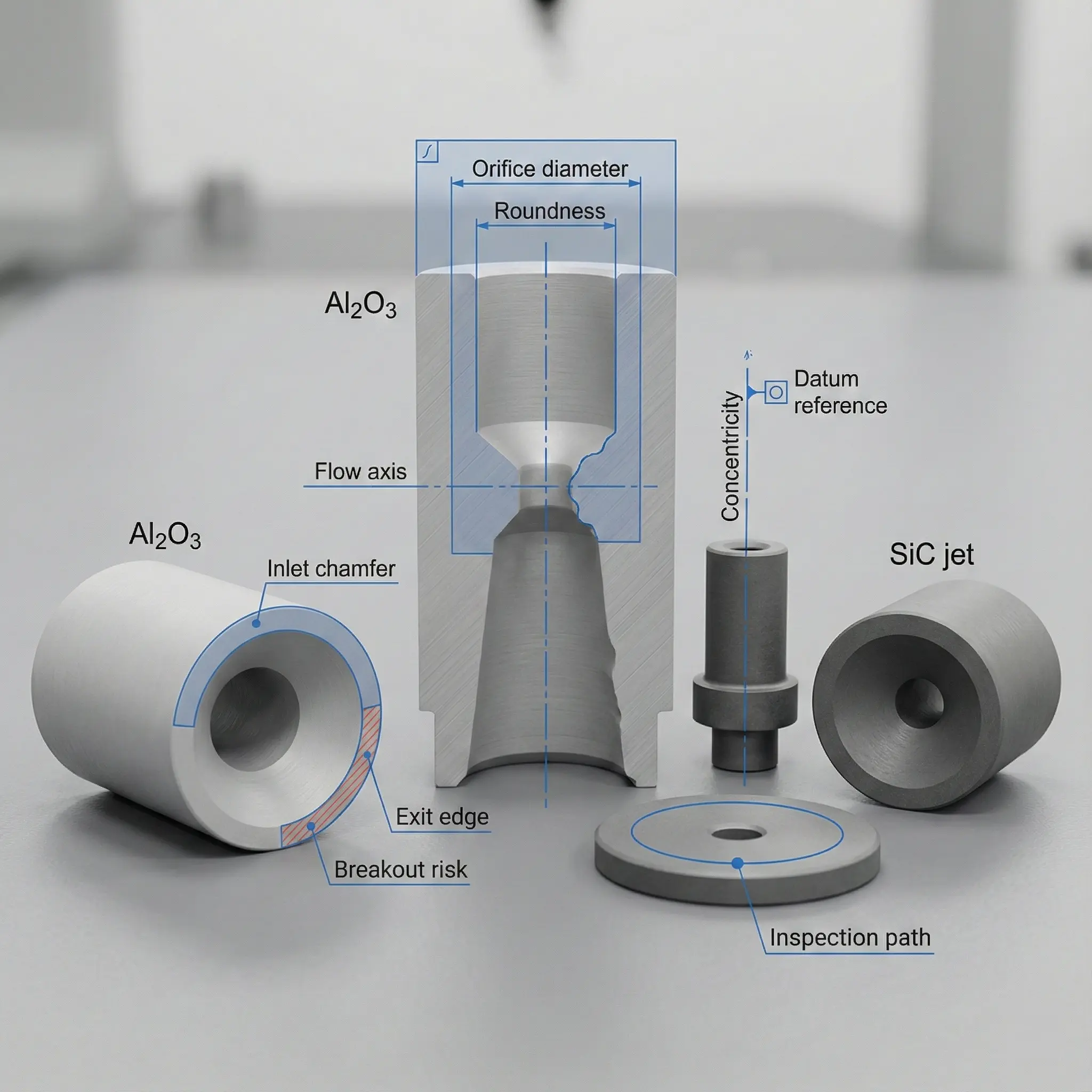
Honing / lapping / polishing
Inspection
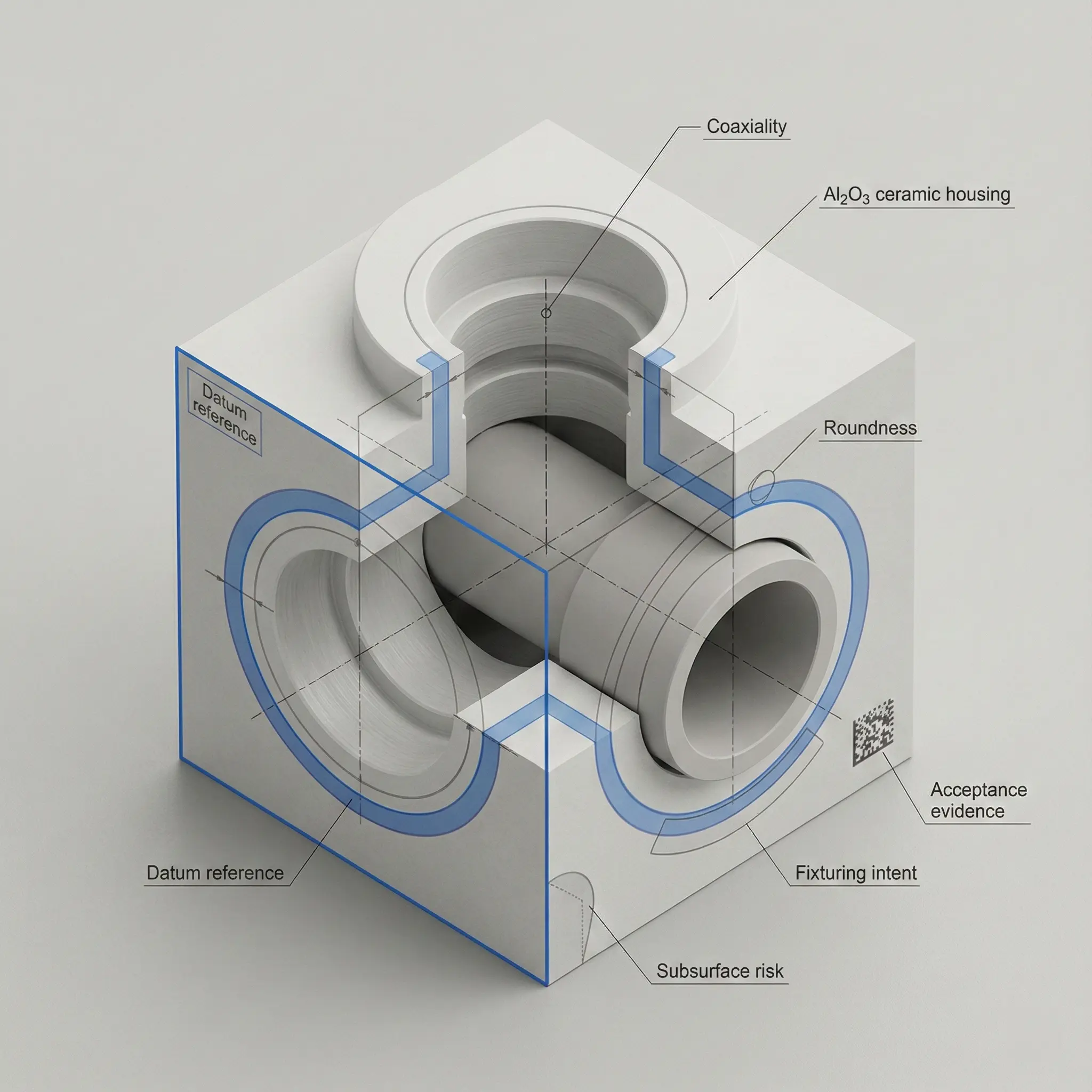
Dimensional / optical / profile / Ra
Delivery control
Cleaning / protection / packaging
05 | How we work
The process is locked around the agreed inputs, drawing, and acceptance criteria, so material, forming, machining, finishing, inspection, and quotation describe the same deliverable.
Send CAD or drawing, part function, material or property priorities, quantity, interfaces, and acceptance needs.
Review material grade, blank or forming route, machining sequence, CTQs, finishing, inspection, and handling risk.
The part moves through the agreed ceramic route, precision machining, grinding, lapping, polishing, or honing.
Inspection evidence is produced against the agreed scope before cleaning, protective packaging, and delivery.
Engineering review
Add quantity, target timing, material or property priorities, operating conditions, and the requirements that cannot be compromised.
06 | Parts and applications
These part forms summarize the most common RFQ patterns. The full catalogue organizes all 23 engineering product categories in one decision-focused view.
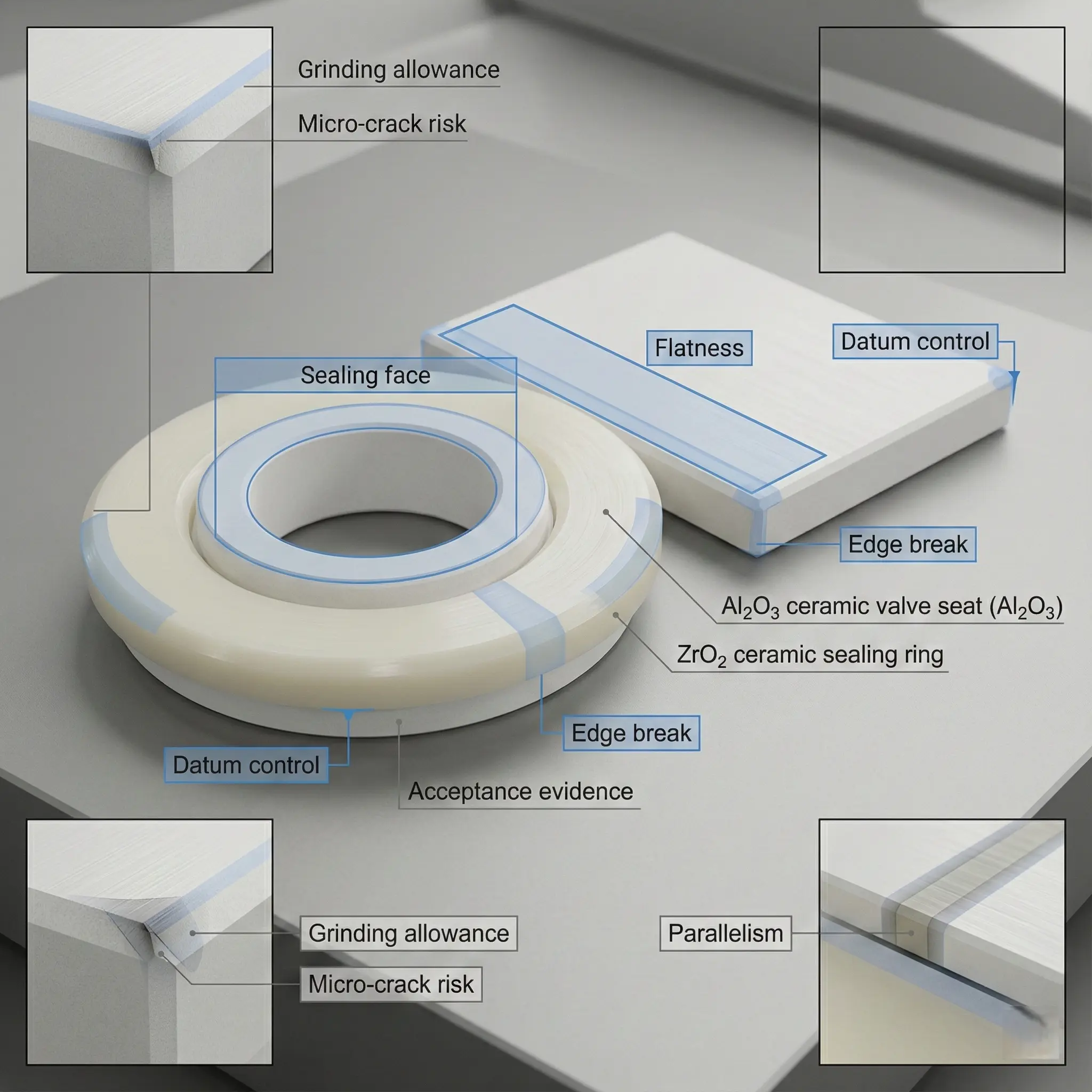
Drawing-controlled cylindrical parts with bores, shoulders, fits, and functional surfaces.
Plungers, pump parts, dosing parts, valve components, seals, and nozzles.
Vacuum pickup, wafer handling, laser, chamber, fixture, and insulation components.
Plates, sheets, gauges, pins, injection-molded parts, and drawing-specific shapes.
07 | Start a project
Submit what is already known. If CAD is not yet available, provide the part function, operating environment, material or property priorities, available envelope, and interfaces. Quantity, inspection, packaging, and target timing help us return a clear scope.
Engineering RFQ
Start with the part function, material or grade if known, quantity, and the critical requirements; an early-stage brief is enough to begin. If online submission is interrupted, the form prepares the same RFQ as an email instead.
Prefer to use your own email?
RFQ email: info@szcomo.com
RFQ email prepared
Your email app should now show a message to info@szcomo.com with these details. Attach CAD or drawings and press send. If nothing opened, copy the text below into an email to info@szcomo.com.