Published · CERAMIC CNC Engineering · Engineering Guide · 5 min read
Industrial Ceramic Machining Standards Reference: DIN 40680, ASTM C1161, ISO 14705 & GD&T
Practical engineering reference to international standards cited on technical ceramic CNC drawings—DIN 40680, DIN EN 60672, ASTM C1161, ISO 14705, ISO 21920-2, and ASME Y14.5—and what each standard does and does not guarantee.
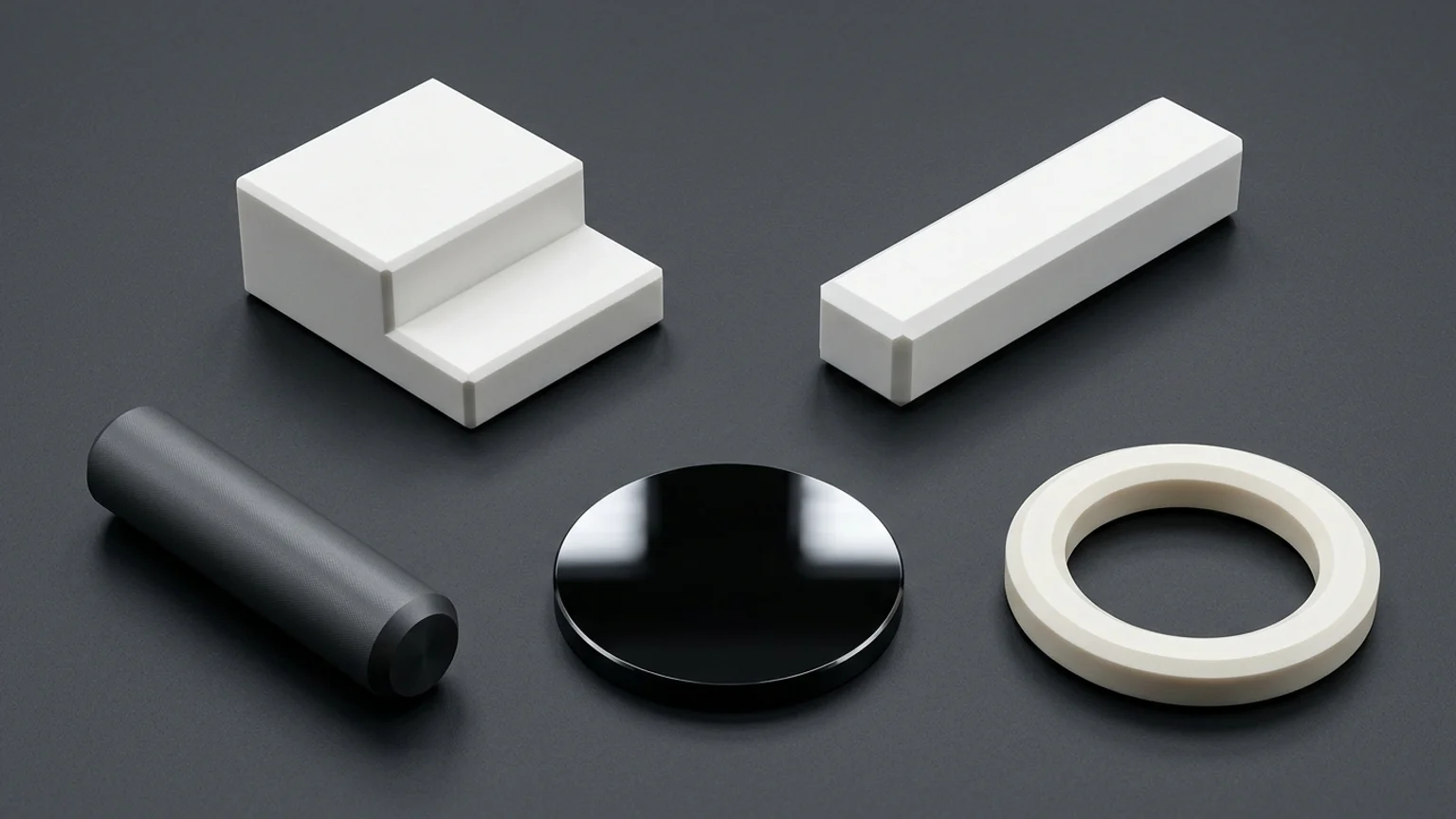
Citing a standard in a drawing title block does not automatically define how a precision ceramic part must be ground, lapped, or inspected. Many ceramic RFQ delays happen because a metalworking general tolerance (such as ISO 2768-m) is pasted onto an as-fired ceramic surface, or because a material-bar test standard is misread as a finished-part strength guarantee.
This reference maps the international standards most frequently referenced on technical ceramic CNC drawings across Europe, North America, and Asia—clarifying what each standard actually governs and what must still be specified explicitly on your drawing before quotation.
Core Standards Matrix for Technical Ceramic Drawings
Use this matrix to verify that title-block notes, material callouts, surface finish symbols, and mechanical property references align with the real manufacturing route.
| Standard | Full scope & role | Applies to | Critical RFQ boundary (what it does NOT replace) |
|---|---|---|---|
| DIN 40680-1 / DIN 40680-2 | General linear (-1) and form (-2) tolerances for ceramic components (classes such as coarse g and medium m) | As-fired (unmachined) sintered ceramic surfaces, straightness, flatness, parallelism, and coaxiality | Does not define diamond-ground or lapped precision faces; tight functional features must carry explicit individual tolerances and finish notes |
| DIN EN 60672 (IEC 60672) | Classification and specifications for ceramic and glass electrical insulating materials (e.g., high-alumina C 795 / C 799 groups) | Baseline electrical insulating material groups and test-specimen property classes | Identifies material class, not finished part geometry, creepage path, or assembly dielectric breakdown voltage |
| ASTM C1161 | Standard test method for flexural strength of advanced ceramics at ambient temperature (3-point and 4-point bending on beams A, B, or C) | Standardized rectangular ceramic test bars prepared with controlled chamfers and longitudinal grinding | Brittle ceramic strength scales with stressed volume and surface flaw distribution; test-bar MPa values are not finished-part load guarantees |
| ISO 14705 | Test method for Vickers hardness of fine ceramics (advanced technical ceramics) | Standardized Vickers indentation hardness on polished fine-ceramic test surfaces | Hardness correlates with abrasion resistance under controlled load, but does not by itself predict wear life, fracture toughness, or edge chipping |
| ISO 21920-2 (replaces ISO 4287 / ISO 4288) | Profile surface texture parameters (Ra, Rz, Rq) evaluated across the evaluation length | Modern international drawing indication and evaluation rules for ground, lapped, and polished profiles | A roughness limit (Ra) alone does not verify subsurface damage (SSD), seal flatness, or absence of pull-out pores |
| ASME Y14.5-2018 (and ISO GPS equivalents) | Geometric Dimensioning & Tolerancing (GD&T): datums, flatness, parallelism, concentricity, runout, position | Precision machined and diamond-ground geometric relationships between functional ceramic features | Drawings must clarify free-state vs. restrained inspection on thin plates, rings, and sleeves, plus datum support conditions |
Why DIN 40680 and ISO 2768 Often Conflict on Ceramic Drawings
One of the most frequent drawing errors in cross-industry ceramic sourcing is leaving a default metalworking block such as ISO 2768-mK on an entire ceramic part:
- As-sintered ceramic shrinkage cannot hold metalworking general tolerances automatically. Technical ceramics shrink substantially during firing; DIN 40680-1 (linear) and DIN 40680-2 (form) exist specifically to give realistic tolerances for unmachined, as-fired ceramic surfaces.
- When a drawing applies
ISO 2768-mglobally, the supplier has to assume every non-functional outside wall, chamfer, and clearance face must be diamond-ground after sintering—driving up machine hours and cost without improving assembly performance. - Practical fix: Reference
DIN 40680-m(or explicit generous tolerances) for as-sintered non-functional faces, and apply explicit GD&T and diamond-grinding / lapping callouts strictly to functional datums, bores, sealing faces, and mating interfaces.
See our ceramic tolerance capability map by feature and process for how feature geometry and grinding sequence interact with title-block tolerances.
Material Test Standards vs. Finished-Part Acceptance
Engineers often copy datasheet numbers tested under ASTM C1161 (flexural strength) or ISO 14705 (Vickers hardness) into purchase notes as if they were incoming part-inspection limits. Keep the distinction clear:
- Material qualification tests are destructive and specimen-specific. ASTM C1161 specifies standardized rectangular beams (Configurations A, B, or C) with longitudinal grinding and edge chamfering. Real machined parts contain holes, shoulders, slots, and multiaxial stress concentrations that behave differently from a bend bar.
- Datasheets establish material screening, not part certification. Confirm during RFQ review whether a standard Certificate of Conformance (CoC) referencing the agreed ceramic grade meets your quality system, or whether separate raw-material lot records or witness test bars are required (which affect cost and lead time).
- For grade-level trade-offs across alumina, zirconia, Si3N4, SiC, AlN, MACOR, and BN, consult the ceramic material selection guide or screen candidates in the Ceramic Material Selector & RFQ Builder.
Surface Texture Transitions: ISO 21920-2 vs. Legacy ISO 4287
Published to supersede legacy ISO 4287 and ISO 4288, ISO 21920 brings international profile roughness evaluation closer to North American ASME B46.1 practice by calculating most profile parameters over the full evaluation length rather than averaging segmented sampling lengths.
On precision ceramic drawings, naming the parameter (Ra, Rz) is only half the specification:
- Mark exact zones: Restrict fine
Ratargets to sealing lands, running ODs, or thermal-contact faces rather than applying one global finish symbol to the entire part. - Indicate direction when directional grinding marks matter: Rotating seals, sliding plungers, and optical mounts can respond differently to circumferential versus axial grinding lay.
- Pair roughness with flatness and edge-chip notes when required: As detailed in our surface finish and subsurface damage guide, a low
Rareading cannot substitute for flatness mapping or edge-integrity inspection.
Checklist: Aligning Standards Before Requesting a Ceramic Quote
Before releasing a drawing for quotation, verify five title-block items:
- Separate as-sintered general tolerances (e.g., DIN 40680) from diamond-ground functional tolerances.
- Name the material family and grade (or DIN EN 60672 class / datasheet target) alongside operating conditions.
- Specify GD&T standard (ASME Y14.5 or ISO GPS) and state free-state vs. restrained flatness/roundness conditions on thin or large parts.
- Limit surface texture (
Ra/Rz) symbols to functional surfaces and clarify measurement standard (ISO 21920-2 / ASME B46.1) if critical. - State required inspection documentation (CMM, optical, profilometer, CoC, or lot material record) so all bidders quote the same scope—see how to compare ceramic CNC quotes and inspection packages.
Need help checking whether your drawing title block and tolerance callouts match a practical ceramic grinding route? Use our printable RFQ Spec Builder or send your 2D PDF and STEP files for engineering review.
- Ceramic standards
- Din 40680
- Astm c1161
- Iso 14705
- Iso 21920
- Gdt