Published · Updated · CERAMIC CNC Engineering · Engineering Guide · 8 min read
Ceramic CNC Machining Services: Tolerances, Cost, and RFQ
A buyer-focused guide to ceramic CNC machining routes, feature-specific tolerances, cost drivers, supplier evidence, and a quote-ready RFQ package.
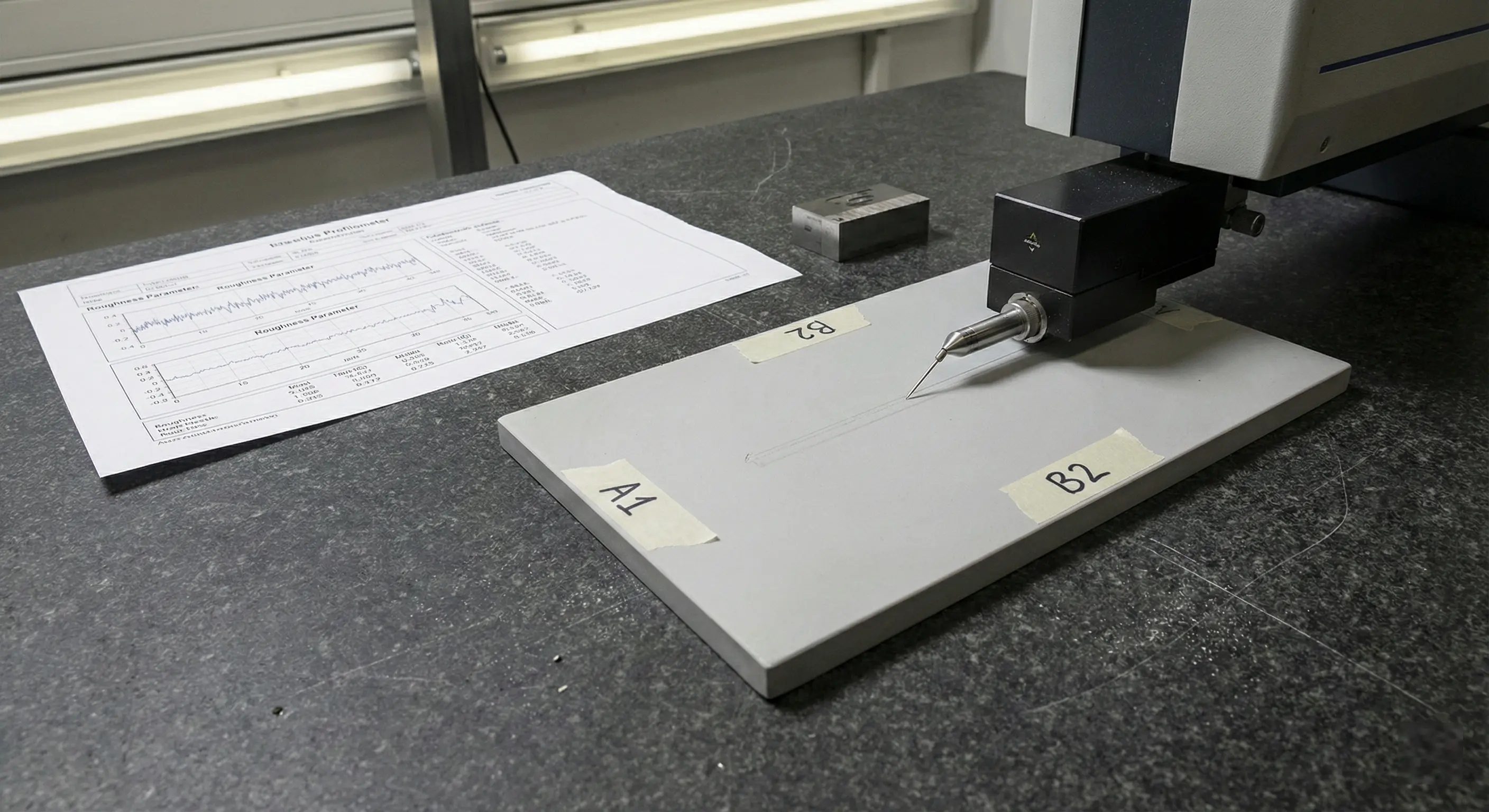
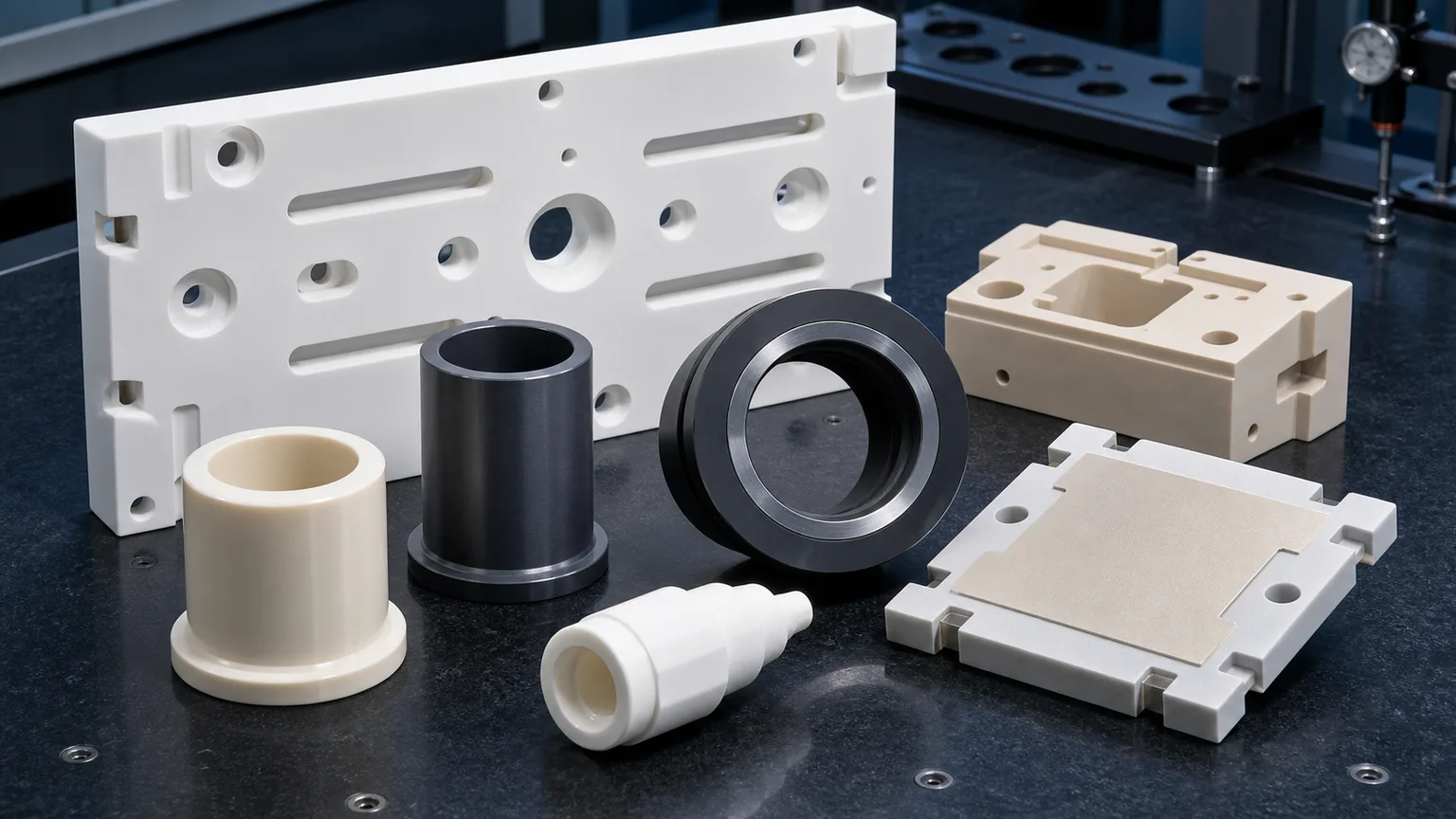
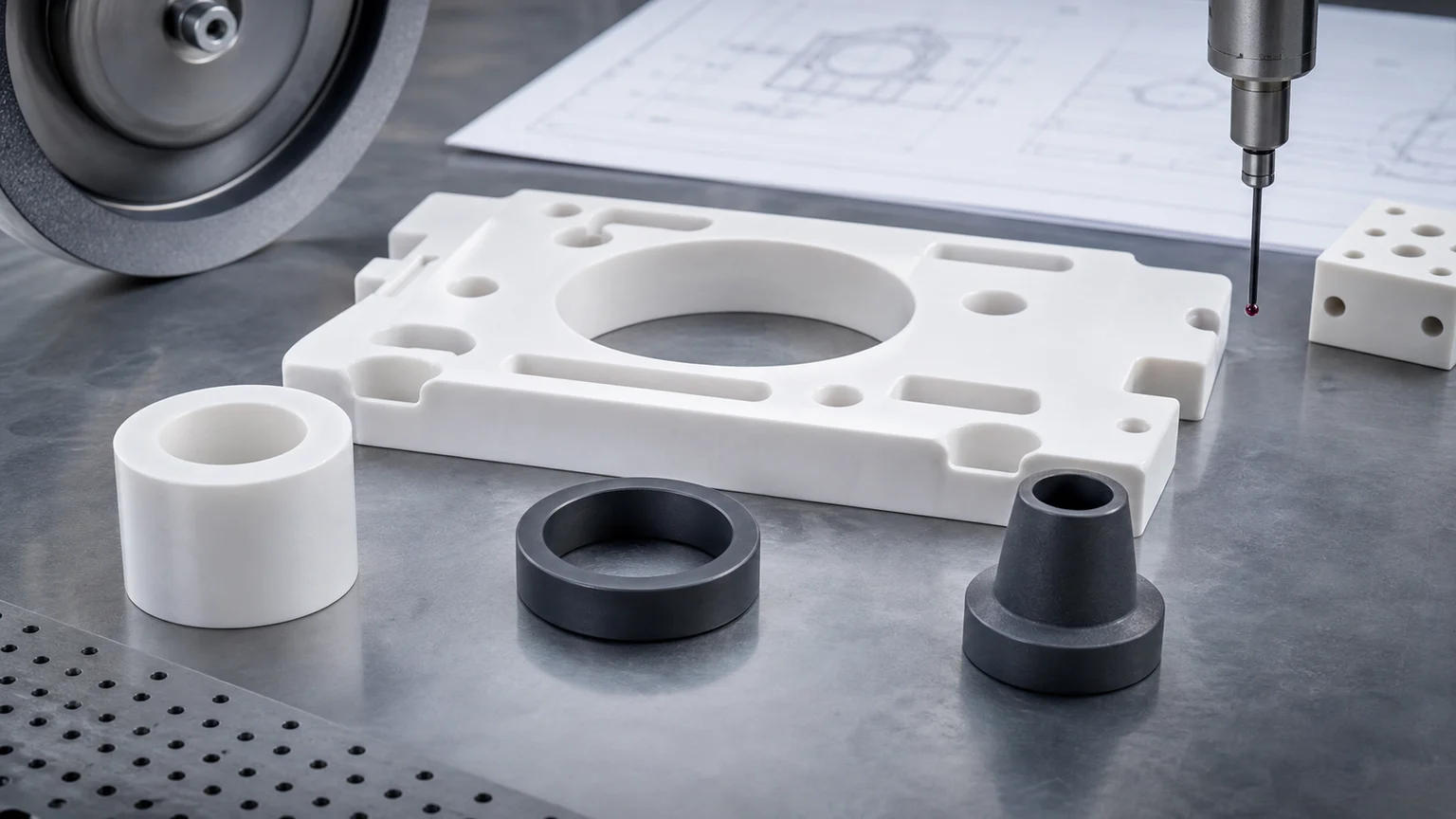
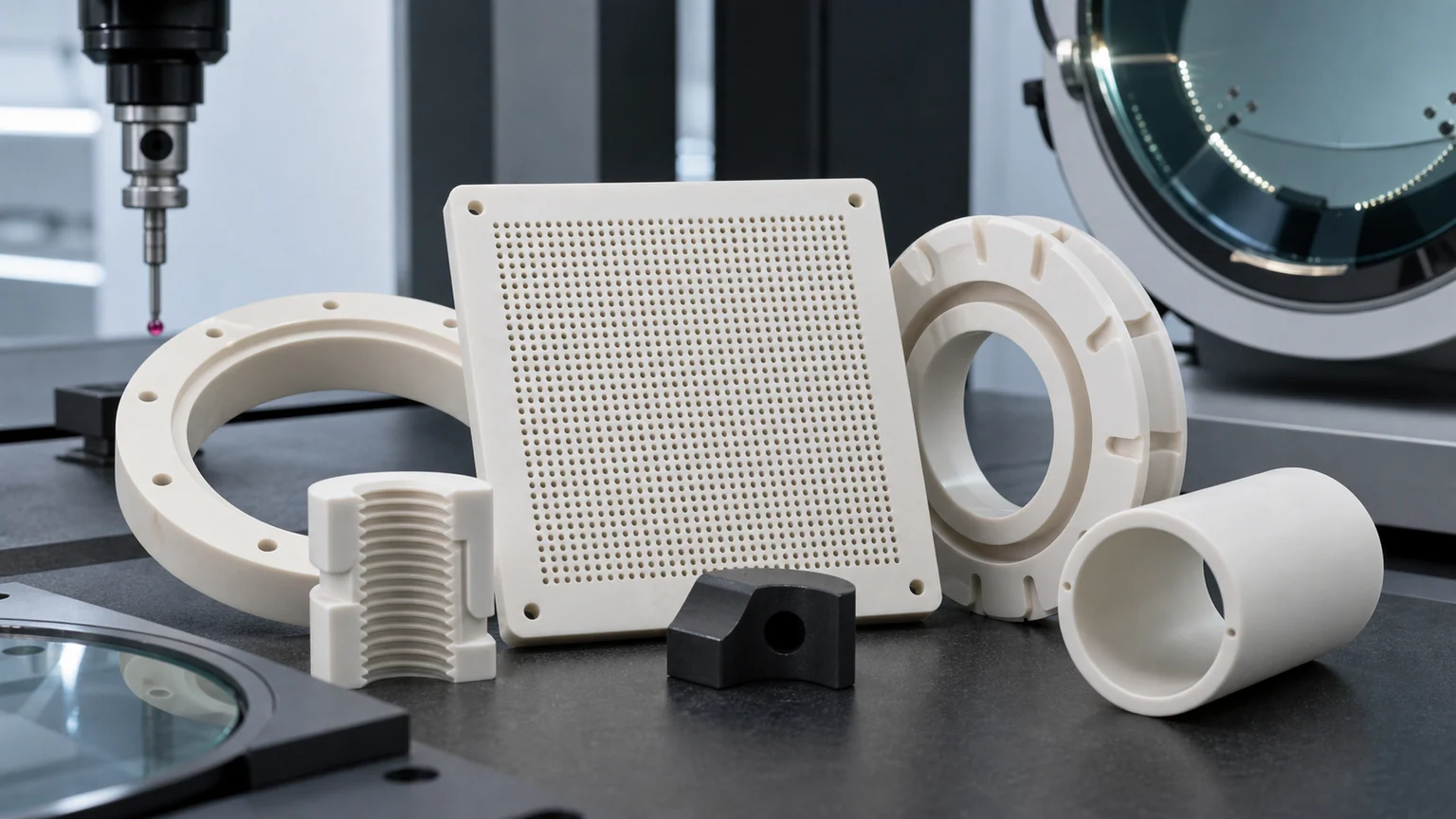
Ceramic CNC machining is not one process. For fired alumina, zirconia, silicon carbide, silicon nitride, and aluminum nitride, the finishing route usually relies on diamond grinding, lapping, polishing, or another abrasive process. Macor and many boron nitride grades can be conventionally machined. The right quotation begins by matching the material state and each critical feature to a realistic process and inspection method.
This guide is for engineers and buyers who need custom precision ceramic parts and are deciding whether a supplier can make, inspect, and repeat the drawing. It focuses on the questions that change feasibility, price, lead time, and acceptance rather than offering a universal tolerance claim.
Is Ceramic CNC Machining the Right Route?
Precision machining is usually worth reviewing when a ceramic component has functional surfaces that cannot be accepted as-formed or as-fired.
| Project condition | Likely direction |
|---|---|
| Tight bore, seal face, datum pad, flatness, parallelism, or controlled Ra | Review post-sinter grinding, honing, lapping, or polishing |
| Complex geometry in a fired high-performance ceramic | Review grinding access, blank strategy, edge risk, and whether a near-net preform is more practical |
| Prototype with threads, pockets, or frequent design changes | Review Macor or a machinable ceramic if its service limits fit |
| High quantity with mostly as-fired geometry | Review forming and green machining first, then finish only the critical features |
| Part needs only a standard ceramic tube, washer, or plate | Compare an off-the-shelf shape before funding custom machining |
| Drawing copies metal-part corners, thin webs, and blanket tight tolerances | Run a ceramic DFM review before quotation |
The term “CNC” describes machine control, not the cutting mechanism. A CNC grinder and a CNC mill may both follow programmed toolpaths, but their tooling, removal rates, edge behavior, coolant, and achievable surfaces are different. That distinction is central to comparing quotes.
The Four Decisions Behind a Reliable Quote
1. Material grade and blank state
“Alumina” or “silicon carbide” is not a complete specification. Purity, additives, forming route, density, grain structure, certification, and blank availability can affect machining and qualification. State the exact grade if it is approved. If it is open, provide the operating environment and the property that is driving the choice.
Also identify whether the supplier will source the blank, manufacture a near-net preform, or machine a customer-supplied fired blank. Responsibility for hidden defects, machining allowance, and replacement material should be agreed before work begins.
2. Process route by feature
Do not ask whether the supplier can “hold the drawing” as one undivided requirement. Break the part into features:
- Ground outside diameter or bore.
- Lapped sealing or thermal face.
- Small through-hole, blind hole, or slot.
- Thin wall, fork, web, or unsupported arm.
- Mounting datum, counterbore, groove, or pocket.
- Wafer-contact, fluid-contact, wear, electrical, or vacuum surface.
Each feature may need a different operation, fixture, sequence, and measurement method. The ceramic CNC design guide explains the geometry risks that should be reviewed before a drawing is released.
3. Functional acceptance criteria
A tolerance has value only when it is tied to function and can be measured. A flatness callout should identify the face and measurement condition. An Ra requirement should identify the surface and method. An edge note should define the critical zone and allowable chip size rather than saying only “no chips.”
4. Evidence and repeatability
Decide what evidence is required for the first article and later lots. Possibilities include a key-dimension report, CMM results, optical inspection, roundness or profile data, flatness mapping, surface roughness results, visual edge criteria, material certification, cleaning records, and protected-packaging confirmation.
The evidence should match the failure mode. More paperwork is not automatically better; the right evidence is what proves the functional surfaces.
Ceramic Machining Route by Material Family
| Material family | Typical machining implication | Buyer question |
|---|---|---|
| Alumina | Fired parts commonly need diamond grinding for precise faces, bores, and profiles | Which purity and which features are finished after firing? |
| Zirconia | Precision grinding is common; edge and thermal history still matter | Is the grade fixed, and which surfaces carry load or sliding contact? |
| Silicon nitride | Hard finishing may be needed for structural, rolling, and wear interfaces | What grade, load path, finish, and edge condition are required? |
| Silicon carbide | Very hard finishing, lapping, and careful edge control can dominate the route | Is the exact SiC grade approved, and which faces are contact or sealing zones? |
| Aluminum nitride | Flatness, thickness, finish, edge handling, and cleanliness often control thermal parts | Which faces are thermal interfaces, and is metallization in scope? |
| Macor | Can be machined with conventional tools within material-specific design limits | Is fast low-volume iteration more important than maximum service performance? |
| Boron nitride | Many grades are machinable, but grade, pressing direction, fragility, and environment matter | Which BN grade and orientation are approved for the application? |
Use the ceramic material selection guide when the material is not yet fixed. Precision Ceramics also distinguishes conventionally machinable grades from fired materials that require diamond grinding, while CoorsTek describes grinding, lapping, and polishing as finishing routes for tight-tolerance ceramic features. These references support the process distinction, but final feasibility still belongs to the actual drawing and grade.
Tolerances: Ask by Feature, Not by Material Name
There is no responsible universal answer to “What tolerance can ceramic CNC machining hold?” The answer changes with part size, feature type, aspect ratio, wall support, blank allowance, material grade, grinding access, datum stability, and inspection setup.
| Requirement | What changes difficulty | Evidence to agree |
|---|---|---|
| Bore size and roundness | Depth-to-diameter ratio, wall thickness, interrupted bore, access | Air gauge, bore gauge, CMM, roundness, or agreed key dimensions |
| Flatness | Part span, thickness, support condition, stock removal, lapping | Flatness map or specified measurement setup |
| Parallelism and thickness | Datum quality, face area, clamping, measurement temperature | CMM, comparator, micrometer map, or fixture method |
| Hole diameter and position | Diameter, depth, entry/exit breakout, pitch, inspection access | Optical, pin gauge, CMM, or flow test when function requires it |
| Surface finish | Material, prior grinding damage, face area, lapping/polishing route | Ra or other agreed parameter on the named face |
| Edge quality | Local section thickness, hole proximity, handling, packaging | Visual standard with zone, magnification, and chip limit |
The feature-by-process tolerance map is a better starting point than copying a single tolerance across the drawing.
What Drives Ceramic Machining Cost?
Price is usually driven by uncertainty and process time more than by raw outside volume.
- Blank and material risk. Grade availability, custom preforms, certificates, and replacement responsibility affect both cost and schedule.
- Removal volume and access. Deep pockets, long bores, narrow slots, and large stock allowance consume tool and machine time.
- Fragile geometry. Thin walls, long arms, small edge distances, sharp transitions, and interrupted features reduce yield margin.
- Finishing scope. Lapping, polishing, honing, and low-Ra surfaces add dedicated operations and handling.
- Inspection scope. A difficult tolerance may cost as much to prove as to make, especially when the datum or feature is hard to access.
- Cleaning and packaging. Semiconductor, vacuum, optical, and high-purity components may need controlled cleaning and individual protection.
- Quantity and learning. Prototype setup is distributed over few parts; repeat lots benefit only when the grade, blank, route, revision, and acceptance plan remain stable.
Cost reduction should start by identifying the true critical-to-quality features. Relaxing nonfunctional surfaces is usually more useful than weakening the one bore, seal face, or datum that makes the component work.
How to Compare Ceramic Machining Suppliers
Ask for evidence related to your part, not a list of machine brands.
| Supplier question | What a useful answer should clarify |
|---|---|
| Have you handled this material state and similar features? | Grade or material family, blank form, comparable feature type, and known risks |
| Which operations finish each critical feature? | Grinding, lapping, polishing, honing, drilling, or other route by feature |
| How will the part be held and referenced? | Stable datums, support condition, fragile zones, and re-fixturing strategy |
| How will acceptance be measured? | Instrument, setup, report, sampling, and treatment of measurement uncertainty |
| What assumptions are excluded from the quote? | Blank defects, material equivalence, cosmetic criteria, cleaning, testing, and rework |
| How are finished surfaces protected? | Edge protection, separators, trays, bagging, labeling, and matched-set control |
A strong supplier review may still conclude that a feature should change. That is more valuable than an immediate promise unsupported by a route or measurement plan.
Quote-Ready Ceramic Machining RFQ
Send these items together:
- Controlled 2D drawing and STEP or native CAD file.
- Material family, exact grade or approved-equivalent rule, and certificate requirement.
- Blank source, blank state, and responsibility for replacement material.
- Prototype and production quantity, target timing, and revision status.
- Functional faces, datums, bores, holes, seal lands, wear zones, and contact areas clearly marked.
- Tolerances and GD&T only where function requires them.
- Surface finish by face, plus lapping or polishing scope.
- Edge break and chip criteria by critical zone.
- Cleaning, packaging, traceability, and inspection-report requirements.
- Mating parts, operating temperature, chemistry, load, vacuum, voltage, or other relevant application context.
Use the custom ceramic machining RFQ checklist for a drawing-by-drawing review. When the package is ready, submit it through the technical RFQ page.
Common Buyer Questions
Can fired ceramic be CNC machined? Yes, but fired high-performance ceramics are commonly finished with diamond grinding, lapping, polishing, or other specialist abrasive processes rather than ordinary metal-cutting methods. The route depends on material and feature.
Is green machining cheaper than hard machining? It can reduce fired-state removal for suitable geometry and volume, but sintering shrinkage and distortion remain. Critical features may still need post-sinter finishing. Compare both routes using the green versus hard machining guide.
Why do ceramic machining quotes vary so much? Quotes often contain different assumptions about grade, blank source, finished surfaces, edge acceptance, yield, inspection, cleaning, and replacement responsibility. Normalize those assumptions before comparing price.
Should every dimension be tightly toleranced? No. Tight control should follow function. Blanket tolerances increase grinding, inspection, and scrap risk without necessarily improving the assembly.
What should I send for an initial feasibility review? Send the drawing, CAD, material or service environment, quantity, critical features, surface and edge requirements, and the evidence needed for acceptance. Open items can be identified explicitly rather than hidden in the quote.
Technical References
- Precision Ceramics: choosing machinable and diamond-ground ceramic materials
- CoorsTek: ceramic component finishing methods
RFQ note: Tolerance, surface finish, feasibility, price, lead time, inspection, and yield depend on drawing review, material grade, blank state, quantity, process route, and agreed acceptance method.
- Ceramic CNC machining
- Diamond grinding
- Tolerances
- Cost drivers
- RFQ checklist