Alumina and zirconia tubes
Straight tubes with ground ODs and bores where straightness and concentricity matter.
Product family
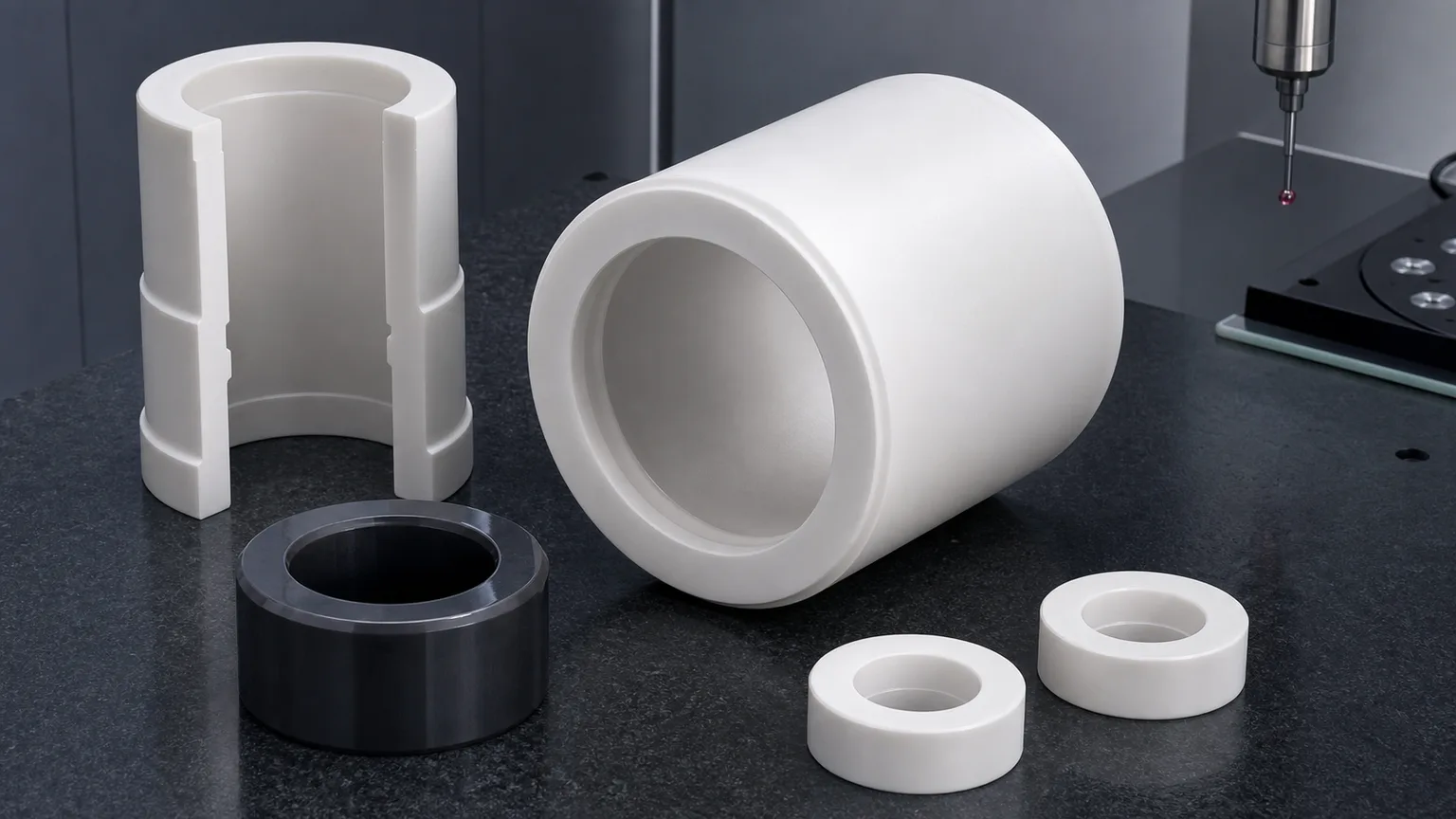
Alumina and zirconia tubes, capillary and fine-bore tubes, insulating sleeves, flange rings, and precision rings with ground bores, lapped faces, and controlled concentricity.
Product overview
Ceramic tubes and rings carry fluids, insulate conductors, guide moving parts, or seal against mating faces. Their function sits in the bore, the end faces, or the wall, so the drawing should say which of these is critical.
Typical requests include high-purity alumina tubes, fine-bore and multi-bore tubes, zirconia sleeves, insulating tubes and spacers, flange rings, wear and seal rings, and precision rings for instruments and semiconductor equipment. Tubes are pressed, isostatically pressed, or extruded, sintered, and then ground on the ODs, bores, and faces that need it.
Long tubes need straightness and bore-to-OD concentricity reviewed early; rings need flatness, parallelism, and face finish defined. Send the drawing and application for review.
Product types
These are made to customer drawings or samples, not sold from stock. Final material, route, and acceptance are confirmed for each drawing.
Straight tubes with ground ODs and bores where straightness and concentricity matter.
Small-bore and multi-channel tubes for sensors, thermocouples, and fluid paths.
Alumina tubes, sleeves, and spacers that isolate conductors and keep creepage distance.
Rings with flanges, steps, and shoulders where face flatness and edge quality are controlled.
Rings with lapped sealing faces or ground running surfaces for pumps and rotating equipment.
Thin and precision rings for instruments, optics, and semiconductor tools with tight face control.
Decision map
Use the final column as a drawing and RFQ check. A requirement is easier to review when its function and acceptance evidence are stated together.
| Requirement | Why it changes the route | What to define in the RFQ |
|---|---|---|
| Bore size and finish | Small and long bores are hard to grind; some bores are best left as-fired if function allows. | State bore size, length, whether it must be ground, and the Ra or flow requirement. |
| Concentricity and wall thickness | Uneven walls weaken the tube and change insulation or flow; thin walls crack in grinding. | Define the datum, concentricity or runout, and minimum wall thickness. |
| Straightness of long tubes | Tubes bow during sintering; tight straightness may need grinding or selection. | Give length, straightness over length, and how it is measured. |
| Ring faces | Flatness, parallelism, and face finish decide sealing and stacking behaviour. | Specify flatness, parallelism, Ra, and which face is functional. |
| Electrical or thermal duty | Insulation and temperature duty decide the alumina purity or zirconia choice. | Give voltage, creepage, temperature, and atmosphere if relevant. |
Material paths
Standard for insulating tubes, spacers, and rings; higher purity for higher temperature and insulation.
Tougher choice for sleeves and rings that are press-fitted or see impact and wear.
Used for wear rings and higher-load rings when alumina is too brittle.
Quote-ready package
Engineering guides
Each guide below narrows one part family or manufacturing constraint and leads back to the drawing information needed for review.
How to prepare an RFQ for thin-wall ceramic sleeves, bushings, insulating tubes, precision bores, wall-thickness control, roundness, concentricity, and inspection.
Engineering guide for precision machined alumina ceramic insulators used in electrical and electronic assemblies, including standoffs, spacers, sleeves, plates, housings, creepage paths, edge quality, cleaning, inspection, and RFQ inputs.
Engineering guide to precision ceramic rings for semiconductor process chambers, including SiC and alumina ring components, lapped bands, ID/OD control, grooves, edge quality, cleaning, inspection, and RFQ inputs.
RFQ guide for lapped ceramic seal faces, valve seats, vacuum interfaces, gasket lands, flatness, Ra, edge condition, subsurface damage, and leak-test expectations.
Questions before quotation
Not always. As-fired bores are cheaper and can be acceptable when the bore only carries fluid or wires. Grind or hone the bore only when it is a fit, seal, or flow-critical surface.
Alumina is common for insulating and general rings; zirconia suits rings that are press-fitted or see impact. Wear and seal rings may use ZTA or silicon nitride depending on load.
Engineering RFQ
Start with the part function, material or grade if known, quantity, and the critical requirements; an early-stage brief is enough to begin. If online submission is interrupted, the form prepares the same RFQ as an email instead.
Prefer to use your own email?
RFQ email: info@szcomo.com
RFQ email prepared
Your email app should now show a message to info@szcomo.com with these details. Attach CAD or drawings and press send. If nothing opened, copy the text below into an email to info@szcomo.com.