High-pressure pump plungers
Solid zirconia or alumina plungers for triplex, washer, and spray pumps where packing wear and scoring limit service life.
Product family
Zirconia, alumina, ZTA, and silicon nitride plungers ground and finished to drawing for reciprocating pumps, dosing systems, and sliding seals. Send the plunger drawing or a used sample for review.
Product overview
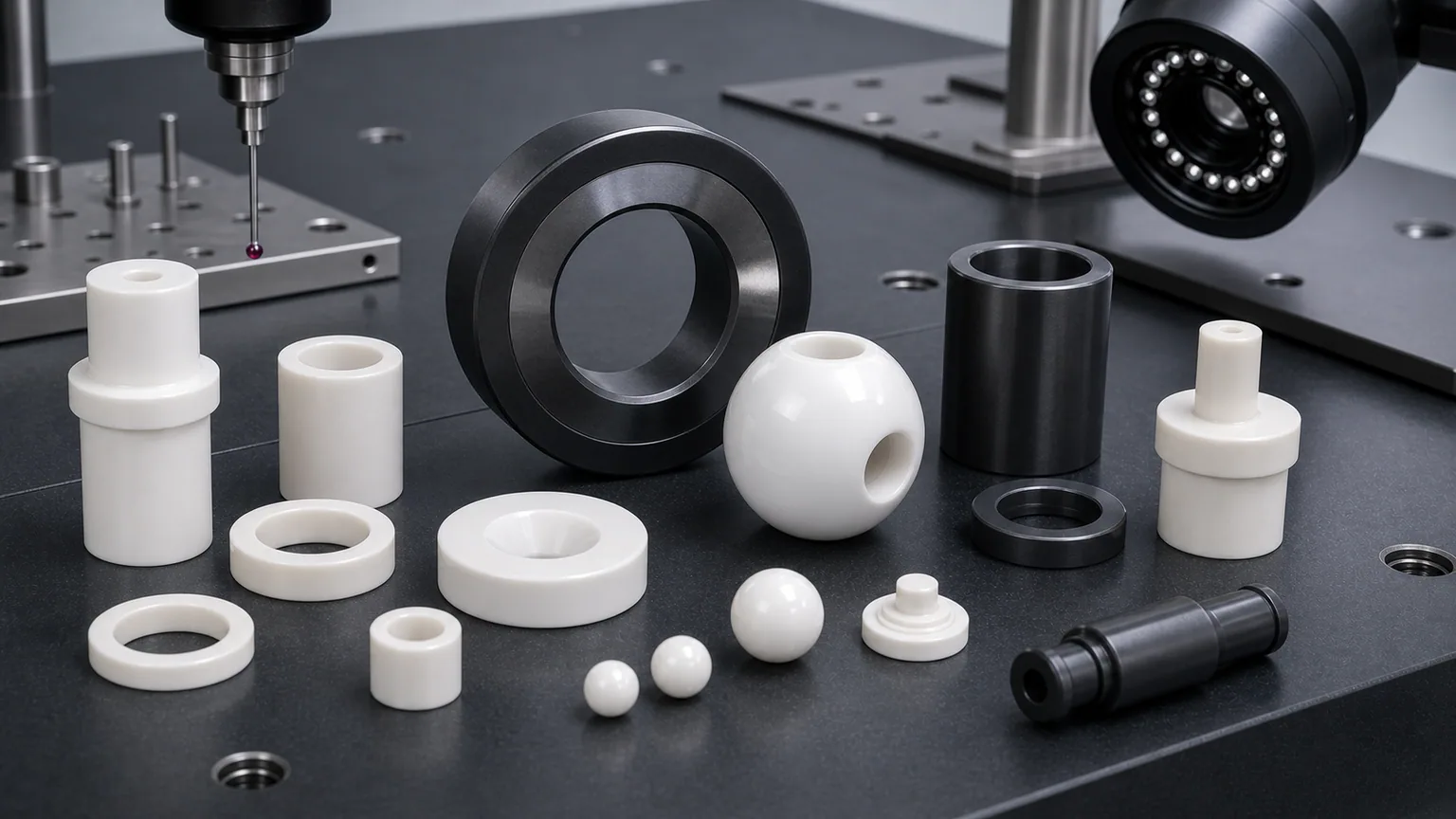
A ceramic plunger replaces a hardened or coated metal plunger where wear, corrosion, or seal life limit the pump. The plunger runs against a packing or seal, so its outside diameter, straightness, roundness, and running-surface finish decide seal life more than the material name does.
Typical requests include solid and stepped zirconia plungers for high-pressure washer and triplex pumps, alumina or zirconia pistons for dosing and metering pumps, plungers for textile machinery, medical and laboratory piston rods, and ceramic plungers bonded or pinned into a metal holder. Plungers are produced from pressed or isostatically pressed blanks, sintered, then centerless or cylindrically ground and polished on the running zone.
Feasibility depends on diameter, length-to-diameter ratio, the metal-to-ceramic joint, and how the running surface is measured. Send the drawing, pump type, pressure, and medium; the engineering review confirms the material, route, and inspection before quotation.
Product types
These are made to customer drawings or samples, not sold from stock. Final material, route, and acceptance are confirmed for each drawing.
Solid zirconia or alumina plungers for triplex, washer, and spray pumps where packing wear and scoring limit service life.
Small-diameter pistons and piston rods for metering pumps, analyzers, and filling heads that need a matched bore clearance.
Plungers with shoulders, grooves, cross holes, flats, or threaded metal ends where transitions need radius and chip control.
Ceramic running sleeves or tips bonded, shrink-fitted, or pinned to metal holders; the joint method and test must be agreed.
Wear-resistant plungers and guide pins for textile, packaging, and automation equipment with sliding contact.
Zirconia or high-purity alumina pistons for dialysis, laboratory, and food-filling pumps where cleaning and material records matter.
Decision map
Use the final column as a drawing and RFQ check. A requirement is easier to review when its function and acceptance evidence are stated together.
| Requirement | Why it changes the route | What to define in the RFQ |
|---|---|---|
| Running OD, roundness, and straightness | The seal or packing follows the running zone; taper, lobing, or bow shortens seal life and changes leakage. | Mark the running length, OD tolerance, roundness, straightness, and the measurement method. |
| Running-surface finish | A polished zone reduces seal wear, but finishing the whole part adds cost without improving function. | Specify Ra (and Rz if needed) only on the running zone and state the measurement direction. |
| Length-to-diameter ratio | Slender plungers bow during sintering and grinding, which raises grinding allowance and scrap. | Send full length, diameter, and any support or centre features that may be added for grinding. |
| Ends, shoulders, and holes | Sharp transitions and cross holes concentrate stress in a brittle part and are common chipping points. | Define chamfers or radii, permitted edge chips, and any thread or hole in the metal holder. |
| Metal joint and pressure | Bonded or shrink-fit joints carry the pump load; the joint design often limits the plunger. | State pump pressure, stroke, speed, joint method, and who performs the assembly test. |
| Medium and cleaning | Chemistry, temperature, and hygiene rules decide grade choice and cleaning before shipment. | List the pumped medium, temperature, cleaning standard, and any material declaration needed. |
Material paths
The usual first choice for plungers: high strength and toughness with a fine polished finish. Check temperature and hot-water exposure for the selected grade.
Considered for pump and valve parts where thermal shock or specific wear behaviour matters; grade data must be confirmed.
Harder and more chemically stable than zirconia but less tough; suited to lower-impact dosing and chemical service.
ZTA offers a middle ground between alumina and zirconia; silicon nitride suits lighter, higher-temperature, or thermal-shock duty.
Quote-ready package
Engineering guides
Each guide below narrows one part family or manufacturing constraint and leads back to the drawing information needed for review.
Design and RFQ guide for ceramic pump and valve components used in corrosive, abrasive, high-purity, and vacuum fluid systems, including SiC seal faces, zirconia balls, alumina seats, plungers, sleeves, lapping, and inspection.
How engineers should specify zirconia ceramic machining for high-strength pins, plungers, bushings, sleeves, valve parts, wear components, fixtures, and precision mechanisms.
Engineering guide for precision ceramic seal faces, mechanical seal rings, mating rings, and lapped faces used in pumps, mixers, compressors, and rotating equipment, including SiC, alumina, zirconia, flatness, Ra, edge chips, inspection, packaging, and RFQ inputs.
Specify ceramic surface finish by functional face, distinguish roughness from flatness and subsurface damage, and agree measurement and qualification evidence before quotation.
Questions before quotation
Yes, a used plunger can start the review, but a sample shows wear, not the design intent. We measure it, propose a drawing, and ask you to confirm the running zone, tolerances, and finish before quotation.
Zirconia is usually preferred for impact and bending loads because of its toughness. Alumina can suit lower-load dosing service with aggressive chemistry. The final choice depends on pressure, medium, temperature, and the seal design.
Metal-ceramic assemblies can be reviewed. The joint method, assembly test, and responsibility for pressure testing must be agreed in the quotation.
Engineering RFQ
Start with the part function, material or grade if known, quantity, and the critical requirements; an early-stage brief is enough to begin. If online submission is interrupted, the form prepares the same RFQ as an email instead.
Prefer to use your own email?
RFQ email: info@szcomo.com
RFQ email prepared
Your email app should now show a message to info@szcomo.com with these details. Attach CAD or drawings and press send. If nothing opened, copy the text below into an email to info@szcomo.com.